
7 Tips for Buying Ruby Jewelry Sets Wholesale?
Table of Contents
Buying a Ruby Jewelry Set wholesale can look simple until stones, settings, and supplier terms are compared closely. A vivid red display piece may photograph beautifully, yet its color can vary under natural light. Ask for clear product photos, close-ups of prongs, and details about gemstone treatments. Small details matter.
Wholesale buyers should also check metal descriptions, stone measurements, available sizes, minimum order quantities, and sample policies. Request written information about return terms and delivery estimates before placing a large order. If a seller provides grading documents, verify what they cover and who issued them; not every document is an independent gemstone report. Keep invoices and product specifications together for easier review.
The seven tips in this guide focus on practical checks that help reduce avoidable surprises. Compare the total cost, not only the listed unit price. Freight, packaging, and sample charges can change the calculation. Inspect a sample when possible, especially for color consistency, secure settings, and finish quality. Ask direct questions, and take time to compare answers. It can feel tedious. Still, one detail may change your decision. Wholesale purchasing always involves some uncertainty, and polished photos cannot replace inspection. A careful process gives buyers a clearer basis for choosing a supplier and a Ruby Jewelry Set assortment suited to their customers.
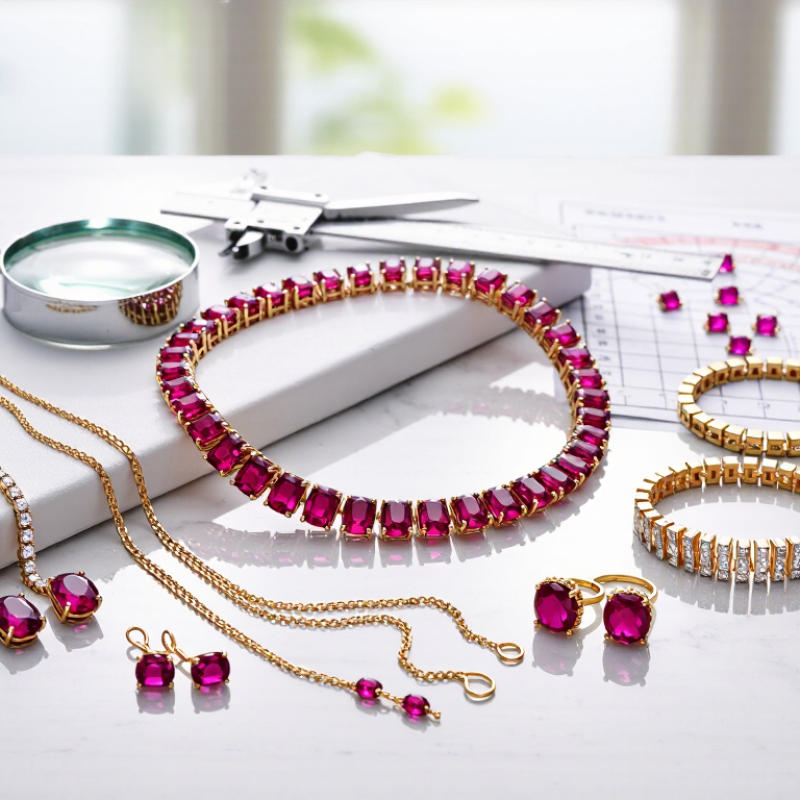
Understanding Ruby Jewelry Sets and Wholesale Buying
Ruby jewelry sets usually combine a necklace, earrings, or ring around a shared design. In wholesale buying, consistency matters as much as appearance. Check whether the rubies are natural or lab-created, and ask about any treatments that affect color or durability. Request those details in writing. A photo is not enough.
Tip: Ask for a sample set before placing a large order. Compare the stones under daylight and indoor lighting; ruby color can shift noticeably. Check whether the earrings and necklace use stones with similar tones and sizes. Confirm the metal type, fineness, clasp construction, and item dimensions. Small details matter.
Before ordering, clarify the minimum quantity, production time, packaging, and policy for damaged or mismatched pieces. Ask how quality checks are handled, and inspect a sample for loose settings or rough stone edges. Calculate the cost per complete set, including shipping and packaging, rather than comparing the stone price alone. Even carefully matched rubies may vary slightly in tone. That is not always a flaw, but buyers should know what variation to expect. Bulk pricing can look attractive; a slow-moving design can still tie up inventory.
Evaluating Ruby Quality, Treatments, and Authenticity
When buying ruby jewelry sets wholesale, evaluate stones individually, not only by the parcel’s overall color. GIA’s published ruby data gives a refractive index of 1.762–1.770 and specific gravity near 4.00; these measurements help with identification, but cannot confirm origin or treatment alone. Under a 10× loupe, look for uneven color, filled surface-reaching fractures, and bubbles that may indicate glass filling. A loupe has limits. Ask for written disclosure of whether stones are natural or synthetic, and whether they have been heated, filled, or otherwise treated. GIA’s ruby guidance explains that heat treatment is common, while glass-filled material needs clear disclosure.
For valuable or mixed-quality lots, request independent gemological reports and verify that the report numbers match the stones or documented sample. CIBJO’s Gemstone Blue Book provides standardized terminology for describing gemstone treatments; use those terms on invoices and product records. Check several pieces from each set under neutral lighting: a vivid red stone may look darker beside a bright metal setting, and matching color does not prove matching quality. Ask suppliers how they grade clarity and whether every stone was examined or only a sample. Sampling can save time, but it can miss inconsistencies. Keep treatment details and report copies with each wholesale lot.
| Tip | What to Evaluate | Useful Checks | Wholesale Buying Guidance |
|---|---|---|---|
| 1. Assess color in neutral lighting | Ruby color is commonly described by hue, tone, and saturation. Stones can range from purplish red to orangy red, and appearance changes with lighting. | View stones under neutral white light and daylight-like conditions. Compare pieces side by side and look for consistent color across the set. | Request consistent lighting in product photos and inspect a physical sample before approving a large order. Avoid relying on heavily edited images. |
| 2. Inspect clarity and visible inclusions | Natural rubies commonly contain inclusions. Their visibility, location, and effect on transparency can influence appearance and value. | Use a 10× loupe or magnification images to check for cracks, cavities, obvious cloudiness, and inclusions that affect durability or face-up appearance. | Agree on an acceptable clarity range and defect policy in writing. Do not assume every natural ruby will be free of inclusions. |
| 3. Check cut, matching, and setting quality | Cut affects brightness and face-up appearance. A jewelry set should also have compatible ruby sizes, proportions, and visual character. | Check for uneven outlines, windowing, chipped edges, loose stones, sharp prongs, and noticeable differences between earrings or coordinated pieces. | Specify matching tolerances for color, size, and shape, along with workmanship requirements for each item in the set. |
| 4. Ask clearly about treatments | Heat treatment is an established ruby treatment. Fracture filling, including lead-glass filling, and surface or lattice diffusion can significantly affect value and care requirements. | Request written disclosure of known treatments and supporting gem-laboratory documentation where appropriate. A basic visual inspection cannot reliably identify every treatment. | Make treatment disclosure part of the purchase agreement. Confirm that product descriptions, invoices, and customer-facing materials use consistent terminology. |
| 5. Verify natural, laboratory-grown, or imitation status | Natural ruby, laboratory-grown ruby, and ruby imitations are different product categories. They can look similar, but differ in origin, value, and disclosure requirements. | For significant purchases, use an independent gemological report from a reputable laboratory. Confirm that the report identifies the tested stone and matches the item. | Request clear item-level descriptions and documentation. Do not treat a supplier’s verbal assurance or a generic certificate as conclusive proof of identity. |
| 6. Treat origin claims carefully | Geographic origin can be difficult to determine and may require advanced laboratory testing. Origin alone does not establish a ruby’s quality or treatment status. | Ask whether an origin statement is a documented laboratory opinion or an unverified supplier claim. Check the report number and scope with the issuing laboratory. | Only pay for a stated origin premium when the claim is supported by suitable documentation and the terms are clear in the order records. |
| 7. Review the full wholesale terms and sample | Ruby sets may differ in metal fineness, gemstone weight, dimensions, treatment disclosure, and manufacturing quality. Return and replacement terms also matter. | Request a detailed specification sheet, a representative sample, itemized weights and measurements, and written terms for defects, mismatches, and shipping damage. | Compare like-for-like specifications rather than price alone. Confirm minimum order quantities, quality tolerances, delivery timing, and remedies before placing a bulk order. |
Checking Metal, Craftsmanship, and Set Consistency
Tip: Check the metal before comparing prices. Ask for the alloy, karat, and any plating details in writing. A stamp is a clue, not proof. Request a sample and use a reputable testing service if the order is substantial. Inspect clasps, posts, and other skin-contact parts closely. Tiny differences matter.
Tip: Examine the workmanship under bright light and with a jeweler’s loupe. Look for secure ruby prongs, smooth solder joints, even settings, and clasps that close firmly. Gently move each piece; loose stones or sharp edges deserve attention. Ask how repairs or defects are handled. A polished photograph can hide rough finishing.
Tip: Compare every piece in the set, not just one sample. Check ruby color, size, cut, and setting height across earrings, necklaces, and rings. Slight variation is normal, but obvious mismatches can make a set look assembled from leftovers. Request batch photos and written size tolerances before approving production. Treatment details should also be disclosed. It is easy to overvalue a neat sample; consistency across the full order is the harder test.
Comparing Wholesale Suppliers, Prices, and Minimum Orders
Compare suppliers using identical specifications, not just product photos. Tip 1: Request details on ruby size, color range, treatment disclosure, metal purity, and setting style. Tip 2: Ask for clear, close-up images of the actual set, including clasps and stone backs. Tip 3: Check whether matching earrings and pendants are available in the same color range. Small details matter. A polished catalog can still hide uneven stones.
Tip 4: Compare item prices alongside shipping, packaging, sample charges, and any customization fees. A low quote may exclude important costs. Tip 5: Ask how quality checks work and what happens if stones arrive loose or noticeably mismatched. Keep the answer in writing. A spreadsheet helps, though neat columns cannot prove a supplier’s claims. Request a sample when practical, then inspect it under neutral light.
Tip 6: Confirm the minimum order quantity for each design, not only the overall order. Some suppliers allow mixed styles; others require several sets per style. Tip 7: Ask whether the minimum can be reduced for a first order, and confirm reorder quantities and lead times. Compare the total cash commitment, not just the per-set price. A smaller order may cost more per set, but it can limit unsold inventory. I would still treat supplier assurances cautiously until a sample arrives.
Wholesale Ruby Jewelry Sets: Price and Minimum Order Comparison
Use these illustrative planning estimates to compare supplier types: direct manufacturers may offer lower unit prices but require larger orders, while smaller wholesalers often have lower minimums. Actual prices and terms vary with ruby quality, metal, craftsmanship, and order details. Request current quotes and confirm gemstone treatments and certifications before buying.
Reviewing Shipping, Returns, and Supplier Credentials
When comparing ruby jewelry sets wholesale, treat shipping terms as part of the product cost. Ask how each set is packed: separate soft pouches help prevent scratches, while a rigid outer box reduces pressure damage. Confirm tracking, insurance, dispatch times, and who handles import charges. Get these details in writing. Small details matter.
Read the return policy before placing a large order. Check the return window, restocking fees, and whether you must pay return shipping. Ask how the supplier handles missing pieces, damaged settings, or stones that differ from the listing. Photograph parcels as they arrive and inspect clasps, prongs, and stone color promptly. Ruby shades can vary, but vague descriptions make comparison difficult.
Check supplier credentials with more than a polished website. Request a registered business name, verifiable contact details, trade references, and clear invoices. For higher-value stones, ask what gem reports are available and what they actually confirm. A report may describe a stone without guaranteeing the whole set. I would not treat friendly replies as proof of reliability; that assumption can be costly. A small sample order can reveal packing quality and communication habits, though it may not predict every shipment.
FAQS
Sets often pair a necklace with earrings or a ring. Check that the stones have similar tones and sizes. Confirm the metal type, fineness, dimensions, and clasp construction. Small details matter.
Ask for written details about whether stones are natural or lab-created, and whether they were heated, filled, or otherwise treated. A 10× loupe can reveal clues, but it cannot prove everything. Photos aren’t enough.
Yes. Compare the sample in daylight and indoor light, then inspect the settings and stone edges. A sample can reveal packing or communication problems, but it may not predict every shipment.
Calculate the cost per complete set, including shipping and packaging. A low stone price can hide extra costs. Slow-moving designs may tie up inventory; I might underestimate that risk.
Ask about dispatch times, tracking, insurance, and any additional charges. Separate soft pouches help prevent scratches, while a rigid box can reduce pressure damage. Get the details in writing.
Check the return window, restocking fees, and return-shipping costs. Ask how missing pieces, damaged settings, or mismatched stones are handled. Photograph the parcel and inspect it promptly.
No. A report may describe one stone or a documented sample, not every piece in the set. Match report numbers to the stones and keep copies with the order records.
Request verifiable contact details, trade references, and clear invoices. A polished website or friendly replies are not proof. A small trial order helps, but it is not a perfect test.
Conclusion
Buying a Ruby Jewelry Set wholesale can offer better value and a coordinated look, but careful research is essential. Start by learning how ruby sets are priced and what each set includes. Assess the stones’ color, clarity, cut, and consistency, and ask sellers to clearly disclose any treatments. Request reliable documentation or independent evaluation when needed, so you can better understand a ruby’s identity and quality before placing an order.
Next, examine the metal type, construction, finish, and matching details across every piece. Compare several wholesale suppliers by reviewing item specifications, pricing, minimum order quantities, and communication practices—not just the lowest price. Before purchasing, confirm shipping timelines, packaging, return terms, and what happens if an order arrives damaged or differs from its description. Checking supplier credentials, customer feedback, and written policies can help you make a more informed purchase and choose a Ruby Jewelry Set that suits your quality expectations and budget.

Blog Tags:
\n