 \n
Direct factory supply featuring high-durability PVD plating, custom alloy casting, and verified hypoallergenic finishing protocols.
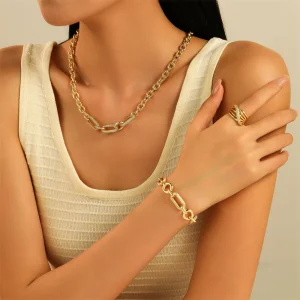
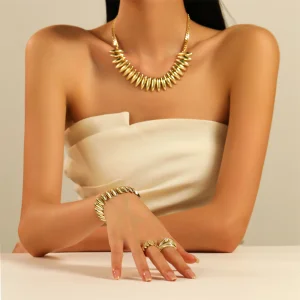
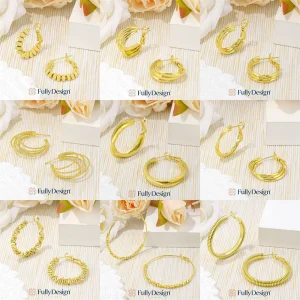
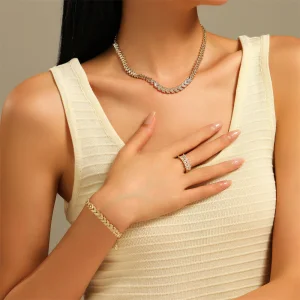
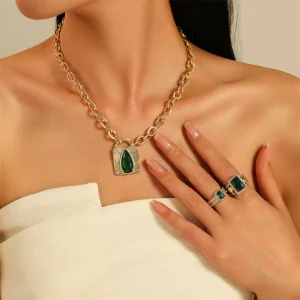
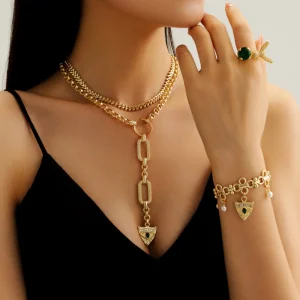
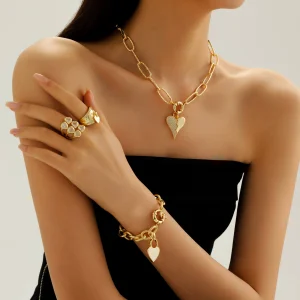
The global wedding jewelry market is undergoing a profound structural evolution. Driven by changing consumer demographics, rising demand for affordable luxury, and rapid technological advancements in vacuum plating and synthetic stone synthesis, international importers face both unprecedented margin opportunities and strict compliance hurdles.
Shift Toward Semi-Fine Materials
Traditional solid gold bridal sets are increasingly replaced by 18K gold-plated brass, 316L surgical stainless steel, and 925 sterling silver embedded with AAA-grade cubic zirconia (CZ) or moissanite. This transition delivers the opulent aesthetic of high jewelry at a fraction of the raw material expense.
Search Intent & B2B Procurement
Modern B2B buyers search beyond generic term variations. Intent analysis reveals a demand for verified micro-plating specs (PVD vs. Water Plating), REACH/Prop 65 chemical compliance, flexible low MOQs for SKU testing, and 7-day rapid CAD-to-sample turnaround times.
E-E-A-T Quality Safeguards
Navigating international import regulations requires suppliers to back up marketing claims with X-Ray Fluorescence (XRF) alloy reports, EN 1811 nickel release certifications, and batch-level salt spray tarnish tests before shipment sealing.
China's dominance as a premier wedding jewelry supplier rests on an unmatched industrial ecosystem combining precision metallurgy, advanced surface engineering, and end-to-end supply chain integration.
Traditional water-electroplating often suffers from swift discoloration when exposed to human sweat, perfumes, or ambient humidity. Advanced Chinese factories utilize multi-stage Physical Vapor Deposition (PVD) within vacuum ion chambers. Titanium nitride (TiN) base layers are combined with authentic 14K, 18K, or Hamilton gold targets, topped with organic e-coating (electrophoretic deposition). This technical stack yields tarnish-resistant finishes that endure up to two years of daily wear without fading.
Speed-to-market defines victory in e-commerce and retail fashion. Factories operating out of Yiwu and Guangdong utilize high-resolution resin 3D printers and matrix CNC engraving tools. Brand designs provided as simple 2D sketches are translated into multi-angle CAD renders within 24 hours, yielding physical master samples within 5 to 7 business days.
Vertical integration allows Chinese OEM/ODM plants to handle die-casting, CNC lathe turning, stone claw-setting (pave/bezel), surface mirror polishing, and automated assembly in-house. This centralized control allows suppliers to support agile buyer strategies—offering low trial MOQs of 50 to 100 units per design while seamlessly scaling to 100,000-unit monthly runs for peak wedding seasons.
Selecting the correct metallurgical foundation and surface treatment for your target market segment is crucial for balancing cost, anti-tarnish performance, and regulatory compliance.
| Base Material | Common Plating Tech | Plating Thickness | Tarnish Resistance | Compliance Target | Optimal Target Market |
|---|---|---|---|---|---|
| 316L Stainless Steel | Vacuum PVD Ion Plating | 0.03 – 0.1 μm Real Gold | Superior (24+ Months Tarnish-Free) | REACH, Prop 65, EN 1811 | E-commerce, Fast Fashion, Daily Wear |
| Eco-Friendly Brass | Rack Electroplating + E-Coating | 0.25 – 2.5 μm Heavy Gold | High (12–18 Months) | Lead/Cadmium < 90 ppm | Boutiques, Bridal Specialty Retail |
| 925 Sterling Silver | Rhodium Flash + 18K Gold | 0.5 – 3.0 μm Vermeil Standard | Very High (With E-Coating) | Fine Jewelry Standards | Premium Bridal & High-End Giftware |
| Zinc Alloy (Die-Cast) | Barrel Plating + Lacquer | 0.01 – 0.03 μm Flash Gold | Moderate (3–6 Months) | Basic Safety Standard | Mass Promotional & Volume Discount |
Understanding geographic consumer preferences allows wholesale importers to curate inventory that aligns precisely with regional wedding traditions and aesthetics.
North American Market
Aesthetic Profile: Bold Bohemian statement sets, vintage shield pendants, layered paperclip chain necklaces, and personalized lockets.
Technical Focus: Tarnish-free 316L steel with 18K Hamilton gold finish; strict adherence to California Proposition 65 limits for lead and cadmium content.
European Union Market
Aesthetic Profile: Minimalist refinement, delicate floral motifs, micro-pave CZ bridal drops, and classic wheat chain styling.
Technical Focus: Zero nickel release (certified EN 1811 standard), REACH Annex XVII toxic heavy metal compliance, and eco-friendly recycled packaging.
Middle East & LatAm Markets
Aesthetic Profile: High-carat vibrant yellow gold appearance (22K-24K visual tone), ornate filigree bib necklaces, oversized teardrop earrings.
Technical Focus: Heavy gold plating depth, multi-layered protective lacquer, high-lustre mirror polish, and reinforced clasp mechanisms for heavy sets.
For large-scale retail brands and cross-border e-commerce sellers (Amazon FBA, Shopify Plus, Mercado Libre), China's top wedding jewelry factories provide end-to-end operational integration:
- Private Label Packaging: Custom rigid gift boxes, anti-tarnish velvet pouches, localized care cards, and scannable GS1 barcoding performed directly at final assembly.
- Direct Fulfillment & DDP Freight: Integrated logistics solutions supporting Duty Delivery Paid (DDP) air freight, sea container consolidation, and drop-shipping nodes directly to regional fulfillment hubs.
- Quality Gate Audit Trails: Comprehensive digital inspection reports (AQL 2.5) detailing dimensional tolerances, clasp fatigue testing (1,000+ snap cycles), and optical stone setting audits delivered before bill of lading release.
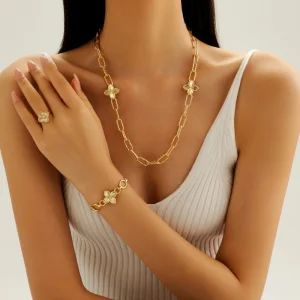
Explore high-demand catalog styles, engineered for high retail turnover, boutique branding, and multi-piece wedding set assortments.
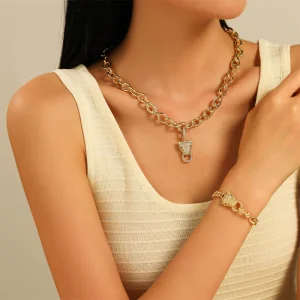
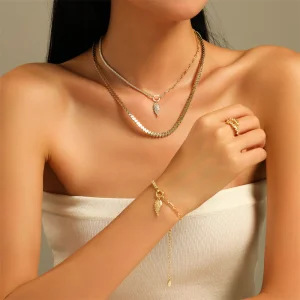
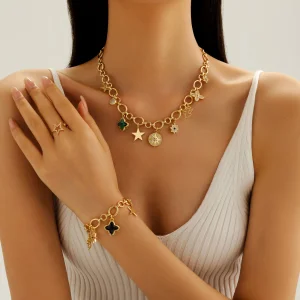
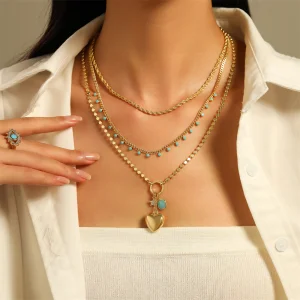
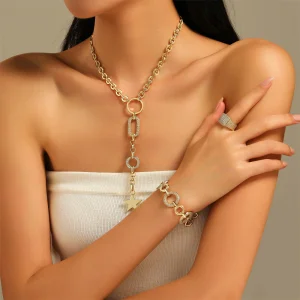
Mitigate supply chain friction and ensure flawless quality control by adhering to our battle-tested five-stage manufacturing roadmap.
Technical Spec & CAD Draft
Submit your design reference image, dimensional parameters, target base metal (steel/brass/silver), and desired plating color (14K/18K/Rose Gold). Our engineering team returns a 3D CAD blueprint within 24–48 hours.
Master Sample Approval
Rapid resin printing and master metal casting generate a physical golden sample in 7–10 days. Pre-production samples undergo XRF alloy inspection and plating thickness validation before sign-off.
Mass Casting & Polishing
Automated lost-wax casting or high-precision CNC machining is executed. Components undergo multiple stages of mechanical vibratory deburring followed by skilled manual hand-polishing to achieve a mirror finish.
Vacuum PVD Plating
Jewelry pieces are mounted on specialized plating racks inside sealed vacuum ion chambers. Multi-stage gold target sputtering applies exact micron layer thickness, followed by protective anti-tarnish electrophoretic coating.
Stone Setting & QC Gate
Prong, bezel, or pave settings are inspected under high magnification. Completed sets pass through AQL 2.5 final inspection, salt-spray corrosion checks, and clasp tension testing before box packaging.
Custom Branding & Logistics
Private label backing cards, custom embossed gift boxes, and barcoded outer polybags are integrated. Goods ship via express courier, consolidated air cargo, or DDP direct-to-warehouse transport.
Get authoritative answers to critical supply chain, chemical compliance, and customization inquiries from factory engineers.
How do Chinese jewelry factories ensure long-term tarnish resistance for wedding sets?
Tarnish protection relies on a dual-layer engineering protocol. First, Physical Vapor Deposition (PVD) vacuum ion plating applies real gold over a corrosion-resistant Titanium Nitride (TiN) substrate. Second, an invisible electrophoretic nanocoating (E-coating) is thermally baked over the outer gold layer. This seals the metal from oxygen, moisture, skin oils, and chemical sprays. Standard PVD-treated 316L stainless steel jewelry withstands over 48 hours of continuous salt-spray exposure without showing signs of oxidation.
What are the typical Minimum Order Quantities (MOQs) for OEM/ODM wedding jewelry?
For existing catalog models with standard 18K gold or rhodium plating, MOQs generally start at 50 to 100 units per design. For fully custom designs requiring new mold tooling, MOQs typically begin at 200 units per style. However, mixed color assortments (e.g., 100 gold, 50 rose gold, 50 silver) can often be aggregated under a single tooling setup to accommodate low-risk market testing.
Which regulatory certifications can suppliers provide for North American and European imports?
Leading export manufacturers supply comprehensive laboratory test reports, including:
- EU REACH Annex XVII: Verifying lead (< 0.05%), cadmium (< 0.01%), and heavy metal compliance.
- EN 1811: Certifying nickel release rates fall well below 0.5 µg/cm²/week for skin-contact items.
- California Proposition 65: Ensuring full safety compliance for North American retail distribution.
- XRF Spectrometry: Non-destructive gold plating layer thickness validation reports.
What is the standard production timeline from initial sketch to final order delivery?
The standard timeline follows three distinct phases:
- CAD & Sample Development: 7 to 10 business days for master prototype completion.
- Mass Manufacturing: 18 to 25 calendar days for casting, plating, stone setting, and final QC.
- Global Freight Transit: 3 to 5 days via express air shipping (DHL/FedEx) or 20 to 30 days via consolidated sea freight.
Can Chinese suppliers match specific gold tones like 14K Rose Gold or 24K Middle Eastern Gold?
Yes. Custom plating targets allow precise color tone matching. Factories utilize spectrophotometers to measure color coordinates (L*a*b* values) against your physical reference sample or pantone standard. Whether matching pale European 14K yellow gold, warm champagne gold, 18K Hamilton gold, or rich 24K yellow gold, approved master swatches remain archived on file to ensure absolute color consistency across reorders.
How are damaged or defective pieces handled under factory quality guarantees?
Reputable OEM manufacturers operate under standard AQL 2.5 acceptance criteria. In the rare event that defective units exceed agreed threshold allowances (e.g., stone fallout or plating blemishes), verified issues reported within 30 days of arrival are immediately credited toward your next production batch or re-manufactured and dispatched via air freight at factory expense.