 \n
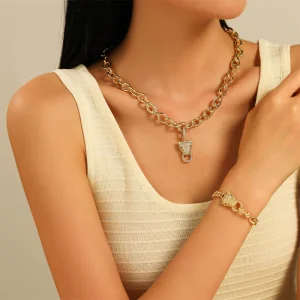
Enterprise OEM/ODM Lineup
Precision-Manufactured Bridal Party Jewelry Catalog
Engineered for global wholesalers, boutique chains, and e-commerce brands demanding REACH-compliant finishes, consistent gold tones, and high turn rates.
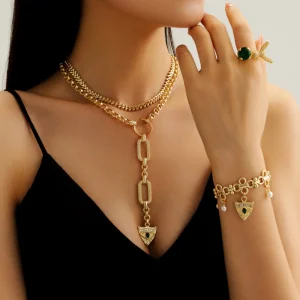
Wholesale Gold Layered Y-Drop Necklace With Vintage Shield Emerald Pendant
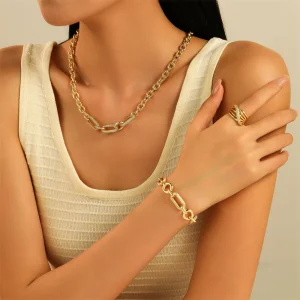
Wholesale China Hot Selling Women's Jewelry Sets: Locket Necklace & Custom Bracelet
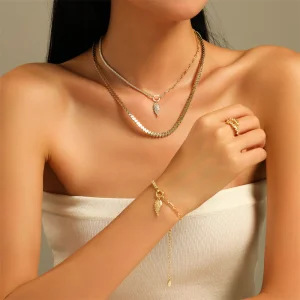
China 14K Gold Plated Jewelry Set with Leaf Charms - Factory Direct Design
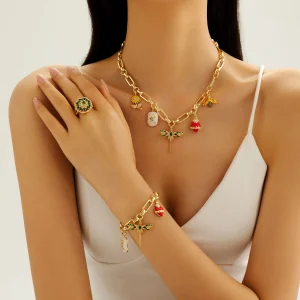
China FullyDesign Artistic Multi-Charm Jewelry Set: Vintage Necklace, Bracelet & Ring
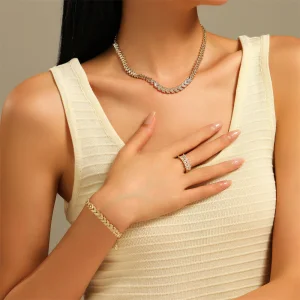
Wholesale Elegant Gold Plated Jewelry Set with Wheat Necklace, Bracelet & Ring
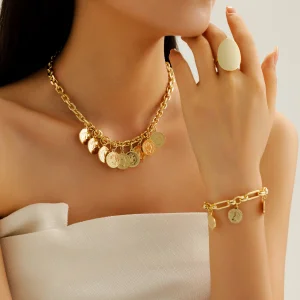
Wholesale FullyDesign Gold Coin Medallion Charm Jewelry Set
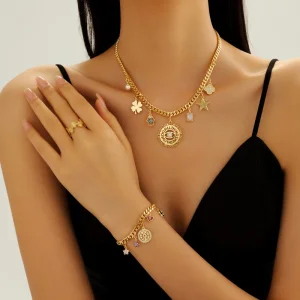
Wholesale Multi Charm Curb Chain Gold Necklace, Bohemian Statement Necklace
Market Dynamics & B2B Intelligence
The Paradigm Shift in Global Bridal Party Jewelry Sourcing
Analyzing macro-economic trends, material evolution, and supply chain strategies shaping the modern $4.8B wedding accessory landscape.
14.8%
Global B2B CAGR (2024-2030)
99.6%
XRF Plating Batch Pass Rate
< 0.05μg
EN 1811 Nickel Release Level
12 Days
Rapid OEM Tooling Lead Time
Evolving Consumer Intent: Cohesive Bridal Squad Styling
Modern bridal parties no longer seek mismatched fashion trinkets or ultra-expensive solid gold pieces that strain bridesmaid budgets. Sourcing directors face an intense demand for cohesive, color-matched jewelry sets that maintain uniform luster across diverse wearers. Key drivers include multi-tonal skin compatibility, sweat-resistant PVD (Physical Vapor Deposition) coatings, and giftable presentation boxes.
China's tier-1 jewelry manufacturing ecosystems—concentrated in Zhejiang (Yiwu) and Guangdong (Panyu, Dongguan)—have restructured their production infrastructure to deliver fine-jewelry aesthetics using eco-friendly base metals like 316L surgical stainless steel and lead-free brass.
Supply Chain Consolidation & Information Gain
Enterprise buyers are shifting away from fragmented trading agents toward direct-factory partnerships equipped with integrated CAD design, automated lost-wax casting, and real-time Spectrometer QA testing. Sourcing directly from Chinese factories eliminates intermediary markups of 30% to 50% while unlocking granular customizability.
By securing standardized alloy batches and verified plating thickness (ranging from 0.03μm flash to 2.0μm heavy gold deposition), brands insulate themselves against marketplace return spikes and regulatory recalls in strict jurisdictions such as the EU and North America.
Enterprise Intent Alignment
What Global Procurement Officers Benchmark in Factory Audits
Bridging the gap between creative design concepts and high-volume factory execution through rigorous quality engineering.
Plating Integrity & Tarnish Control
Bridal party jewelry must withstand humidity, perfume, and extended event wear without oxidizing. Top-tier Chinese manufacturers utilize advanced IP (Ion Plating) under high-vacuum environments, incorporating titanium nitride (TiN) barrier layers beneath real 14K/18K/24K gold top coats. This guarantees a tarnish-resistant lifespan up to 10x longer than conventional electroplating.
Color Consistency Across Lots
A major pain point for bridal brands is tone variance between necklaces, bracelets, and earrings ordered in separate production cycles. Leading factories implement strict Delta E (ΔE < 1.5) color-matching protocols using spectrophotometers to enforce exact gold hue uniformity across entire bridesmaid collections.
Flexible Low-MOQ Tiering
To support boutique curation and rapid micro-season testing, modern factories provide flexible minimum order quantities (50–100 pieces per style) while maintaining bulk pricing efficiency on modular components such as chains, clasps, and jump rings.
| Evaluation Vector | Traditional Trading Supplier | Modern Tech-Driven OEM Factory (Fully Design Standard) |
|---|---|---|
| Base Metal Precision | Unverified brass or zinc alloys with variable lead/cadmium trace amounts. | Spectrometer-certified 316L Surgical Steel or H65 Eco-Brass with zero lead/nickel. |
| Plating Methodology | Standard rack/barrel electroplating (0.01μm - 0.02μm), prone to peeling. | Vacuum PVD Ion Plating (0.05μm - 0.5μm) with optical sealing coating. |
| Gemstone Setting | Glued acrylic or low-grade glass rhinestones that detach under heat. | Hand-set or wax-set 5A CZ stones with 4-prong structural security. |
| Quality Control Standard | Basic visual glance; no formal sampling documentation. | AQL 2.5/4.0 standard with XRF thickness & 48-hr salt-spray corrosion reports. |
| Customization Speed | 3-4 weeks for physical 2D sample iterations. | 48-hour 3D CAD modeling + 7-day resin print prototype delivery. |
Material & Process Engineering
Advanced Engineering Solutions for Bridal Party Jewelry
Decoupling technical metallurgy, gemstone setting mechanics, and surface physics for high-reliability manufacturing.
Substrate Metallurgy Optimization
Choosing the right base material directly impacts product durability, tactile weight, and skin safety:
- 316L Medical Steel: Ultra-hypoallergenic, zero deformation risk, ideal for active daily wear.
- Lead-Free H65 Eco-Brass: Exceptional fluidity for complex vintage filigree, micro-carvings, and lightweight statement collars.
- 925 Sterling Silver: Premium tier for fine bridal boutiques, requiring specialized anti-tarnish e-coating.
PVD Ion Vacuum Deposition
Unlike obsolete liquid bath electroplating, PVD vacuum sputtering bonds metal vapor to the substrate at atomic levels. Incorporating real 14K or 18K real gold targets ensures authentic yellow or rose gold sheen while providing high scratch resistance under intense environmental exposure.
Precision Cubic Zirconia & Pearl Setting
Bridal sets demand diamond-grade brilliance without optical cloudiness. Leading suppliers utilize AAAAA cubic zirconia with heart-and-arrow facet cuts. Stones are anchored via automated micro-pave or hand-prong settings rather than glue, while imitation pearls are anchored via threaded post pins to prevent accidental dislodgement.
Manufacturing Blueprint
5-Stage OEM/ODM Customization Workflow
How China's modern jewelry suppliers transform high-level fashion moodboards into shelf-ready retail packages.
01
Tech-Pack & CAD Modeling
Engineering 3D digital renderings from buyer sketches, defining exact tolerances, chain link gauge, stone settings, and clasp mechanics within 48 hours.
02
Rapid Prototyping
High-resolution 3D resin printing and master silver mold creation allow buyers to evaluate scale, weight, and ergonomic drape before mass tooling.
03
Casting & Polishing
Automated lost-wax vacuum casting followed by 3-stage mechanical centrifugal tumbling and hand mirror-polishing to remove all micro-porosity.
04
PVD Coating & Assembly
Multi-layer ion plating followed by hand stone setting, laser logo engraving, and spring-clasp tensile strength testing.
05
QA Audit & Packaging
XRF gold thickness validation, chemical nickel release verification, custom barcode labeling, and FBA-compliant blister packaging.
Compliance & Risk Mitigation
Global Regulatory Assurance & Eco-Plating Practices
Ensuring your imported jewelry collections navigate customs seamlessly and meet strict international safety standards.
International Chemical Safety Standard Compliance
Reputable Chinese factories maintain active certifications with third-party testing agencies such as SGS, Bureau Veritas, and TÜV Rheinland. Key regulatory frameworks include:
- EU REACH Annex XVII: Strict enforcement of heavy metal restrictions (Lead < 0.05%, Cadmium < 0.01%).
- EN 1811 Nickel Release: Certified rate below 0.5 μg/cm²/week for skin-contact items, preventing contact dermatitis.
- California Proposition 65: Fully compliant with stringent total lead and phthalate limits for North American retail networks.
Sustainable ESG & Zero-Discharge Manufacturing
Environmental, Social, and Governance (ESG) standards have become mandatory criteria for international retail buyers. Modern manufacturing facilities in China feature:
- Closed-Loop Electroplating Water Recycling: Advanced filtration systems that reclaim 95%+ of industrial process water.
- Recycled Stainless Steel Alloys: Utilizing post-consumer recycled steel to reduce carbon footprints by up to 40%.
- Ethical Workplace Certification: Audited under BSCI and Sedex SMETA standards to ensure fair labor practices and safe working conditions.
Industry Horizon
Technology Roadmap: The Future of Jewelry Manufacturing
How emerging technologies will redefine agility, customization, and quality control in the next decade.
AI-Assisted Generative Design
Algorithms trained on historical fashion trends generate micro-variations of bridal motifs within minutes, enabling brands to iterate 50+ prospective SKU designs during initial planning sessions.
In-Line Automated Optical Inspection (AOI)
Computer vision cameras scan plated components on conveyor belts, instantly spotting surface micro-scratches, stone misalignment, or plating bubbles down to 5 microns.
Blockchain Traceability
Digital material passports log metal purity and plating origin onto immutable ledgers, providing downstream retail customers with verifiable proof of ethical sourcing.
B2B Procurement Knowledge Base
Frequently Asked Sourcing & Manufacturing Questions
Addressing technical specs, lead times, regulatory testing, and customization options for enterprise buyers.
What is the standard minimum order quantity (MOQ) for custom bridal jewelry sets?
Standard OEM/ODM orders typically start at 50 to 100 sets per style for existing base components. For completely bespoke cast designs requiring custom molds, MOQ is usually 200 to 300 pieces. However, buyers can mix plating colors (e.g., yellow gold, rose gold, rhodium) within a single production run to satisfy MOQ thresholds.
How does PVD vacuum plating compare to traditional electroplating for tarnish resistance?
PVD (Physical Vapor Deposition) operates in high-vacuum plasma chambers, depositing real gold particles alongside hard titanium nitride layers. This yields a far denser, micro-hard coating (0.05μm - 0.5μm) that lasts 5 to 10 times longer than standard wet electroplating and easily passes 48-hour salt-spray corrosion tests without peeling or discoloration.
Can the factory supply official compliance documentation for EU REACH and US Prop 65?
Yes. Every production batch is backed by XRF metal analysis reports. Upon request, independent lab testing via SGS, Intertek, or Bureau Veritas can be arranged to provide official certificates for REACH Annex XVII (Lead, Cadmium, Nickel Release EN 1811) and California Proposition 65 compliance prior to cargo departure.
What is the turnaround timeline from initial design sketch to delivered shipment?
CAD renderings are generated within 48 hours. 3D resin prototypes and silver master samples require 7 to 10 working days. Upon sample sign-off, mass production takes approximately 15 to 25 days depending on gemstone complexity. Express air freight delivers orders globally in 3 to 7 days.
How do suppliers maintain color consistency between different production batches?
Factories utilize spectrophotometer color matching (ΔE < 1.5 tolerance standard) and keep archived physical color masters on file for every client account. Plating voltage, chemical bath ratios, and cycle times are logged digitally to ensure identical gold hues across repeat orders placed months apart.
What private label packaging and branding options are supported in-house?
Factories offer turnkey branding solutions including custom logo laser engraving on clasps, branded velvet jewelry boxes, anti-tarnish micro-fiber pouches, custom instruction cards, and Amazon FBA-ready barcoded polybags.
High-Demand Wholesale Selections
Trending Bridal Party Accessories & Statement Sets
Explore top-performing styles optimized for fast inventory turnover and high retail profit margins.
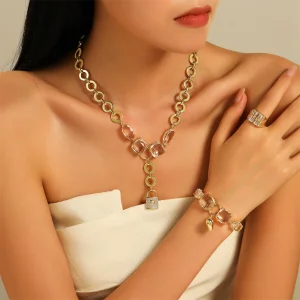
Wholesale Luxury Designer Jewelry - High-Quality Real Gold Plated Necklaces & Bracelets
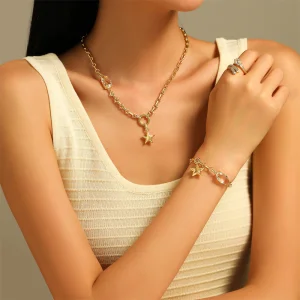
Wholesale 14k Gold Plated Star Necklace Bracelet Jewelry Set from China Suppliers
China Luxury Gold Plated Designer Jewelry - Crystal Necklaces & Bracelets
China Custom Jewelry Sets for Women: Stylish Locket Necklaces & Bracelets
Wholesale Gold Plated Wheat Necklace Jewelry Set – Elegant Premium Jewelry
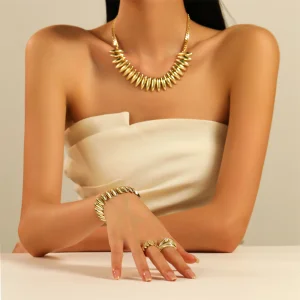
China Custom Charm Personalized Necklace & Bracelet - Unique Bullet Shape Design
China Suppliers Factory Gold Plated Ladies Necklace Set - Wheat Design