 \n
High-Demand Cosmetic Jewelry Collection (Part I)
Precision-engineered ODM/OEM jewelry items featuring PVD real-gold plating, hypoallergenic base metals, and factory-direct quality verification.
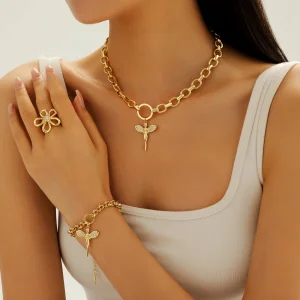
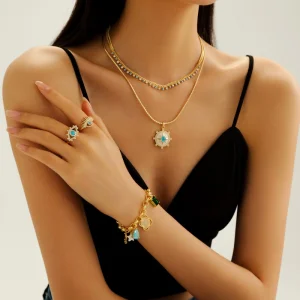
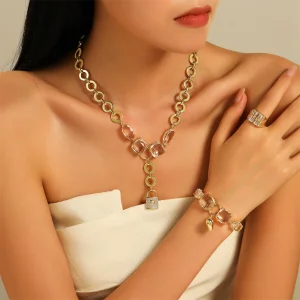
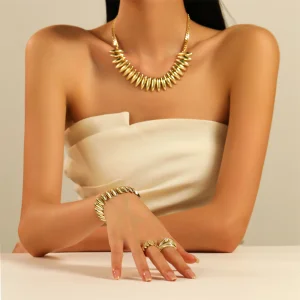
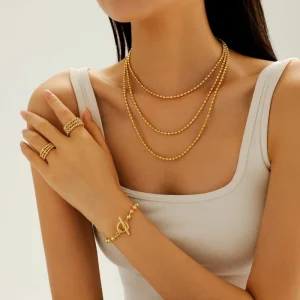
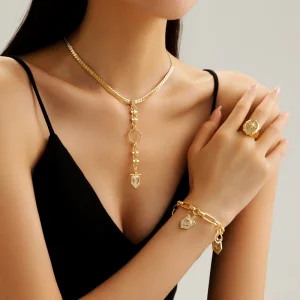
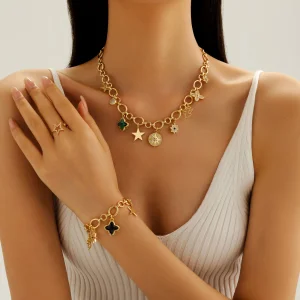
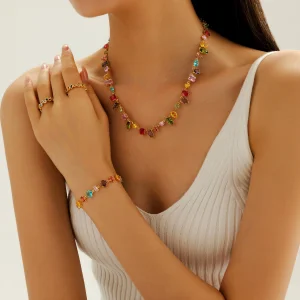
1. The Global Landscape of Cosmetic Jewelry & Chinese Sourcing Ecosystems
Understanding the technical structural shift from traditional costume accessories to high-durability, hypoallergenic cosmetic jewelry manufactured in China.
The global fashion jewelry market has experienced a fundamental transformation over the past decade. Once dominated by low-cost, disposable trinkets with ephemeral plating, modern global buyers—ranging from high-street fashion chains and DTC e-commerce pioneers to boutique jewelry brands—now demand "Cosmetic Jewelry". Cosmetic jewelry bridges the gap between fine luxury jewelry and high-turnover fashion accessories, delivering precious metal aesthetics (such as 14K/18K/24K gold finishes, 925 sterling silver, and AAA cubic zirconia) built upon durable, hypoallergenic engineering base metals.
China stands as the global epicenter of this industrial evolution. Anchored by world-class industrial clusters in Yiwu (Zhejiang Province), Guangzhou/Panyu (Guangdong Province), and Qingdao (Shandong Province), Chinese cosmetic jewelry manufacturers supply more than 75% of the world’s fashion accessories. Sourcing directly from verified Chinese suppliers provides international importers with unmatched competitive advantages: complete supply chain verticalization, rapid rapid-prototyping, and cost-efficient scaling backed by advanced automated manufacturing systems.
Yiwu Muxi Jewelry Co., Ltd. and regional partners operate within the world's largest small-commodity network. This node excels in rapid component assembly, extensive stock readiness, low Minimum Order Quantities (MOQs starting from 50–100 pcs), and unmatched turn-around speed for fast-fashion cycles.
Guangdong manufacturing centers provide advanced lost-wax precision casting, micro-pave setting with synthetic gemstones, and specialized surface electroplating engineering, perfect for luxury-grade bridge jewelry and high-ticket retail brands.
2. China Factory Supply Chain Resilience & Cost-Efficiency Advantages
How full-stack backward integration, raw material buffers, and agile cluster logistics protect global buyers from supply chain volatility.
In an era characterized by global shipping uncertainties, geopolitical shifts, and raw material price spikes, the resilience of a supplier's supply chain directly dictates a retailer's gross margin. Leading Chinese cosmetic jewelry factories like Yiwu Muxi Jewelry (Fully Design) have engineered end-to-end vertically integrated production architectures under one roof.
From initial 3D computer-aided design (CAD) rendering, 3D resin wax printing, lost-wax casting, and automated stamping, to hand polishing, PVD vacuum plating, chemical testing, and final custom barcode packaging—every phase occurs internally. Eliminating sub-contractors cuts lead times by up to 40% while preserving absolute confidentiality for private-label OEM designs.
Chinese factories maintain direct partnerships with primary refineries for 316L surgical stainless steel, eco-friendly brass (C3604 grade), and lead-free zinc alloys. Coupled with automated hedging strategies for precious metals (Gold and Silver bullion), suppliers can guarantee locked-in unit pricing for 6 to 12 months despite international market fluctuations.
Leveraging high-speed industrial SLA 3D printers, custom counter-samples can be physically produced within 48 hours of design approval. Tooling costs are amortized and reduced through modular master mold libraries, allowing brands to launch seasonal capsule collections with negligible financial risk.
| Base Material | Primary Processing Method | Tarnish Resistance | Ideal Retail Application | Target Compliance Standard |
|---|---|---|---|---|
| 316L Stainless Steel | CNC Machining / Precision Stamping | Extreme (Waterproof / Lifetime PVD) | Everyday wear, Minimalist unisex, Gym-ready jewelry | REACH Annex XVII, California Prop 65 |
| Eco-Friendly Brass | Lost-Wax Investment Casting | High (Anti-tarnish E-coating applied) | Intricate designer jewelry, Crystal pave settings | EN 1811 (Nickel-Safe), CPSC Lead Limits |
| Zinc Alloy (Lead-Free) | High-Pressure Die Casting | Moderate (Topcoat lacquered) | High-volume promotional & trend fashion items | ASTM F2923 (Children & Adult jewelry) |
| 925 Sterling Silver | Vacuum Casting / Hand Finishing | High (Rhodium / E-Coated protection) | Demi-fine retail collections & Fine gift sets | Stamping Hallmarked 925, Anti-Oxidized |
3. Technical Roadmap: Advanced Metallurgy, PVD Plating & AI Quality Control
Discover how cutting-edge surface engineering and non-destructive spectroscopic testing guarantee product longevity and brand reputation.
Physical Vapor Deposition (PVD) inside high-vacuum titanium chambers represents the pinnacle of modern cosmetic jewelry finishing. Gold targets (14K, 18K, or 24K) are vaporized into plasma and bombarded onto base metals alongside Titanium Nitride (TiN). This creates a molecular bond ranging from 0.03 μm up to 2.5 μm in thickness. PVD plated items are 10x more scratch-resistant than standard electroplating and completely waterproof, sweat-proof, and tarnish-free for years.
To eliminate plating discrepancies between sample batches and mass production, factories utilize X-ray Fluorescence (XRF) non-destructive analyzers. Quality control engineers verify the exact chemical composition of the alloy substrate and measure the plating thickness down to nanometer resolution. Every export shipment is accompanied by detailed XRF certified inspection sheets.
Integrating AI generative topology algorithms into CAD modeling allows factory engineers to optimize jewelry structural integrity while reducing unnecessary gram weight. This yields lightweight, comfortable wearability for large statement earrings and chunky paperclip chain sets without sacrificing physical durability or tactile luxury aesthetics.
4. Global Regional Blueprints & Localized Application Scenarios
Decoupling market preferences across North America, Europe, the Middle East, and Latin America to maximize retail conversion rates.
Consumer Trend: Waterproof, non-tarnish daily wear jewelry, stackable snake chains, dainty lucky clovers, and bold hip-hop Cuban link chains.
Technical Preference: High-grade 316L Stainless Steel base with 18K Real Gold PVD plating (0.05μm + clear protective coating). Must pass California Prop 65 lead/cadmium tests and comply with Amazon US jewelry policy standards.
Consumer Trend: Sustainable fashion, recycled 925 sterling silver, minimalist geometric designs, matte brushed gold, and organic irregular gemstone drop necklaces.
Technical Preference: Absolute hypoallergenic compliance. Stringent adherence to EU REACH Annex XVII (Nickel release under 0.5 μg/cm²/week according to EN 1811 testing). Eco-friendly zero-wastewater electroplating certifications required.
Consumer Trend: Rich, vibrant 21K-24K yellow gold aesthetic, ornate multi-layer statement jewelry sets, bridal costume sets, and evil eye protection talismans.
Technical Preference: Heavy gold PVD coatings (above 0.1μm thickness) featuring high-carat yellow color matching. Enhanced anti-salt and heat resistance for harsh, humid coastal climates.
Consumer Trend: High-luster AAA Cubic Zirconia pave settings, colorful rainbow gemstone jewelry, religious medallions, and affordable trendy bohemian layered chains.
Technical Preference: High-pressure lead-free zinc alloy casting or lightweight brass, optimized for aggressive target retail price-points while retaining premium surface brilliance.
5. Regulatory Compliance & Environmental Governance (E-E-A-T Framework)
How China's premier manufacturers safeguard global buyers against customs seizures, retail recalls, and marketplace takedowns.
Selling fashion jewelry in international markets requires rigorous compliance with chemical safety regulations. Leading OEM/ODM suppliers maintain permanent quality testing protocols and collaborate directly with accredited international testing agencies including SGS, Bureau Veritas (BV), and Intertek.
Strict monitoring of heavy metal content ensures Lead (Pb) content is kept below 0.05% (500 ppm), Cadmium (Cd) below 0.01% (100 ppm), and Nickel release rate strictly within the EN 1811 standard limits, protecting consumers against contact dermatitis.
Compliance documentation verifies that adult and children's jewelry products meet total lead content limits (100 ppm for accessible substrates) and comply with California Safe Drinking Water and Toxic Enforcement Act thresholds.
Modern Chinese jewelry industrial parks utilize centralized zero-wastewater discharge facilities. Electroplating effluent undergoes heavy metal recovery, closed-loop water recycling, and chemical neutralization, enabling international brands to fulfill ESG reporting criteria.
High-Demand Cosmetic Jewelry Collection (Part II)
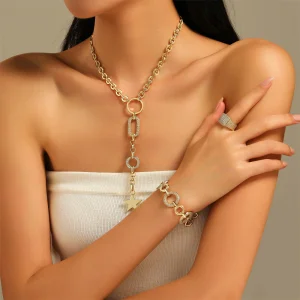
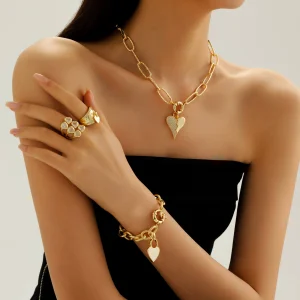
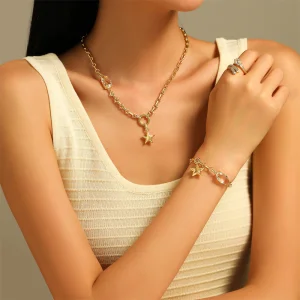
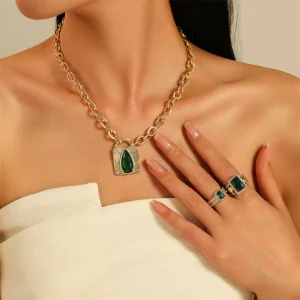
Explore our complete collection of top-selling designer jewelry sets, paperclip chains, and star-themed accessories engineered for global export.
6. Frequently Asked Questions (FAQ) for Global Jewelry Buyers
Expert technical answers covering custom MOQs, production lead times, plating anti-tarnish guarantees, and private-label packaging support.
What is the standard Minimum Order Quantity (MOQ) for OEM/ODM cosmetic jewelry?
For existing factory designs and catalog items, our standard MOQ starts at 50 to 100 pieces per style/color. For completely custom OEM designs requiring brand-new master mold tooling, the initial order threshold is typically 200 pieces. However, mixed color batches (e.g., gold, silver, rose gold) or variable sizing assortments can often share a single tooling run to minimize initial inventory risks for growing retail brands.
What is the turnaround lead time for sample development and mass production?
Rapid 3D CAD modeling and resin prototype printing are completed within 48 to 72 hours. Physical samples with plating and hand-set crystals take 7 to 10 working days (or 12-15 days if custom molds are built). Once counter-samples are approved, full mass production runs require 15 to 25 working days, depending on assembly complexity and batch size.
How do Chinese factories ensure gold plating does not tarnish or fade rapidly?
Tarnish prevention relies on advanced surface engineering. We apply a multi-layer coating system starting with a nickel-free barrier layer, followed by Physical Vapor Deposition (PVD) real gold plating (14K/18K/24K), and capped with an invisible organic E-coating (Electrophoretic lacquer) layer. This combination passes standard 24–48 hour salt-spray testing and artificial sweat testing, ensuring resistance against tarnishing for 1 to 3 years of regular wear.
Can you provide official compliance certificates for EU REACH and US Proposition 65?
Yes. Every mass production shipment can be tested through accredited third-party laboratories such as SGS, Bureau Veritas (BV), or Intertek upon request. We supply XRF material analysis certificates, EN 1811 nickel release reports, and heavy metal limit clearances for lead and cadmium to ensure smooth customs clearance in Europe and North America.
Can you match specific retail color finishes or competitor physical samples?
Absolutely. You can mail a physical reference sample or specify Pantone color metrics for enamel work. Our laboratory technicians use spectroscopic color matching to replicate exact gold tones (e.g., champagne gold, rose gold, vintage antique yellow). Once approved, master color parameters are cataloged in our system to maintain 100% color consistency across repeat re-orders.
What private label packaging and Amazon FBA preparation services are offered?
We provide full-service turn-key packaging solutions including custom debossed drawer gift boxes, velvet pouches, branded care cards, barcode hang-tags, and eco-friendly polybags. Furthermore, we support Amazon FBA logistics—offering FNSKU labeling, carton bundling, and direct shipping to global fulfillment centers via DDP (Delivered Duty Paid) freight partners.