 \n
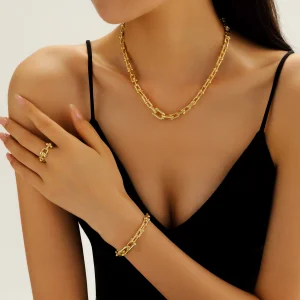
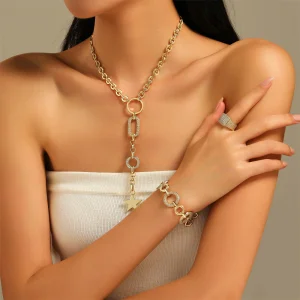
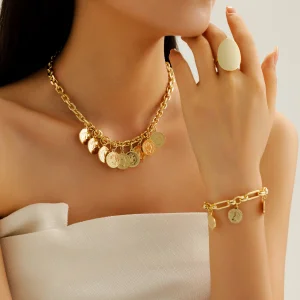
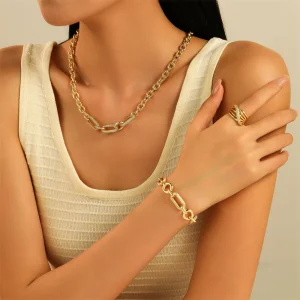
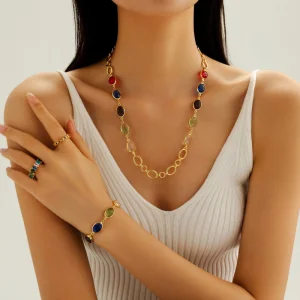
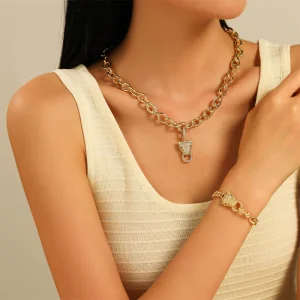

Global Industry Landscape & Macro Trends
Analyzing the Paradigm Shift from Cheap Fashion Accessories to High-Precision Premium Costume Jewelry.
The global costume jewelry market is experiencing a profound structural evolution. Historically categorized as disposable, fast-fashion accessories with low structural durability, contemporary elegant costume jewelry has crossed into the domain of "demi-fine luxury." Modern global consumers—driven by omnichannel exposure, social media curation, and shifting economic sensibilities—increasingly demand jewelry that offers the aesthetic prestige, tactile weight, and skin safety of fine jewelry at accessible wholesale price points.
This macro-shift has reshaped procurement criteria for international importers, department store buyers, and digital D2C brands. Today, sourcing high-end costume jewelry requires strict technical alignment across metallurgical composition, physical vapor deposition (PVD) plating longevity, environmental compliance, and ergonomic design integrity.
Material Innovation & Skin Safety
The global sunsetting of nickel, lead, and cadmium base alloys has established 316L surgical stainless steel, eco-friendly refined brass, and high-purity zinc alloys as standard substrates. Combined with hypoallergenic barrier coatings, modern pieces eliminate dermatological reactions completely.
PVD Hardness & Color Retention
Traditional wet electroplating is rapidly being replaced by vacuum Ion Plating (IP) and PVD techniques. Depositing real 14K, 18K gold, or real rhodium in vacuum chambers achieves target hardness levels above 1500 HV, rendering items resistant to tarnishing, sweat, and corrosion.
Sustainable & Ethical Supply Chains
International regulatory frameworks (EU REACH Regulation Annex XVII, California Proposition 65, and US CPSC standards) require complete material traceability. Top-tier Chinese manufacturers now integrate closed-loop water treatment and certified synthetic gems (AAA CZ and lab-created agates).
Information Gain Insight: Modern procurement contracts no longer merely specify "gold plated." Professional B2B buyers now mandate exact specifications in tech packs: minimum micro-inch thickness, salt-spray hour ratings (24h to 48h neutral test), and XRF spectrometry readings for zero-nickel verification.
Global B2B Procurement Demands & Intent Mining
Understanding the Operational & Commercial Requirements of International Buyers across Different Business Models.
E-Commerce & Amazon FBA Brands
D2C jewelry enterprises demand rapid turnarounds, low minimum order quantities (MOQs starting at 50–100 pcs per style), individual barcode labeling, gift-box integration, and strict volumetric weight optimization to minimize international air freight and FBA storage fees.
Boutique Chains & Retail Wholesalers
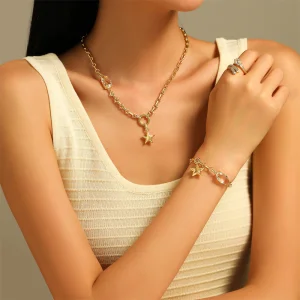
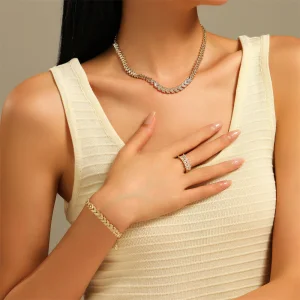
Traditional brick-and-mortar buyers require collection cohesion—matching sets (necklace, bracelet, ring, and earrings)—seasonal drop scheduling, custom header card branding, and guaranteed visual consistency across batch reorders separated by months.
Private Label Fashion Houses
High-end fashion labels demand dedicated OEM/ODM engineering support, IP protection non-disclosure agreements (NDAs), custom mold creation, precise Pantone color matching for enamel inlays, and custom laser engraving on clasps and extension tags.
Corporate & Promotional Merchandisers
Large-scale corporate importers focus heavily on cost-to-weight ratios, certified non-toxic material compliance for global trade, customs tariff classification accuracy (HS Code 7117.19 / 7117.90), and robust shipping packaging designed for bulk container transportation.
China Factory 4.0: Supply Chain Resilience & Efficiency
How Smart Manufacturing & Industrial Clusters Give Chinese Jewelry Factories an Unrivaled Global Edge.
The manufacturing ecosystem in key industrial centers—such as Yiwu, Dongguan, and Guangzhou in Zhejiang and Guangdong provinces—has undergone a complete technological transformation. China’s Factory 4.0 integration in costume jewelry production is not simply about cheap labor; it is built upon high-density industrial clustering, digitized workflow integration, and advanced metallurgical precision.
Key Infrastructure Pillars of Modern Chinese Jewelry Manufacturing
CAD & 3D Rapid Printing
Instead of manual wax carving that takes weeks, modern facilities convert buyer vector sketches or 2D photos into 3D CAD files within 24 hours. High-resolution resin 3D printers generate physical prototypes for fitting within 48–72 hours.
Automated Plating Line Precision
Computer-controlled electroplating and PVD tanks maintain exact chemical ratios, temperature profiles, and current density. This ensures that every micron layer (from 14K champagne gold to 18K yellow gold) matches exact color lab parameters across thousands of units.
Rigorous AQL Quality Assurance
Quality control operates under international ISO 2859-1 standards (AQL 2.5/4.0). Raw materials undergo preliminary XRF screening; inline checks inspect polishing smoothness; final gate checks execute tensile tests on chain links and clasp spring tensions.
This industrial synergy means raw casting, polishing, micro-pave stone setting, electroplating, surface laser engraving, quality inspection, and custom display packaging are executed within a unified 30-kilometer logistics radius. Consequently, lead times are compressed by 40% compared to competing manufacturing hubs in Southeast Asia or South America.
Localized Application Scenarios & Global Style Adaptation
How Elegant Costume Jewelry Adapts to Regional Aesthetic Preferences and Retail Use-Cases Worldwide.
North America: Chunky Chains & Minimalist Layering
Consumer Trend: High demand for bold collarbone chains, U-shaped horsebit sets, minimalist stacked bracelets, and multi-layered coin medallions.
Technical Focus: High durability 18K real gold PVD over stainless steel, optimized for daily wear, gym sweat resistance, and tarnish-free water exposure.
Europe: Vintage Romanticism & Natural Stones
Consumer Trend: Strong preference for French romantic teardrop pendants, green agate and colorful gemstone inlays, wheat link chains, and vintage Art-Deco motifs.
Technical Focus: Strict EU REACH Compliance (EN 1811 nickel release testing), delicate hand-polishing, natural stone grain retention, and subtle champagne gold plating tones.
Middle East & LATAM: High-Luster Luxury Sets
Consumer Trend: Demand for complete statement sets (heavy necklaces paired with oversized matching rings and dangling earrings), featuring rich 24K yellow gold luster and cubic zirconia brilliance.
Technical Focus: Anti-oxidation protective lacquers over heavy brass base metals, maximum light refraction settings for CZ stones, and sturdy box clasps.
Frequently Asked Questions (Buyer Procurement FAQ)
Direct Answers to Engineering, Compliance, Quality Control, and Logistics Queries from Professional Buyers.
What are the main base metals used in Chinese elegant costume jewelry, and how do I choose?
How does your factory ensure nickel-free and lead-free compliance for Western customs?
What is the difference between standard electroplating and PVD vacuum coating?
What is the realistic sampling and mass production lead time?
How do you maintain consistent gold color across different production batches?
What custom branding and private label packaging services are provided?
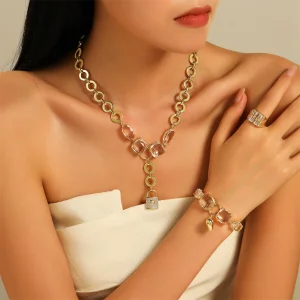
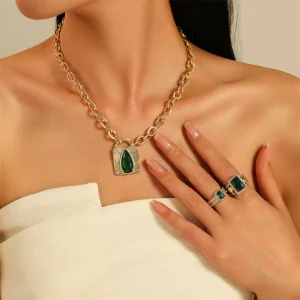

OEM/ODM Sourcing Blueprint: From Concept to Container
A Standard Operating Protocol for Establishing Efficient Manufacturing Partnerships with Chinese Factories.
Phase 1: Design Specification & Tech Pack Creation
Submit 2D vector files, physical counter-samples, or reference images. Specify target dimensions, gemstone parameters (Cubic Zirconia, synthetic agate, glass enamel), target weight, and desired base metal (stainless steel vs. brass).
Phase 2: Cost Engineering & Rapid Prototyping
Our engineering team performs a DFM (Design for Manufacturing) review, provides an itemized cost breakdown, and generates 3D CAD renders. Upon approval, 3D resin or metal prototypes are produced for physical hand evaluation.
Phase 3: Tooling, Casting & Precision Polishing
Master steel molds are created via CNC machining. Parts undergo centrifugal casting or automated stamping, followed by multi-stage robotic and hand polishing to eliminate surface micro-imperfections prior to plating.
Phase 4: Plating, QC Inspection & Global Logistics
Pieces undergo vacuum PVD or electroplating with color-matching verification. Final assembly, stone setting, AQL 2.5 quality control inspection, custom packaging, and FOB/DDP shipping execution complete the manufacturing lifecycle.