 \n
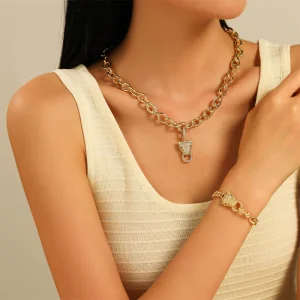
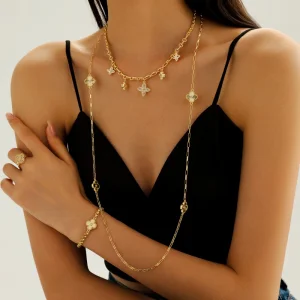
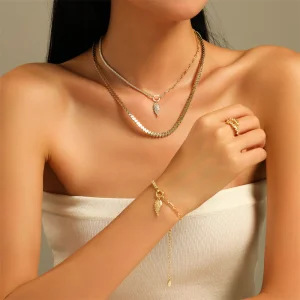
Featured Designer Collections (Batch I)
Precision-crafted fashion jewelry engineered for global private label brands and high-end retailers.
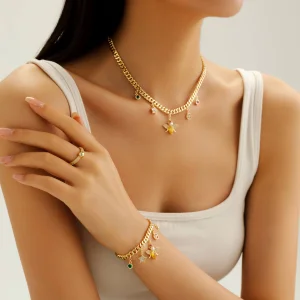
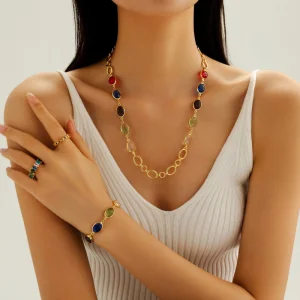
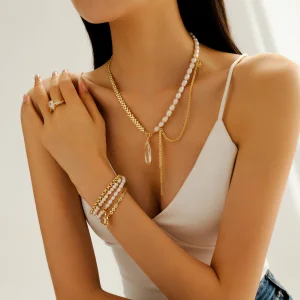
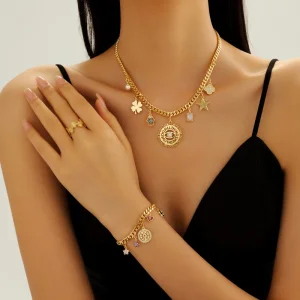
1. Executive Industry Landscape: The Shift to High-End Costume Jewelry Manufacturing
The global retail market for costume jewelry—often referenced synonymously with high-fashion, demi-fine, and premium accessory jewelry—has experienced a structural paradigm shift. According to recent trade analytics, the market valuation for luxury costume jewelry is projected to expand at a CAGR of 7.8%, transitioning from a fast-fashion commodity model toward durable, hypoallergenic, high-value visual aesthetics. Global buyers from North America, Europe, and the Middle East are increasingly looking to specialized Chinese manufacturing clusters (primarily situated in Yiwu, Guangzhou, and Qingdao) to bridge the operational gap between fast-turnaround production and heirloom-quality craftsmanship.
Historically, "costume jewelry" implied brass base metals coated with thin decorative flash plating that oxidized within weeks. Today, the competitive benchmark defined by market-leading China Expensive Costume Jewelry Suppliers & Factories demands engineering parity with fine jewelry. Modern high-end costume jewelry utilizes advanced substrate alloys, heavy multi-layer Physical Vapor Deposition (PVD) vacuum gold plating, precision micro-pavé CZ setting, and strict compliance with global heavy metal standards (REACH, Prop 65). This white paper provides an exhaustive structural blueprint for enterprise sourcing directors, wholesale brand owners, and procurement managers evaluating China's top-tier jewelry manufacturing ecosystem.
Material Evolution: Fine vs. Demi-Fine Alloys
Traditional costume jewelry relied heavily on high-lead zinc alloys or cheap copper substrates. Leading OEM/ODM suppliers in China have migrated to medical-grade 316L Stainless Steel and eco-compliant C36000 Brass Alloys. Stainless steel provides inherent tarnish resistance and superior mechanical strength, allowing complex curb chains and paperclip links to maintain dimensional stability under daily wear.
The Chinese Manufacturing Ecosystem Advantage
China operates the world's most vertically integrated jewelry manufacturing infrastructure. Within a 50-kilometer radius in Zhejiang or Guangdong, factory supply chains integrate raw metal refining, automated CNC mold carving, lost-wax vacuum casting, optical laser soldering, eco-friendly electroplating, and custom eco-packaging fulfillment, reducing lead times by up to 60% compared to Southeast Asian alternatives.
2. Metallurgy Science & Advanced Plating Technologies
What differentiates true "Expensive Costume Jewelry" from low-end mass market accessories is the technical control over microscopic surface deposition and chemical metallurgy. High-end suppliers engineer every piece to simulate the exact optical density, mass, and color saturation of solid 14K/18K/24K gold while ensuring total resistance to sweat, perfume, and environmental oxidation.
| Plating Category | Deposition Layer Thickness | Technical Process Method | Salt Spray Durability (ASTM B117) | Target Product Applications |
|---|---|---|---|---|
| Flash Gold Electroplating | 0.01 - 0.03 microns | Aqueous Chemical Dip | < 8 Hours (Low wear) | Budget promotional items, fast-fashion accessories |
| Standard Micron Gold Plating | 0.10 - 0.50 microns | Rack Electroplating + E-Coating | 24 to 48 Hours | Boutique fashion jewelry, statement drop earrings |
| Heavy PVD Vacuum Ion Coating | 1.00 - 3.00 microns | Titanium Nitride Sputtering + Real Gold Target | 72 to 120 Hours (Waterproof) | Premium waterproof jewelry, daily wear chains, luxury sets |
| Rhodium & Platinum Mirror Finish | 0.05 - 0.20 microns | Electro-Deposition on White Brass/Steel | 96+ Hours (High tarnish resistance) | Bridal jewelry, simulated diamond zirconia rings |
Substrate Alloy Purity
Leading factories mandate spectrographic testing of raw brass ingot inputs to enforce strict lead limits (<90 ppm) and cadmium content (<75 ppm). Sub-par base metals cause surface micro-pitting during casting, which compromises the uniformity of the protective gold barrier.
Electrophoretic E-Coating
After real 14K/18K gold electro-deposition, premium costume jewelry receives a microscopic nano-ceramic or polymer E-coating (Electrophoretic coating). This transparent layer acts as a mechanical shield against micro-abrasions and human sebum oxidation.
Precision Stone Setting
Rather than utilizing surface glues or epoxy adhesives which yellow over time, high-tier factories utilize hand-set Prong, Bezel, and Micro-Pavé settings. AAA+ Cubic Zirconia, synthetic emeralds, and lab-grown agates are locked structurally into the metal frame.
3. Global Regulatory Compliance & Rigorous Quality Control (E-E-A-T Framework)
For international buyers importing costume jewelry into North America, the European Union, Australia, or the GCC region, regulatory compliance represents a mission-critical risk vector. Defective shipments containing trace heavy metals or failing nickel release thresholds can result in customs seizures, severe financial fines, and brand destruction. Verified Chinese factories adhere to standardized quality assurance protocols across every batch.
European Union: REACH Annex XVII & EN 1811 Standards
Jewelry entering the European market must comply with REACH Regulations governing heavy metal exposure:
- Nickel Release (EN 1811 / EN 12472): Must test below 0.5 µg/cm²/week for general products and 0.2 µg/cm²/week for post assemblies (pierced ears).
- Lead Content: Total lead concentrations restricted to <0.05% (500 mg/kg).
- Cadmium Restrictions: Restricted to <0.01% (100 mg/kg) by weight in plastic and metallic parts.
North America: US California Prop 65 & CPSC Compliance
Shipments intended for major US department stores or Amazon FBA must adhere to stringent state and federal guidelines:
- California Proposition 65: Requires clear labeling or zero detection of cancer-causing heavy metals, enforcing strict lead limits under 90 ppm.
- ASTM F2923-20: Standard specification for consumer product safety for children's and adult fashion jewelry.
- XRF Spectrometry Verification: Every shipment is scanned via non-destructive X-Ray Fluorescence to confirm elemental alloy composition.
Factory Quality Control (QC) Inspection Flow
Leading Chinese costume jewelry factories execute a multi-tier quality gate structure aligned with ISO 9001 and AQL (Acceptable Quality Limit) 1.0/2.5 protocols:
Incoming Quality Control: Testing pure brass bars, 316L steel wire, cubic zirconia clarity, and synthetic stones prior to machining or melting.
In-Process Quality Control: Laser alignment inspections, mold flash removal checks, mirror polishing surface audits, and pre-plating ultrasonic cleaning verification.
Outgoing Quality Control: 100% visual inspection under magnification for plating pinholes, clasp spring-tension stress tests, and 48-hour sweat chamber simulations.
4. End-to-End Custom OEM/ODM Solutions & Sourcing Roadmap
Modern luxury jewelry brands rarely operate their own manufacturing plants. Instead, they leverage the agile research, development, and engineering capabilities of premier Chinese OEM/ODM factories. Whether you are scaling an existing collection or launching an exclusive private-label line, a structured manufacturing process ensures high precision and rapid time-to-market.
Step 1: Concept, Tech-Pack & 3D CAD Modeling
The manufacturing process begins with a 2D sketch, mood board, or reference sample provided by the buyer. In-house jewelry engineers translate the creative intent into an industrial 3D CAD (Computer-Aided Design) file using Matrix Gold or Rhino 3D software within 24 to 48 hours. Weight distribution, wall thickness, stone seat depths, and clasp tolerances are calculated mathematically to prevent structural weakness.
Step 2: Rapid 3D Printing & Physical Counter-Sampling
Once the CAD render is approved, high-resolution SLA 3D printers generate a physical resin master model. This resin model is used in the lost-wax casting process to produce a silver or brass counter-sample. Within 7 to 10 business days, physical counter-samples complete with customized gold plating tones (14K yellow gold, 18K champagne gold, rose gold, or white rhodium) are dispatched to the buyer via express courier for physical sign-off.
Step 3: Precision Tooling & Mass Casting
Upon sample approval, master steel molds are carved via high-speed CNC milling machines. Production lines execute high-vacuum lost-wax investment casting for brass, or automated CNC stamping and laser tube cutting for stainless steel. Automated production lines allow output capabilities ranging from 50,000 to 300,000 units per month per facility.
Step 4: Private Label Packaging & Turnkey Logistics
Tier-one Chinese suppliers deliver fully shelf-ready retail solutions. Beyond manufacturing the physical jewelry, suppliers integrate custom FSC-certified rigid presentation boxes, velvet pouch debossing, anti-tarnish storage strips, barcoding, UPC labeling, and direct fulfillment to global Amazon FBA hubs or regional distribution centers under DDP (Delivered Duty Paid) terms.
5. Regional Market Demands & Localized Application Scenarios
Consumer preferences for high-end fashion jewelry vary significantly across global geographic zones. Successful importers collaborate with Chinese factories capable of adapting alloys, plating hues, and design motifs to meet regional expectations.
North America (US & Canada)
Core Focus: Tarnish-proof, sweat-proof waterproof daily jewelry.
Preferred Specs: 316L Stainless Steel with 18K Real Gold PVD coating. Heavy demand for minimalist paperclip chains, chunky curb link bracelets, stackable rings, and personalized initial pendants. Rapid growth in DTC e-commerce brands requiring low MOQs and rapid restock cycles.
Western Europe (UK, France, Germany)
Core Focus: Vintage French romantic aesthetics & strict eco-compliance.
Preferred Specs: Eco-Brass base with 14K pale yellow gold electroplating or e-coated antique finishes. Popular styles include teardrop pendant sets, natural freshwater pearls, colorful synthetic gemstones, green agate rings, and organic leaf motifs. Strict requirement for REACH certificates and nickel-free guarantees.
Middle East (GCC Region) & LatAm
Core Focus: Bold statement luxury & rich high-karat visual color.
Preferred Specs: Heavy brass statement sets coated in rich 22K or 24K yellow gold tones. Elaborate multi-layer curb chains, large cubic zirconia pave clusters, and bridal jewelry sets. High tolerance for weight paired with multi-layer barrier coatings designed to withstand ambient humidity and heat.
6. Technological Roadmap & Sustainable Manufacturing (2025–2030)
The costume jewelry sector in China is undergoing an industrial transformation driven by artificial intelligence, automated robotics, and zero-discharge environmental sustainability imperatives.
AI-Assisted CAD Modeling & Trend Forecasting
Forward-thinking factories are integrating predictive AI algorithms that analyze global social commerce data, search volume metrics, and fashion runway imagery. These tools suggest optimized geometric configurations for jewelry molds, reducing engineering iteration cycles from weeks to hours while predicting market demand surges for specific gemstone colors or chain structures.
Closed-Loop Zero-Discharge Electroplating Facilities
In response to stringent environmental legislation, premier Chinese jewelry manufacturing zones operate centralized closed-loop wastewater recycling plants. Heavy metals and chemical solvents are captured, purified, and re-circulated with near-zero environmental discharge. Additionally, factories are rapidly adopting 100% Recycled 316L Steel and Brass to fulfill corporate scope 3 carbon reduction goals for global retail partners.
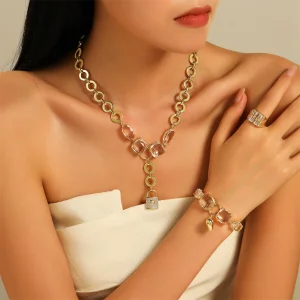
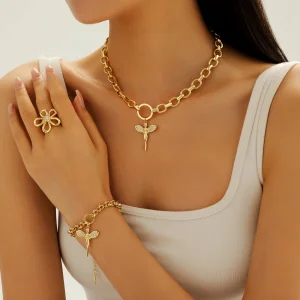
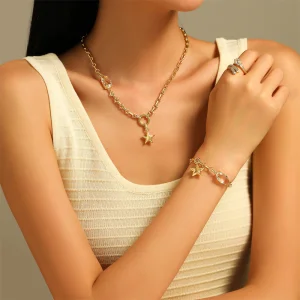
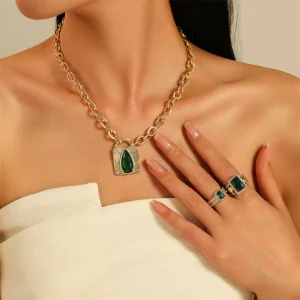
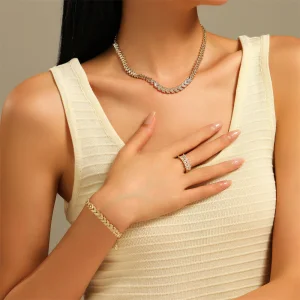
Luxury Export Collection (Batch II)
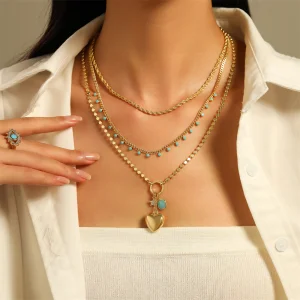
Factory-direct wholesale statement pieces featuring heavy real gold plating and gemstone accents.
7. Frequently Asked Questions (FAQ) for Enterprise Procurement
Comprehensive answers regarding technical specifications, minimum order quantities (MOQs), quality guarantees, and manufacturing logistics for international buyers.