 \n
Precision-Engineered Fine Jewelry Series
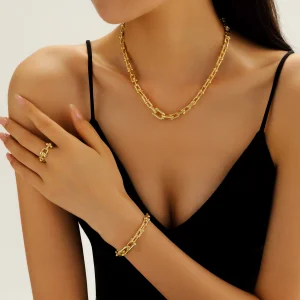
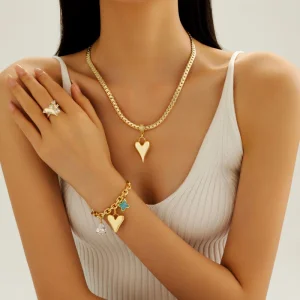
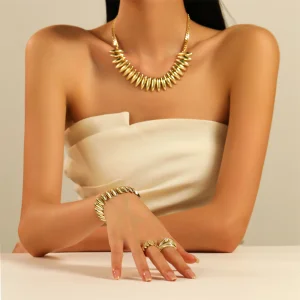
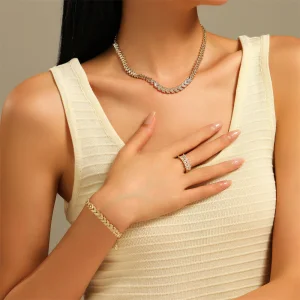
Explore our high-demand OEM/ODM catalog manufactured with REACH-certified anti-tarnish gold plating and precision stone settings.
1. Global Fine Jewelry Macro Context & The Modern Manufacturing Paradigm
Analyzing structural market shifts, supply chain centralization, and how Chinese industrial clusters drive competitive leverage for global luxury & premium retail brands.
The global fine and demi-fine jewelry market is undergoing a profound structural metamorphosis. Projected to surpass $340 Billion by 2028, the industry is witnessing an unprecedented convergence of traditional artisan goldsmithing and advanced industrial automation. Historically, European luxury houses dominated high-end fine jewelry through artisanal heritage, while regional manufacturing hubs provided mass-market fashion accessories. Today, modern China fine jewelry factories have bridged this structural divide by establishing a sophisticated, vertically integrated industrial framework capable of high-precision casting, physical vapor deposition (PVD) vacuum coating, and automated micro-pave setting.
International procurement directors, D2C brand founders, and institutional retail buyers face intense headwinds: inflationary raw material costs, tightening REACH and California Proposition 65 chemical compliance standards, and compressed product lifecycles driven by social-commerce demand spikes. Sourcing directly from modern Chinese jewelry manufacturers is no longer merely a cost-arbitrage strategy—it is a core strategic requirement for operational agility, metallurgical precision, and scalable product line expansion.
Supply Chain Density
Concentration of raw precious metals, lab-grown gemstones, precision CNC tooling, and specialized plating facilities within a 50km industrial radius reduces lead times by up to 60%.
Technological Convergence
Integration of matrix CAD, high-resolution 3D wax printers, and robotic laser welding ensures dimensional tolerances within ±0.02mm across high-volume production runs.
Compliance Rigor
Rigorous material traceability protocols ensure complete compliance with EU EN 1811 (nickel release), REACH Annex XVII, and ASTM F2923 children's jewelry safety standards.
2. China’s Fine Jewelry Industrial Ecosystem: Regional Clusters & Capabilities
Understanding the geographical specialization of Chinese manufacturing hubs enables procurement executives to optimize vendor allocation.
China’s jewelry manufacturing ecosystem is not monolithic; it is a highly specialized network of regional industrial clusters, each possessing distinct competitive strengths. Sourcing managers must align their product architecture with the specific technical capabilities of these manufacturing hubs to maximize quality and cost-efficiency.
Guangdong Cluster: Panyu & Shenzhen (High Fine Jewelry)
The Panyu (Guangzhou) and Shuibei (Shenzhen) industrial corridors represent the apex of precision jewelry engineering in Asia. Specializing in solid karat gold (9K, 14K, 18K), 925 sterling silver, lab-grown diamond setting, and high-complexity gemological mountings, this cluster handles approximately 70% of the world’s high-end OEM craft finishing.
- Core Competency: Master hand-setting, micro-pave cubic zirconia & real gemstones.
- Target Products: Fine gold chains, diamond bridal rings, luxury pendant necklaces.
- Tooling Infrastructure: CNC high-speed carving, lost-wax investment casting.
Zhejiang Cluster: Yiwu & Dongguan (Agile Demi-Fine & Fashion)
Yiwu, alongside Dongguan’s precision stainless steel hubs, leads global production in 316L surgical steel, brass-based demi-fine jewelry, and rapid-turnaround fashion accessories. This cluster excels at massive production scaling, low MOQs, and integrated private-label export packaging.
- Core Competency: PVD ion vacuum gold plating, hypoallergenic stainless steel chains.
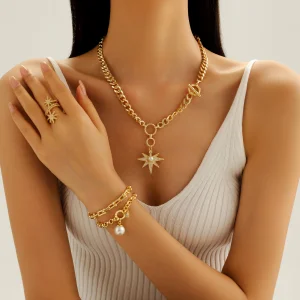
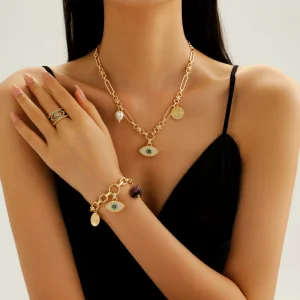
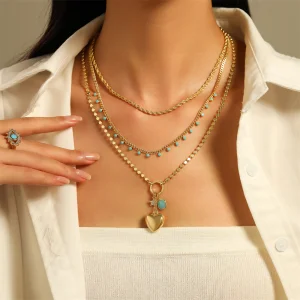
- Target Products: Layered chokers, paperclip chains, evil eye charms, statement sets.
- Supply Advantage: Rapid sample execution (3-5 days), instant packaging integration.
Comparative Technical Manufacturing Matrix
The following quantitative benchmark illustrates why Chinese production facilities lead global sourcing efficiency compared to competing regions:
| Manufacturing Region | Prototyping Lead Time | Plating Durability Tech | Average Unit Cost Variance | Max Defect Rate (AQL 2.5) | Compliance Documentation |
|---|---|---|---|---|---|
| China (Guangdong / Yiwu) | 5 - 7 Days | Advanced PVD Gold / E-Coating | Benchmark Base (100%) | < 0.5% | Instant REACH / Prop 65 / XRF |
| Southeast Asia (Thailand/Vietnam) | 14 - 21 Days | Standard Electroplating | +15% to +25% | 1.8% - 2.5% | Partial / Third-Party Dependent |
| Southern Europe (Italy/Spain) | 21 - 30 Days | Traditional Flash Gold Coating | +180% to +350% | < 0.3% | Full EU Certification |
| South Asia (India) | 12 - 18 Days | Manual Wet Dip Plating | -5% to +10% | 3.0% - 4.5% | Variable Quality Assurance |
3. Engineering Superiority: Advanced Metallurgy & PVD Vacuum Gold Plating
Deep dive into the material science, chemical anti-tarnish treatments, and XRF analysis techniques that give Chinese fine jewelry factories a decisive quality advantage.
The single greatest point of failure in retail fine and demi-fine jewelry is premature tarnishing, plating oxidation, and skin-reactivity causing customer returns. Leading China fine jewelry suppliers have eliminated these issues through multi-layer PVD (Physical Vapor Deposition) technology executed inside ultra-clean vacuum chambers.
Traditional electroplating relies on chemical wet baths that deposit microscopic layers of gold via electric current, often resulting in porosity and high vulnerability to sweat corrosion. In contrast, PVD Titanium Nitride (TiN) vacuum deposition bombards 316L steel or premium brass with vaporized 14K/18K real gold ions in a high-vacuum state. This forms an atomic-level bond resulting in a hardness rating of 1500–2500 HV, making the jewelry 100% waterproof, sweat-proof, and tarnish-resistant for 2 to 5 years of daily wear.
Base Metal Metallurgical Standard
Utilizing low-cadmium (<100ppm) brass alloys and medical-grade 316L Surgical Stainless Steel (UNS S31603). High molybdenum content ensures superior resistance to pitting and crevice corrosion in saline or acidic environments.
Electrolytic E-Coating Barriers
Application of an invisible nano-ceramic organic clear lacquer (E-coating) baked at 120°C post-plating. This acts as an impermeable seal, preventing atmospheric sulfide reactions and enhancing gloss longevity.
XRF Plating Verification
Every manufacturing batch undergoes non-destructive X-Ray Fluorescence (XRF) Spectrometry analysis to certify plating thickness uniformity (0.03μm to 2.5μm gold thickness options) prior to export packaging.
4. Global Market Alignment & Localized Retail Trends
How Chinese OEM manufacturers customize design parameters to match specific regional consumer behaviors across Western markets.
Global retail buyers require products engineered specifically for localized market dynamics. Leading Chinese factories maintain internal design research divisions that reverse-engineer regional fashion forecasts, adapting chain gauge thicknesses, pendant scales, and clasp ergonomics accordingly.
North American Market (USA & Canada)
The North American demographic leans heavily toward bold, statement-driven jewelry featuring warm 14K gold tones, chunky Cuban curb chains, layered paperclip necklaces, and talismanic motifs (Evil Eye, North Star, Horoscope charms).
European Market (EU & UK)
European consumers prioritize architectural minimalism, eco-responsible sourcing, and strict skin safety. Demand centers on 18K champagne gold tones, delicate horsebit geometric links, organic pearl accents, and 100% nickel-free verification.
For Amazon FBA sellers, Shopify D2C brands, and TikTok Shop fashion outlets, inventory velocity is paramount. Leading China fine jewelry factories now offer flexible OEM programs with minimum order quantities starting as low as 50–100 units per style, coupled with custom logo laser engraving, barcoded gift boxes, and anti-oxidant velvet pouch packaging ready for direct fulfillment centers.
5. Enterprise Procurement Blueprint: Mitigating Operational Sourcing Risks
Step-by-step risk management protocols for enterprise buyers conducting supplier audits and contract manufacturing in China.
Selecting the right manufacturing partner requires robust due diligence beyond online catalog scanning. Establishing an enterprise-grade OEM relationship requires rigorous verification across three main operational pillars:
1. Intellectual Property & Mold Rights
Ensure formal Non-Disclosure Agreements (NDAs) are executed under Chinese jurisdiction (NNN Agreements). Demand exclusive mold ownership clauses for proprietary CAD designs with zero cross-selling guarantees.
2. Quality Assurance Gates (AQL 2.5)
Implement standardized acceptable quality limit (AQL 2.5) criteria: Level II inspection across critical defects (0%), major defects (<1.5%), and minor defects (<4.0%). Require pre-shipment salt-spray testing video verification.
3. Agile Production Lead Times
Contractual benchmarks: 3D CAD sample sign-off within 48 hours, physical sample delivery in 7–10 business days, mass production completion within 15–25 calendar days post sample approval.
6. Industry 4.0: AI-Driven Design & Sustainable Metallurgy
How next-generation technological integration is defining the future of fine jewelry manufacturing in China.
The future of jewelry manufacturing lies at the intersection of generative artificial intelligence and sustainable material engineering. Forward-thinking Chinese factories are deploying AI generative tools to convert client text prompts and mood boards directly into 3D printable STL files within hours.
Generative AI in Rapid Prototyping
By leveraging machine-learning design algorithms trained on thousands of years of historical jewelry motifs, engineering teams can optimize structural wall thickness, stone seat allocations, and center-of-mass balance automatically before physical casting occurs.
Closed-Loop Recycled Metallurgy
Sustainability is now a core prerequisite for international retail placement. Modern Chinese factories utilize 100% recycled 316L steel and refined recycled gold sources, drastically reducing the carbon footprint per manufactured piece while providing full ESG traceability.
High-Demand Wholesale Jewelry Collections
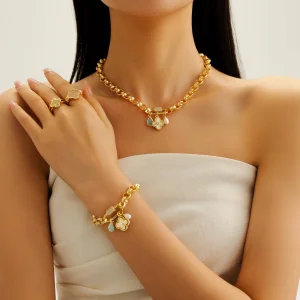
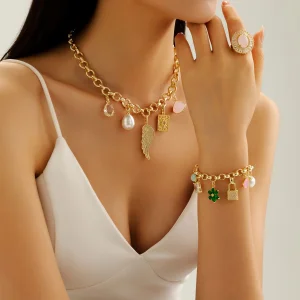
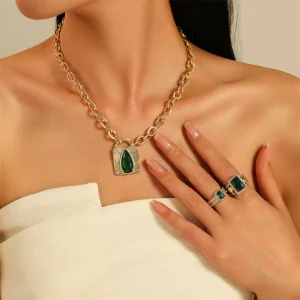
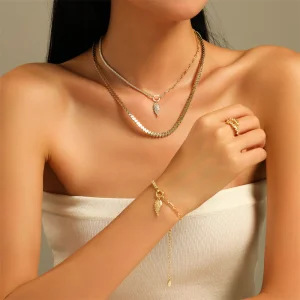
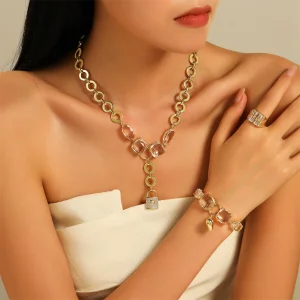
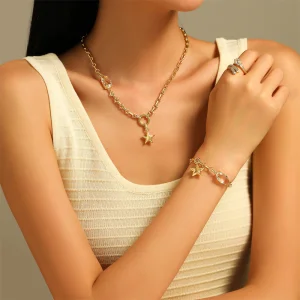
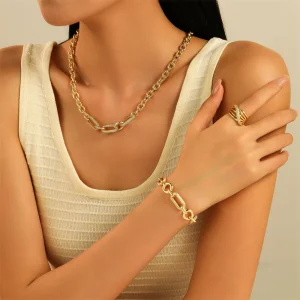
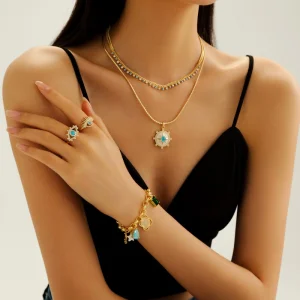
Discover top-performing custom bracelets, locket necklaces, and multi-charm jewelry sets manufactured for global distribution.
7. Frequently Asked Questions (FAQ) for Global Sourcing Managers
Direct answers to the most critical logistical, technical, and quality compliance questions regarding Chinese fine jewelry manufacturing.
What are the typical Minimum Order Quantities (MOQ) for custom fine jewelry OEM orders?
Our standard MOQ for catalog designs starts at 50 to 100 pieces per design. For fully customized OEM projects requiring exclusive CAD tooling and custom metal molds, the baseline MOQ is 200 pieces. However, mixed-color plating assortments (e.g., 18K Yellow Gold, Rose Gold, Rhodium/Silver) or varied ring sizes can share a single tooling run to minimize upfront capital commitment.
What chemical compliance certificates and metal test reports do Chinese factories provide?
We provide full analytical test documentation for key global markets, including EU REACH Annex XVII (Lead, Cadmium, Nickel release under EN 1811), California Proposition 65 compliance, ASTM F2923 (Children's Jewelry Safety), and non-destructive XRF plating thickness verification reports. On-demand testing through third-party laboratories such as SGS, Bureau Veritas (BV), or Intertek can be coordinated prior to bulk dispatch.
How long does the rapid 3D prototyping and custom sampling process take?
Once a tech pack or 2D concept sketch is approved, our CAD engineering team generates photorealistic 3D renders within 24 to 48 hours. Physical resin 3D printing and master silver/brass prototype casting take 7 to 10 business days. Custom mold creation for high-volume die-struck or stamped pieces takes 12 to 15 business days. Sample costs are credited directly toward the final bulk order invoice.
Can you match existing luxury retail gold tones or competitor sample finishes?
Yes. By submitting a physical benchmark sample or target Pantone color specification, our metallurgical lab conducts spectrophotometer color-matching and XRF spectrum analysis. We establish a customized plating bath formula and retain an approved master reference standard in our quality control vault, ensuring zero color drift across repeat production batches executed years apart.
What is the difference between PVD Vacuum Gold Coating and Standard Electroplating?
Standard electroplating coats metal through a wet chemical liquid bath, producing a gold layer that typically wears off in 3 to 6 months. PVD (Physical Vapor Deposition) operates inside a high-vacuum chamber, vaporizing 14K or 18K gold and bonding it atomically to 316L stainless steel or brass base metals. PVD coatings are 10 times thicker, non-porous, waterproof, hypoallergenic, and guaranteed not to tarnish or fade for 2 to 5 years under normal daily wear.
What export packaging and private label fulfillment services are available?
We offer turnkey private-label packaging solutions, including custom rigid gift boxes, debossed velvet drawstring pouches, care cards, anti-tarnish tissue wrapping, custom logo laser-engraved tags, and Amazon FBA-ready SKU barcode labeling. All shipments are packed into heavy-duty corrugated export master cartons with moisture-absorbing silica packs.
Initiate Your Custom Jewelry OEM/ODM Production Today
Connect directly with our engineering and procurement team. Receive a line-by-line cost estimation, material feasibility breakdown, and sample catalog within 24 hours.
Request Technical Catalog & Price Matrix