 \n
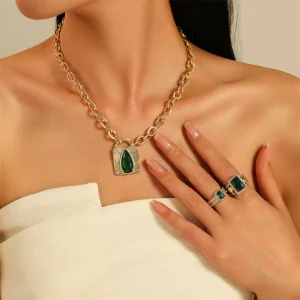
Featured High Fashion Jewelry Collections
Explore our industrial-grade, precision-plated necklace collections engineered for global brands, wholesale importers, and high-end fashion chains.
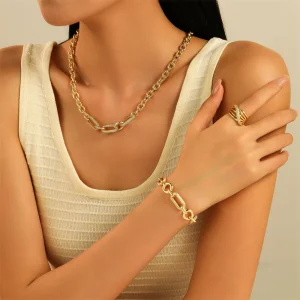
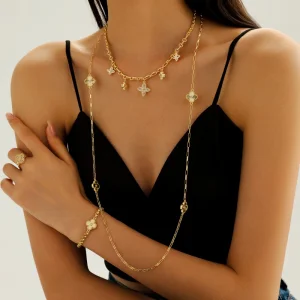
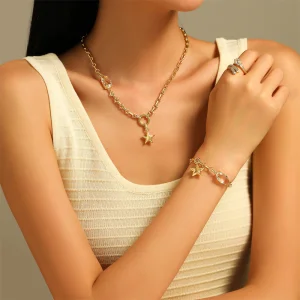
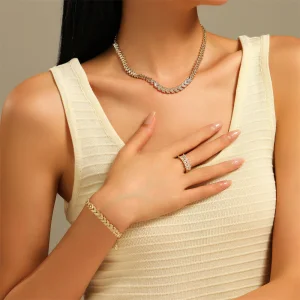
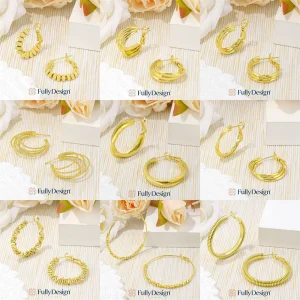
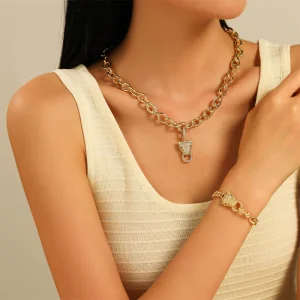
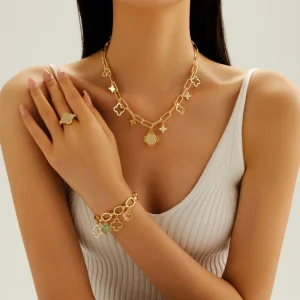
Macro-Industry Landscape: The Structural Advantages of China's High Fashion Necklace Supply Chain
The global high-fashion jewelry market has undergone a paradigm shift. High fashion necklaces—once defined strictly by precious metals and heritage luxury houses—are now driven by dynamic consumer trends, hyper-accelerated product cycles, and demanding requirements for material longevity. Within this global ecosystem, China has transitioned from a high-volume manufacturing center to an advanced engineering hub for fashion jewelry. China's supplier network produces over 70% of the world's fashion jewelry, sustained by a dense matrix of raw material refiners, tool-and-die specialists, electroplating plants, and automated assembly infrastructure.
Sourcing high fashion necklaces from China direct manufacturers provides global brand directors, department store procurement executives, and direct-to-consumer (D2C) founders with unprecedented operational leverage. The competitive edge is no longer limited to unit cost savings; it encompasses rapid 3D CAD prototyping, industrial-grade Physical Vapor Deposition (PVD) gold vacuum coating, strict adherence to international chemical compliance regulations, and unmatched scalability.
Industrial Cluster Integration
China's fashion jewelry ecosystem is concentrated in specialized manufacturing clusters. Yiwu excels in rapid design turnaround, fashion trend monetization, and unmatched component availability. Panyu (Guangdong) specializes in micro-pave stone setting, fine jewelry transition skills, and high-end brass casting. Qingdao dominates high-volume stainless steel and Korean-style minimal aesthetics. This geographic specialization ensures that every design nuance finds its optimal production line.
Advanced Technical Infrastructure
Modern Chinese jewelry factories leverage automated multi-axis CNC machining, high-resolution 3D wax printers (SLA/DLP), laser welding systems, and automated optical inspection (AOI). This technological transition removes manual variability, ensuring that a 10,000-unit batch of paperclip chain necklaces maintains dimensional tolerances within ±0.05mm across all links.
Total Cost of Ownership (TCO) Efficiency
By streamlining vertical production—from raw alloy melting to final branded packaging within a single industrial area—Chinese suppliers significantly minimize friction costs. Global buyers benefit from lower minimum order quantities (MOQs), tiered volume pricing, reduced logistical lead times, and predictable landed cost modeling.
Metallurgy, Surface Finishing, and Engineering Standards
The structural reliability and visual richness of a high fashion necklace depend on precise metallurgical formulations and sophisticated surface treatments. High fashion necklaces must balance aesthetic brilliance—mimicking solid 14K or 18K gold—with wear resistance, tarnish prevention, and hypoallergenic properties required by international consumer safety laws.
Technical Insight: Traditional electroplating relies on wet chemical baths that often produce inconsistent layer thickness and micro-porosity. Modern Chinese high-fashion factories utilize Physical Vapor Deposition (PVD) in ultra-high vacuum chambers. This process deposits Titanium Nitride (TiN) and real gold layers, achieving surface hardness ratings above 1500 HV (Vickers) and corrosion resistance that survives 48 to 72 hours of standardized Salt Spray Testing (ASTM B117).
| Substrate Material | Composition & Grade | Plating / Coating Tech | Target Durability | Compliance Standards |
|---|---|---|---|---|
| 316L Surgical Stainless Steel | Fe-Cr-Ni-Mo (Low Carbon) | PVD Vacuum Plating (0.03–0.1µm 18K Gold + TiN Layer) | 2–5 Years Water & Tarnish Proof | EN 1811 (Nickel Release), REACH Annex XVII |
| Eco-Friendly Brass | Cu-Zn Alloy (Lead < 90 ppm) | Rack Electroplating + E-Coating (0.5–2.0µm Real Gold) | 1–2 Years Daily Wear Protection | CA Prop 65, CPSIA Lead Content |
| Recycled Zinc Alloy | Zamak 3 / Zamak 5 Die-Casting | Barrel Plating + Electrophoretic Lacquer | Seasonal / Fast-Fashion Application | ASTM F2923-14 Children's Jewelry Safety |
| 925 Sterling Silver | 92.5% Ag, 7.5% Alloyed Cu | Micron Gold Vermeil (2.5µm 18K Gold) | Fine Jewelry Grade / Lifetime Care | Hallmark Certification, ISO 9202 |
Precision Gemstone Integration & Setting Techniques
A major differentiator of elite Chinese necklace suppliers is their mastery of stone-setting technology. High-fashion statement pieces, locket necklaces, and charm chains frequently incorporate cubic zirconia (CZ), synthetic agate, natural mother-of-pearl, and lab-created crystals. Wax-setting (Cast-in-place) and Micro-Pave hand setting are deployed based on design complexity:
- Micro-Pave Setting: Using high-magnification stereomicroscopes, artisans secure 1.0mm to 1.5mm AAA+ Cubic Zirconia stones beneath micro-prongs. This guarantees maximum refraction and stone retention compared to glued imitations.
- Bezel & Prong Engineering: Custom CAD design ensures prong thickness offsets metal shrinkage during cooling, preventing stone looseness during international transit and retail handling.
- Natural Stone Inlay: Shell, green agate, and onyx are CNC-milled to sub-millimeter tolerances, securing seamless fit within metallic housings without visible adhesive borders.
Macro Solutions for Global Enterprise Procurement
Procurement strategies vary across retail channels. Top-tier China fashion necklace suppliers tailor their manufacturing operations to match the specific risk profiles, speed-to-market metrics, and packaging mandates of distinct buyer channels.
D2C E-Commerce Brands
Need: Low initial MOQs, rapid trend iteration, anti-tarnish guarantees, and unboxing-ready custom packaging.
Factory Solution: Modular stock-chain sourcing with custom logo laser engraving. Production runs starting at 50–100 pieces per style with 7-day sample turnaround, supported by custom velvet boxes and anti-oxidation polybags.
Department Stores & High-Street Chains
Need: Massive volume scalability, strict EDI integration, standardized barcode ticketing, and AQL 1.5 final inspections.
Factory Solution: High-capacity automated casting and plating lines capable of delivering 500,000+ units monthly. Full compliance with social accountability standards (BSCI, SMETA, Sedex) and automated carton packing.
Amazon FBA & Marketplace Sellers
Need: Drop-test certified packaging, FSKU labeling, strict defect elimination to protect seller ratings, and rapid restock.
Factory Solution: End-to-end prep services including barcode labeling, polybag suffocation warning compliance, master carton drop testing (ISTAA standard), and direct freight forwarding to global FBA hubs.
Quality Assurance, Testing Protocols, and International Compliance
Entering tier-one retail markets in North America, the European Union, and the United Kingdom requires strict compliance with heavy metal regulations and chemical safety standards. Reliable Chinese necklace manufacturers maintain in-house testing laboratories equipped with X-Ray Fluorescence (XRF) analyzers and atomic absorption spectrometers to pre-screen raw materials before mass casting.
EU REACH Regulation
Strict limitation of Nickel release (EN 1811: under 0.5 µg/cm²/week for items in prolonged skin contact), Lead content (under 0.05%), and Cadmium limits (under 0.01% weight ratio) enforced via third-party SGS/TÜV certification.
California Proposition 65
Rigorous chemical screening ensuring brass, soldering alloys, and electroplating baths pass stringent limits for Lead, Cadmium, and Phthalates, mitigating legal exposure for North American retailers.
AQL Inspection Framework
Pre-shipment inspections executed according to ISO 2859-1 (ANSI/ASQ Z1.4) standards. Every batch undergoes visual inspection under 100-lux lighting, clasp tension force testing, and artificial sweat resistance tests.
Frequently Asked Questions: Executive Sourcing Guide
Answers to critical questions asked by procurement officers, supply chain managers, and brand developers when sourcing high-fashion necklaces from Chinese factories.
How do Chinese suppliers ensure gold-plated necklaces do not tarnish during storage or transit?
What is the difference between OEM and ODM services in fashion necklace manufacturing?
ODM (Original Design Manufacturer): You select from the factory’s pre-engineered catalog of white-label necklace designs. The factory customizes finishes, stone selections, chain lengths, and applies your custom brand logo.
What are the standard Minimum Order Quantities (MOQs) for custom necklace production?
• 316L Stainless Steel (PVD): Typically 50–100 pieces per design due to automated CNC and laser-cutting capabilities.
• Brass (Custom Casting): 100–300 pieces per design to justify master mould creation and manual polishing setups.
• In-Stock / White Label ODM Styles: 10–20 pieces per design for rapid market testing.
How is structural integrity and clasp durability tested prior to shipment?
What are the typical lead times for sample prototyping and bulk production?
• Physical Sample (3D Print & Prototype): 7 to 10 calendar days.
• Bulk Production: 15 to 25 calendar days post sample approval, depending on order complexity and surface plating requirements.
Can factories match specific gold color standards (e.g., Hamilton Gold, 14K Light Yellow, Rose Gold)?
Extended High Fashion Product Portfolio
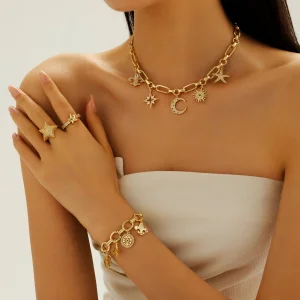
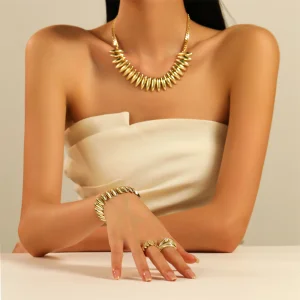
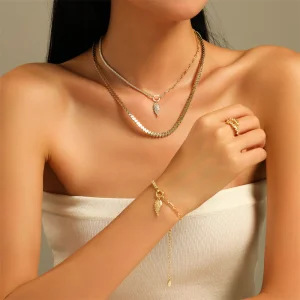
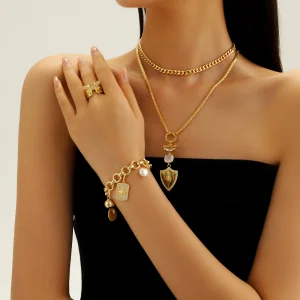
Explore additional statement chains, charm necklaces, and complete fashion jewelry sets from our manufacturing facilities.
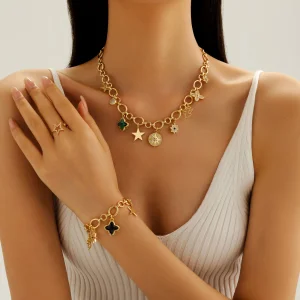
Partner with China's Premier High Fashion Necklace Manufacturer
Accelerate your product development cycle, reduce defect overheads, and access certified PVD plating standards. Contact our OEM/ODM engineering team today for a comprehensive quote and material sample kit.