 \n
Featured OEM/ODM Product Catalog (Part I)
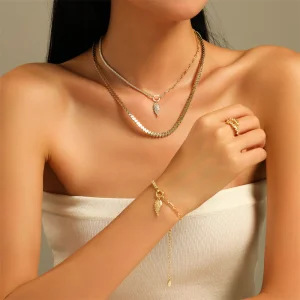
Explore our factory-direct collections of precision-crafted jewelry sets, stackable necklaces, and premium accessories produced under strict ISO9001 and REACH quality benchmarks.



1. Technical Foundations of Modern Jewelry Care Textiles
Understanding the physics of split microfiber matrices, anti-tarnish chemical passivation, and mechanical micro-abrasion for precious metals.
Split Microfiber Matrix
Unlike conventional woven cotton with coarse 12–15 micron filaments, advanced jewelry polishing cloth uses an 80/20 Polyester-Polyamide split filament structure. The conjugated wedge-shaped cross-sections measure under 0.2 denier (1/100th the diameter of a human hair), generating capillary forces that trap micro-particulates, skin oils, and atmospheric residues without scratching high-polish PVD gold or sterling silver surfaces.
Anti-Tarnish Impregnation
Premium silver polishing cloths undergo deep chemical bath impregnation with proprietary organic tarnish inhibitors (BTA & Azole complexes). When rubbed against tarnish-susceptible alloys (such as 925 sterling silver containing 7.5% copper), the cloth neutralizes silver sulfide ($Ag_2S$) deposits and leaves a microscopic hydrophobic barrier film that resists oxidation caused by atmospheric sulfur compounds.
Zero-Scratch Micro-Abrasives
To eliminate surface hairline scratches without eroding fine gold plating, high-end jewelry cleaning cloths incorporate sub-micron Aluminum Oxide ($Al_2O_3$) and Cerium Oxide polishing agents. Thermally fused into suede velvet micro-fleeces, these particles break down under friction pressure to yield a mirror-grade optical finish across brass, stainless steel, and solid gold bases.
2. Engineering Benchmarks: Fabric Weight & Performance
Comparing fabric structures, finishing edges, and chemical impregnation technologies to assist B2B procurement managers in selecting exact specification grades.
| Performance Parameter | Standard Cotton Flannel Cloth | Uncoated Microfiber Suede | Impregnated Anti-Tarnish Velvet (Flagship Grade) |
|---|---|---|---|
| Filament Structure | Natural Cotton Fiber (12–15 μm) | 80/20 Polyester/Polyamide (0.3 μm) | Conjugated Split Micro-Velvet (0.15 μm) |
| Fabric Density (GSM) | 140 – 180 GSM | 180 – 240 GSM | 280 – 350 GSM Heavyweight |
| Tarnish Neutralization | Passive (Surface Dusting Only) | Physical Lipophilic Oil Removal | Active Chemical Reduction ($Ag_2S \rightarrow Ag$) + Protective Layer |
| Edge Processing Tech | Standard Overlock Stitch | Cold Cut / Zig-Zag Shear | Ultrasonic Laser Sealed / Micro-Scalloped Edge |
| Gemstone Safety | Moderate (Prone to Lint Catching) | High (Lint-Free) | Absolute Zero-Scratch (Pearls, Emeralds, Opal Safe) |
| Reusability & Washability | Washable (100+ Cycles) | Washable (50+ Cycles) | Dry-Rub Only (Washing removes active anti-tarnish agent) |
Note for Procurement Officers: Impregnated anti-tarnish cloths should be kept dry. For dual-action care kits, leading global jewelry brands supply a two-cloth system: an inner chemically treated cloth for tarnish removal, and an outer un-impregnated microfiber suede cloth for final surface buffing.
3. Strategic Manufacturing Ecosystem: China Supply Chain Advantages
Why leading international jewelry conglomerates and high-growth DTC brands leverage Yiwu & Guangdong textile manufacturing hubs.
Vertical Textile Integration
China's industrial clusters in Zhejiang and Guangdong integrate raw polymer synthesis, micro-warp knitting, chemical dip-dyeing, continuous calendar pressing, and automated die-cutting within tight geographic radiuses. This cluster density reduces raw material transit lead times to under 48 hours, yielding a 30% to 45% unit cost advantage over European textile converters.
Ultrasonic Die-Cutting Tech
Traditional mechanical shearing leaves loose fibers that migrate into watch movements or catch on prong-set stones. Modern Chinese factories deploy high-frequency ultrasonic die-cutting stations that trim and melt fabric edges simultaneously. This ensures clean edge seals without producing rigid melt beads that could scratch softer gemstones.
End-to-End Packaging Solutions
Chinese suppliers provide total integration between care textiles and finished jewelry packaging. From custom silk-screen printed microfiber pouches to FSC-certified eco-paper envelopes, hot-stamped logo boxes, and FBA retail-ready barcoded packaging, orders move directly from assembly lines to global distribution hubs.
4. Global Procurement & Customization Branding Architecture
Transforming standard maintenance accessories into high-ROI brand touchpoints for jewelry importers, wholesalers, and e-commerce brands.
Logo & Surface Customization Techniques
To align with luxury brand visual identities, custom jewelry cloths support multiple high-precision surface decoration methodologies:
- Blind Hot Debossing: Applies heat and hydraulic pressure to sink logos directly into micro-velvet nap, creating a subtle, durable, ultra-luxury tactile mark.
- Metallic Foil Stamping: Fuses gold, silver, or rose-gold metallic foils into suede microfibers for elevated optical contrast.
- Silkscreen Printing: Uses REACH-compliant eco-friendly silicone or polyurethane inks for sharp PMS color matching on high-volume promotional cloths.
- Sublimation Printing: Full-color, edge-to-edge photographic printing suitable for custom artwork and modern DTC branding.
Procurement ROI & Customer Lifetime Value
Including a branded jewelry polishing cloth in every customer shipment delivers measurable B2B commercial benefits:
- Lower Product Return Rates: Over 40% of fashion jewelry returns stem from natural copper oxidation (tarnishing). Providing instant care tools resolves customer complaints before returns occur.
- Increased Unboxing Engagement: High-quality care accessories signal premium craftsmanship, driving positive social media unboxing impressions.
- Extended Brand Visibility: A durable polishing cloth stays on a consumer’s dressing table for 2–3 years, providing repeated daily brand impressions at near-zero incremental cost.
5. International Compliance & Quality Inspection Protocols
Rigorous laboratory standards ensuring seamless customs entry across North American, European, and Asia-Pacific target markets.
EU REACH Annex XVII
All chemical impregnation solutions and micro-dyes strictly comply with European Chemicals Agency (ECHA) regulations. Lab reports verify non-detectable levels of heavy metals (Lead, Cadmium, Mercury), Azo dyes, and Substances of Very High Concern (SVHC).
California Prop 65 Compliance
Products shipped to the US market pass stringent California Proposition 65 total lead limits (<90 ppm) and phthalate restrictions (DEHP, DBP, BBP <0.1%). Safe for daily skin contact without carcinogenic chemical off-gassing.
AQL 1.0/2.5 Inspection Gates
Production runs undergo 3-stage Quality Control: Greige fabric optical scanning for yarn defects, post-impregnation chemical distribution testing, and final AQL 1.0 (Critical) / 2.5 (Major) dimensional and logo accuracy sampling prior to export container sealing.
6. Cross-Category Deployment & Application Scenarios
How distinct commercial sectors deploy specialized polishing textiles across retail, luxury hospitality, and high-end manufacturing environments.
Fine & Sterling Silver Retailers
925 sterling silver, 14K/18K solid gold, and platinum collections require immediate anti-tarnish maintenance. Retailers supply extra-large 30x30cm dual-velvet cloths inside premium gift boxes to maintain long-term metal luster after home wear.
Luxury Horology & Watchmaking
High-complication mechanical watchcases, sapphire crystal lenses, and bracelet links require ultra-soft, zero-lint microfiber suede cloths. Non-impregnated 220 GSM split-microfiber ensures smudge removal without clogging rotating bezels.
Fashion & Designer Jewelry Sets
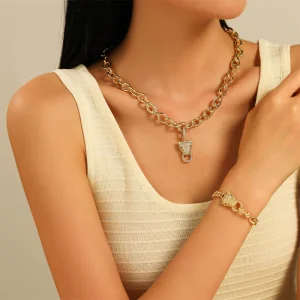
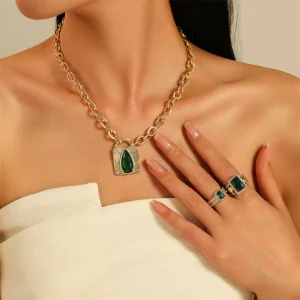
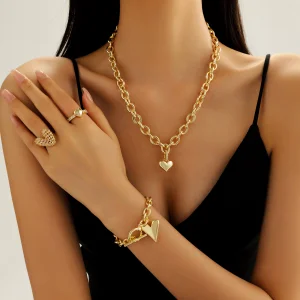
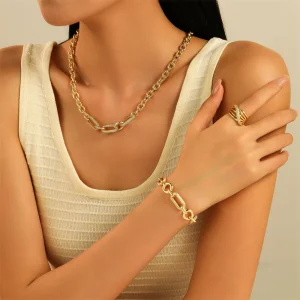
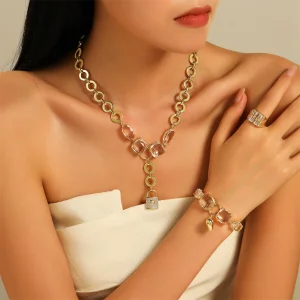
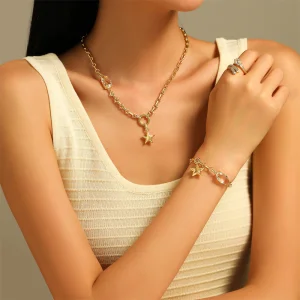
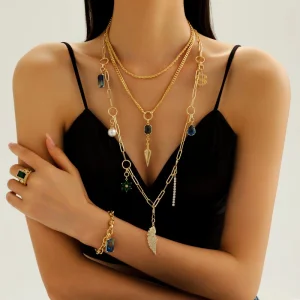
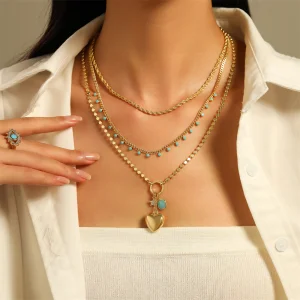
Gold-plated fashion necklaces, agate pendants, chunky link bracelets, and costume jewelry sets benefit from compact 10x10cm embossed cloths. Removing sweat and cosmetics prevents premature degradation of 0.03–0.1 μm PVD gold coatings.
7. Strategic Industry Trends & Tech Innovations (2025–2030)
Key technological transformations reshaping the global jewelry care accessories landscape over the coming decade.
rPET Sustainable Microfibers
Driven by global ESG mandates, manufacturers are transitioning to 100% Recycled Polyethylene Terephthalate (rPET) yarns derived from post-consumer plastic bottles. GRS (Global Recycled Standard) certified rPET cloths deliver identical soft-touch performance while lowering carbon footprint by 38%.
Plant-Based Bio-Formulas
Replacing traditional petroleum-derived tarnish inhibitors, next-generation polishing cloths feature plant-extracted organic fatty acids and coconut-oil derivatives. These bio-based formulas offer bio-degradable chemical safety while maintaining silver sulfide restoration efficacy.
Nano-Ceramic Protective Shields
Emerging nano-coating technology allows polishing cloths to deposit an invisible, molecularly bonded nano-ceramic layer ($SiO_2$) during routine wiping. This glass-like barrier repels fingerprint oil, saltwater, and sweat oxidation for up to 90 days per rub-down.
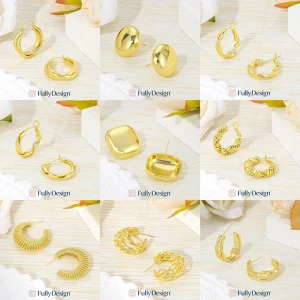
Featured OEM/ODM Product Catalog (Part II)
Discover additional hot-selling wholesale jewelry lines designed for global distributors, fashion boutiques, and private label collections.


8. Frequently Asked Questions (B2B Procurement FAQ)
Expert technical answers addressing common questions from international purchasing leads, factory auditors, and brand directors.