 \n
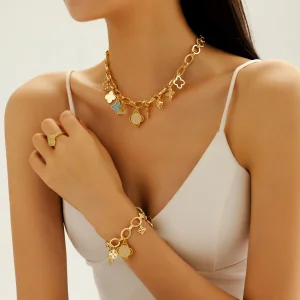
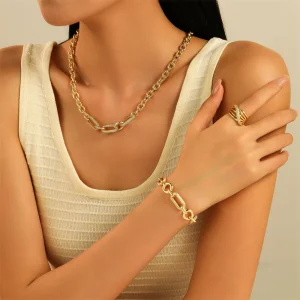
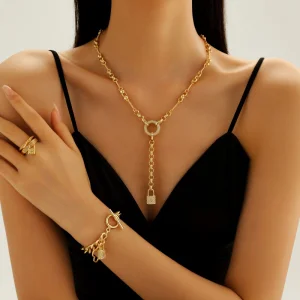
Precision Jewelry & Display Stand Product Line
Explore our top-tier export catalog featuring high-precision plated craftsmanship, anti-tarnish technical linings, and engineered retail display compatibility.
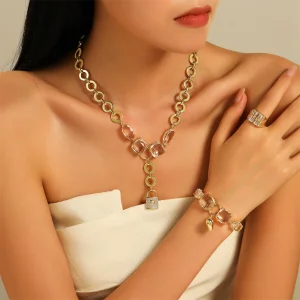

Executive Summary: The Global Transformation of Commercial Jewelry Displays
Analyzing the shift from static point-of-sale props to high-performance visual merchandising platforms across global luxury retail and digital-native DTC environments.
Global Retail Evolution
The global commercial jewelry display industry has transitioned from standardized velvet busts to custom-engineered, modular merchandising systems. Retailers now demand displays that double as brand narrative devices, optimized for both physically immersive flagship stores and high-contrast, glare-free live-stream studios.
Visual Merchandising ROI
Industry empirical metrics indicate that high-grade display fixtures directly correlate with sales conversion uplift. Custom display stands equipped with micro-fiber non-abrasive lining and ergonomic angle elevation boost customer engagement duration by up to 34% at point-of-sale counter displays.
China Factory Ecosystem
China manufactures over 72% of the world's retail visual props. The convergence of automated CNC acrylic precision machining, eco-conscious water-based lacquer coating, and integrated metal casting allows Chinese OEMs to offer unmatched economies of scale alongside agile prototyping capability.
Global Enterprise Procurement Needs & Intent Mining
Demystifying the strategic sourcing requirements of enterprise buyers: Tier-1 luxury conglomerates, international boutique chains, and high-volume e-commerce platforms.
Search queries surrounding "China Jewelry Display Stand Suppliers & Factory" extend far beyond unit price comparison. Professional procurement directors evaluate anti-tarnish chemical stability, structural load capacity, modular stackability, surface finish longevity under continuous LED lighting, and export compliance documentation.
High-End Luxury Boutiques
Requires custom hardwood structures wrapped in ultra-soft, anti-oxidation microfiber. Color temperature neutrality is essential—props must not alter the visual tone of 18K gold or natural gemstones under high-CRI showroom lights.
Boutique & Franchise Chains
Focuses on high-durability acrylic displays, vacuum-plated alloy stands, and modular components that allow rapid window display redesigns according to seasonal collection rotations.
DTC & Live-Stream Studios
Demands anti-reflective coating surfaces, rotation-stabilized ring cones, and compact, photo-optimized photography display blocks that reduce shadow casting during macro videography.
China Industry 4.0: Supply Chain Resilience & Manufacturing Depth
How Chinese display stand factories leverage integrated raw material supply hubs, automated fabrication, and stringent QA frameworks to outperform regional alternatives.
Precision CNC Fabrication
Automated 5-axis CNC router lines execute zero-tolerance cutting on acrylic, solid beech wood, and high-density MDF substrates with micrometer accuracy.
Vacuum PVD Plating
State-of-the-art physical vapor deposition (PVD) chambers apply ultra-durable rose gold, chrome, and matte champagne metal coatings resistant to oxidation and wear.
Anti-Tarnish Fabric Coating
Proprietary chemical treatments applied to velvet and suede linings prevent sulfide migration, protecting displayed precious metal jewelry from discoloration.
AQL 1.5/2.5 Inspection
Every production batch undergoes strict ISO-compliant sampling: drop tests, scratch tests, UV-aging resistance, and glue seam shear strength tests.
| Manufacturing Hub | Primary Material Specialization | Prototyping Lead Time | Cost Efficiency Benchmark | Supply Chain Integration Level |
|---|---|---|---|---|
| Yiwu / Jinhua Cluster | Acrylic, Velvet, Synthetic Leather, Mixed Metal | 3 - 5 Days | Maximum (High-Volume Scale) | Full Vertical (Raw material to packaged goods) |
| Dongguan / Shenzhen Cluster | High-End Hardwood, PVD Stainless Steel, Smart LED Displays | 5 - 7 Days | Premium (Precision Engineering) | Advanced Electro-mechanical Integration |
| Guangzhou / Panyu Cluster | Boutique Trays, Customized Counter Sets, Fine Microfiber | 5 - 8 Days | High (Luxury Focus) | Direct Synergy with Fine Jewelry Workshops |
Material Engineering & Durability Comparative Analysis
Comprehensive engineering evaluation of primary display stand substrates to guide B2B buyers in selecting long-lasting commercial props.
| Substrate Material | Anti-Tarnish Properties | UV Light Resistance | Structural Longevity | Best Application Scenario |
|---|---|---|---|---|
| Cast PMMA Acrylic | Inert (No chemical reaction with gold/silver) | High (Non-yellowing grade option) | 5+ Years (Scratch-resistant coating recommended) | Modern Minimalist Windows, Countertop Riser Sets |
| Ultra-Microfiber Wrapping | Superior (Sulfide-free, non-scratch surface) | Medium to High (Color-fast treated) | 3-5 Years under daily handling | Luxury Ring Racks, Necklace Busts, Fine Bracelet Trays |
| FSC-Certified Solid Walnut/Beech | Requires inert water-based seal coating | High (Natural grain ages gracefully) | 10+ Years | Heritage Brands, Eco-conscious Luxury Showrooms |
| Electroplated Stainless Steel / Brass | Inert (PVD seal prevents metal transfer) | Maximum (Impervious to light rot) | 10+ Years (Corrosion-free) | Structural T-Bars, Hanging Pendant Frames, Heavy Stands |
Localized Commercial Application Scenarios
How tailored visual display stands solve operational challenges across specific retail and commercial environments worldwide.
Duty-Free Airport Boutiques
High-traffic environments require heavy-base, anti-topple display stands with tamper-proof security locks and integrated LED spotlight bases to draw international travelers' immediate attention under bright terminal lighting.
Pop-Up & Trade Show Booths
Exhibitors need lightweight, flat-pack, magnetic assembly display blocks. Modular designs enable swift venue setup, transport weight optimization, and versatile arrangement across varying booth footprints.
E-Commerce & Social Commerce Studios
Live-stream studios require non-glare, matte-finish velvet busts and low-profile ring holders that allow camera auto-focus tracking systems to lock onto gemstone details without reflections.
Future Industry Trends: Smart Displays & Sustainable Merchandising
Key technology shifts reshaping the future of display stand manufacturing in China and global adoption rates.
RFID-Enabled Interactive Display Blocks
Next-generation Chinese factories are embedding ultra-thin RFID sensors into display bases. When a customer lifts a necklace stand off the riser, adjacent digital screens automatically trigger content showcasing the product's origin, gemstone certification, and matching accessories, bridging offline touchpoints with online data analytics.
Zero-VOC & Circular Bio-Composites
With strict ESG regulations across Europe and North America, Chinese suppliers lead the adoption of recycled ocean plastic acrylics, bio-resins, and FSC-certified wood cores bonded with zero-VOC soy-based adhesives, allowing international brands to meet carbon-neutral retail footprint goals.
Strategic OEM/ODM Sourcing Framework & Quality Control
A step-by-step roadmap for global buyers to ensure flawless custom production runs from Chinese factories.
Phase 1: CAD & Structural 3D Prototyping
Never skip 3D sample verification. Request physical prototypes to evaluate weighted base balance, center of gravity stability under heavy jewelry loads, and exact lining texture before authorizing mass mold fabrication.
Phase 2: Plating & Color Match Calibration
Enforce Pantene or Pantone matching standards for wood lacquers and micro-fiber dye batches. Require spectrophotometer color tolerance reports (ΔE < 1.0) to maintain strict visual brand consistency across multiple store locations.
Phase 3: Export Packaging Engineering
High-finish display stands are prone to transit abrasions. Ensure your factory uses anti-static PE wraps, custom-molded high-density EVA foam corners, and 7-ply reinforced master export cartons subjected to ISTA 1A drop testing.
Frequently Asked Questions (FAQ) for B2B Buyers
Direct technical answers to common questions asked by procurement directors, brand owners, and logistics managers.
1. What is the typical Minimum Order Quantity (MOQ) for custom jewelry display stands?
2. How do Chinese display factories ensure lining materials do not tarnish gold or silver jewelry?
3. What is the average lead time for prototyping vs. mass production?
4. Which international compliance standards apply to jewelry display stands?
5. Can custom displays be shipped flat-packed to reduce ocean freight costs?
6. What acrylic thickness is recommended for commercial counter risers?
7. How do I maintain color consistency across re-orders placed months apart?
8. Can logo branding be integrated into display stands, and what techniques are available?
9. What quality inspection reports should I request prior to final shipment?
10. How do Chinese display stand factories assist with custom design tech packs?
Featured Factory Direct Catalog & Collection Highlights
Browse additional factory-direct products manufactured according to global wholesale, custom OEM/ODM, and retail display standards.