 \n
High-Precision Fashion Jewelry Collections
Engineered with vacuum PVD gold plating, anti-tarnish barrier technology, and hypoallergenic bases. Directly exported from verified Chinese manufacturing facilities.

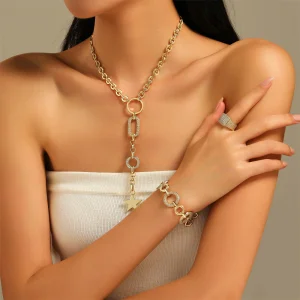
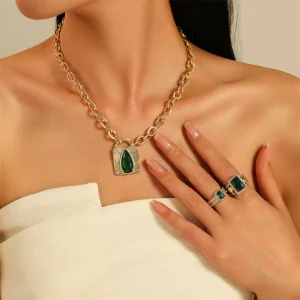
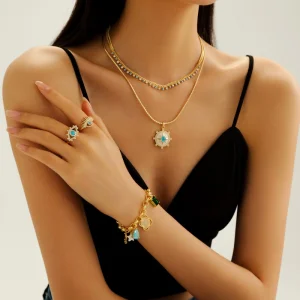

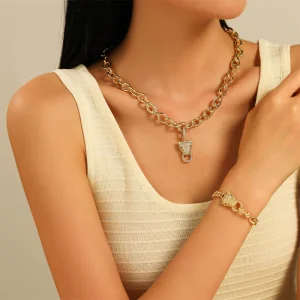
The Global Transformation of Jewelry Manufacturing & Sourcing Matrix
The global fashion and demi-fine jewelry ecosystem is undergoing an unprecedented structural transition. Driven by volatile precious metal spot prices, strict international chemical compliance frameworks (such as EU REACH Annex XVII and California Proposition 65), and shifting consumer demand toward tarnish-free, sweatproof everyday accessories, enterprise brand buyers are fundamentally re-evaluating their vendor portfolios.
Navigating China jewelry making suppliers & factories requires moving past traditional commodity purchasing into strategic supply chain integration. Leading Chinese industrial clusters—headquartered across Yiwu, Zhejiang and Panyu, Guangdong—have transformed from manual assembly workshops into automated, high-precision Industry 4.0 production hubs equipped with Physical Vapor Deposition (PVD) vacuum chambers, 5-axis CNC laser carving, SLA/DLP 3D resin matrix printers, and X-ray fluorescence (XRF) non-destructive assay systems.
Four Strategic Drivers Reshaping Global Jewelry Sourcing
To capture market share in North America, Europe, and Asia-Pacific, brands must align their OEM/ODM supplier selection with four critical macro engineering shifts:
1. The Rise of 316L Stainless Steel & PVD Gold Plating
Traditional electroplating over zinc alloy or low-grade brass frequently fails modern consumer durability expectations, succumbing to tarnish, oxidation, and skin irritation. Strategic buyers are shifting heavily toward 316L Surgical Stainless Steel paired with Physical Vapor Deposition (PVD) titanium gold coating.
PVD bonding takes place inside high-vacuum plasma chambers, depositing real 18K/14K gold micro-layers that bond atomically to the steel. This provides 10x higher abrasion resistance, rendering products waterproof, sweatproof, and resistant to perfumes and ocean water.
2. Stringent Environmental & Chemical Compliance Standards
Regulatory agencies worldwide have tightened non-destructive testing requirements. Importers can no longer afford supply chain opacity that leads to customs detentions or marketplace bans.
Premier Chinese factories implement strict chemical management programs: guaranteeing Lead (<90 ppm), Cadmium (<100 ppm), and Nickel release rates strictly adhering to EN 1811:2011+A1:2015 (<0.5 μg/cm²/week). Raw materials undergo mandatory XRF spectrometry verification before casting.
3. Lead-Time Compression & Agile SKU Refreshing
Fast-fashion digital retailers (Shopify, TikTok Shop, Amazon FBA) require inventory turnover speeds that render legacy 60-day manufacturing cycles obsolete. Contemporary procurement models rely on Agile Supply Chains.
By adopting modular tooling and keeping pre-cast master components in buffer stocks, top-tier Chinese manufacturers now deliver fully custom 3D-printed samples in 5–7 business days, with full-scale production batches shipping within 14–20 days.
4. Sustainability & Recycled Precious Metal Supply Chains
ESG initiatives are no longer optional for tier-1 retail buyers. Brand storytelling requires verified traceability of recycled metals, ethically sourced gemstones, and synthetic lab-grown crystals (Cubic Zirconia 5A grade, Moissanite, and Synthetic Agate/Opal).
Chinese suppliers are integrating GRS-certified (Global Recycled Standard) recycled brass and stainless steel into standard production routines, drastically lowering the carbon footprint per manufactured piece.
Inside Industry 4.0: The End-to-End Manufacturing Process
To understand why Chinese suppliers maintain a dominant 70%+ share of the global fashion jewelry manufacturing market, one must inspect the step-by-step technological workflow executed on the factory floor:
Digital CAD Engineering & 3D Prototyping
Every design concept, napkin sketch, or 2D vector is ingested into specialized CAD software (RhinoGold, MatrixGold). Industrial designers optimize structural integrity, wall thickness (ensuring structural strength while preventing excess metal weight), and stone seat clearances. DLP 3D printers generate high-density wax models with zero dimensional shrinkage within 24 hours.
Vacuum Lost-Wax & Investment Casting
3D wax trees are encapsulated in ceramic plaster investment flasks. Under computer-controlled thermal cycles, the wax is burned out, and molten 316L steel or H65 eco-friendly brass is injected under high-vacuum pressure. This prevents micro-porosity, surface pitting, and cold-shuts, delivering pristine metal density suitable for mirror polishing.
Automated Robotic & Hand Electropolishing
Cast components undergo multi-stage surface refinement: starting with magnetic tumbling to de-burr internal corners, followed by centrifugal disc polishing with ceramic media, and concluding with hand-buffing by master craftsmen or automated 6-axis robotic arms. Achieving a Ra (Roughness Average) < 0.02 μm is mandatory prior to plating.
Physical Vapor Deposition (PVD) & Advanced Electroplating
Items are racked into ultra-clean vacuum chambers. A multi-layer ion sputtering process deposits: (1) a titanium nitride (TiN) adhesion layer, (2) a barrier layer against base-metal diffusion, and (3) a genuine 14K, 18K, or 24K real gold top coating (or palladium/rhodium for silver finishes). Plating thickness is monitored continuously via in-situ XRF analyzers.
Micro-Pave Setting & Quality Control Gate
5A Cubic Zirconia, natural stones, or synthetic agates are hand-set under stereoscopic microscopes using prong, bezel, or micro-pave techniques—eliminating glued setting failures common in cheap novelty items. Final products pass AQL 2.5 inspection covering clasp tension, pull testing (>15kg force), salt spray anti-tarnish testing, and packaging line verification.
Material Science Matrix: Selecting the Right Substrate
Choosing the optimal substrate impacts product positioning, retail margin, target market compliance, and warranty returns. The comparison matrix below outlines industrial performance across primary manufacturing metals:
| Material Substrate | Corrosion & Tarnish Resistance | Hypoallergenic Rating | Plating Adhesion Integrity | Target Retail Segment | Unit Cost Scale |
|---|---|---|---|---|---|
| 316L Surgical Stainless Steel | Extreme (Waterproof / Sweatproof) | 100% (Medical Grade) | Superior (Vacuum PVD Bonding) | Everyday Demi-Fine, Activewear Brands | Moderate ($$) |
| H65 Environmental Brass | High (When Sealed with E-Coating) | High (Lead/Nickel Free) | Excellent (Multi-Layer Electroplating) | Boutique Fashion, Complex Intricate Jewelry | Moderate ($$) |
| 925 Sterling Silver | Moderate (Requires Anti-Tarnish Passivation) | High (Requires Nickel-Free Plating) | High (Rhodium / Gold Vermeil Plating) | Fine & Demi-Fine Retail Outlets | High ($$$) |
| Zinc Alloy (Die-Cast) | Low-Moderate (Indoor Decorative Use) | Variable (Requires Strict QC) | Standard Flash Plating | Mass Market Fast Fashion, Promotional | Low ($) |
B2B Sourcing Scenarios & Commercial Customization
Top Chinese jewelry manufacturers cater to specialized commercial delivery models. Depending on your brand architecture, suppliers customize everything from structural alloy composition to retail packaging:
E-Commerce & DTC Brands
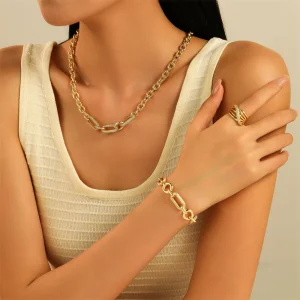
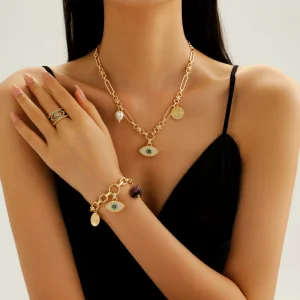
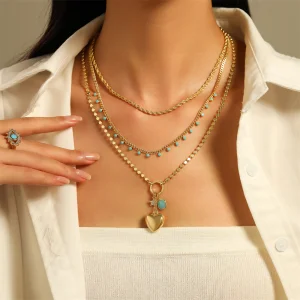
Optimized for high velocity and low return rates. Focuses on tarnish-free 316L PVD gold chains, paperclip layering necklaces, evil eye pendants, and stackable rings. Packed in barcode-scannable polybags ready for direct FBA insertion or third-party fulfillment centers.
Boutique Chains & Retail Outlets
Demands distinct aesthetic point-of-view, custom branded gift boxes, rigid drawer boxes with velvet inserts, laser-engraved logo tags, and customized point-of-sale display cards. Emphasizes heavy 18K gold plating with e-coating finish for premium shelf presence.
Subscription & Corporate Gifting
Requires scaled volume production with absolute cost efficiency. Ideal for seasonal gift bundles, promotional merchandise, or subscription boxes. Engineered using lightweight brass or stainless steel with standardized AQL 1.0 defect thresholds.
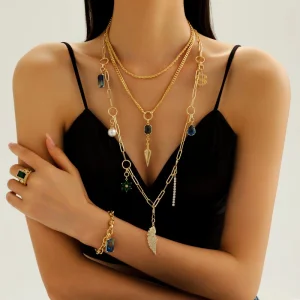
Curated Wholesale Jewelry Sets & Statement Pieces
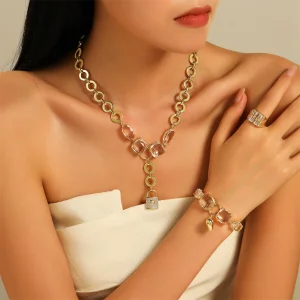
In-demand designs available for private-label branding, custom gemstone swapping, and agile small-batch order runs.

Frequently Asked Sourcing & Technical Questions
In-depth technical answers prepared by senior jewelry manufacturing engineers and international trade compliance experts.
What is the difference between standard electroplating and PVD vacuum gold plating?
PVD (Physical Vapor Deposition) Vacuum Plating takes place inside a high-temperature vacuum chamber. Titanium or zirconium metal ions are vaporized into plasma and blasted onto the 316L stainless steel substrate, followed by real 14K/18K gold vapor. The gold micro-layer bonds at an atomic level, creating an impenetrable surface that resists corrosion, salt water, sweat, and friction—extending wear resistance up to 2–3 years under daily use.
How do Chinese jewelry factories verify chemical compliance for REACH and Prop 65?
For European Union shipments, finished items undergo synthetic sweat leaching tests in accordance with EN 1811 to verify nickel release remains below 0.5 μg/cm²/week (or 0.2 μg/cm²/week for post assemblies meant for body piercing). Formal test certificates from accredited 3rd party laboratories like SGS, Intertek, or TÜV Rheinland are issued upon request before shipment release.
What is the typical Minimum Order Quantity (MOQ) for custom OEM vs. catalog ODM items?
- In-Stock ODM Catalog Items: 30–50 pieces per style (ideal for small boutique testing).
- Custom Color/Plating Variations (Existing Molds): 100–200 pieces per colorway.
- Full Custom OEM CAD Tooling (Stainless Steel / Brass): 200–500 pieces per design to cover custom casting tree molds and CNC setup overhead.
How does the sampling and mass production timeline work?
- 2D Sketch to 3D CAD Render: 24 to 48 hours.
- DLP 3D Wax Sample / Prototype: 5 to 7 working days (including physical sample delivery).
- Bulk Mold Cutting & Pre-Production Sample Approval: 7 to 10 days.
- Mass Manufacturing & PVD Plating: 15 to 25 working days depending on order volume and hand-setting complexity.
Can Chinese suppliers duplicate existing retail samples or pantone color finishes?
What quality control (QC) frameworks are used before container dispatch?
- Visual Defect Gate: Checking for surface scratches, micro-bubbles, solder joint excess, or misaligned pave stones under 10x magnification.
- Mechanical Stress Test: Clasp opening/closing cycles (500+ actuations) and chain tension pull testing (>15-20 kg force rating).
- Environmental Chamber Test: 24-96 hour artificial salt spray exposure (ASTM B117) to verify anti-tarnish barrier performance.