 \n
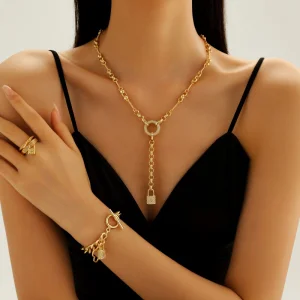
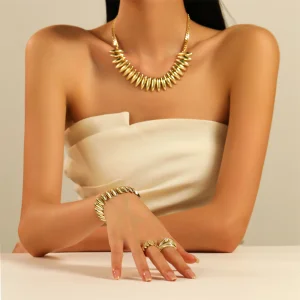
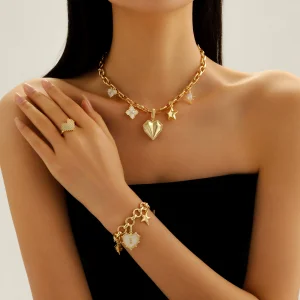
Featured Factory Direct Product Catalog (Top Tier Selection)
Explore high-volume OEM/ODM export lines engineered for international jewelry brands, boutique chains, and global wholesalers.
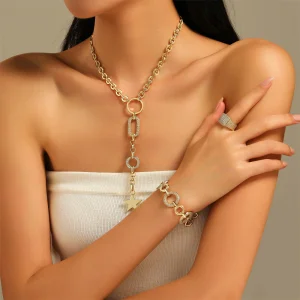
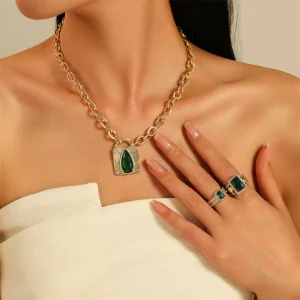
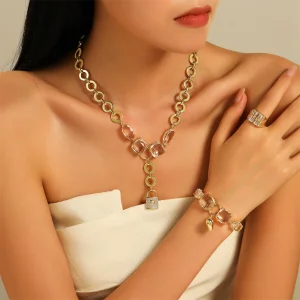
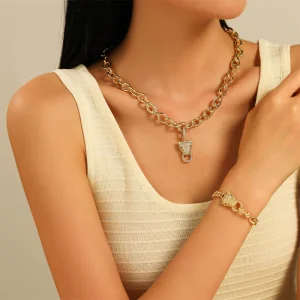
Global Macro Ecosystem of China Women's Jewelry Manufacturing
An authoritative analysis of industrial clustering, supply chain convergence, and the structural advantage of Chinese B2B suppliers.
The global market for fashion and fine women's jewelry has undergone a seismic structural realignment over the past decade. China has solidified its status not merely as a high-volume production hub, but as the primary global epicenter for advanced jewelry metallurgy, precision electroplating chemistry, and automated CAD-to-mold rapid manufacturing. For enterprise purchasing executives, brand owners, and wholesale distributors searching for China Jewelry Women Suppliers & Factories, understanding this macro industrial matrix is critical to optimizing landed costs, mitigating compliance liabilities, and accelerating time-to-market.
Yiwu Cluster Ecosystem
Specializing in high-velocity fashion jewelry, rapid prototyping, and ultra-competitive component sourcing. Yiwu factories integrate thousands of localized sub-tier vendors supplying findings, CZ stones, chains, and specialized packaging.
Panyu & Shenzhen Precision Hubs
Renowned for fine jewelry engineering, 316L stainless steel PVD vacuum plating, sterling silver micro-pave setting, and strict clean-room quality control adhering to luxury European retail benchmarks.
Dongguan Hardware Integration
Leverages heavy industrial tooling and CNC multi-axis milling expertise to produce heavy-duty brass, titanium, and stainless steel hardware, locks, and complex structural jewelry findings.
This geographic specialization creates an unmatched industrial synergy. A typical piece of contemporary fashion jewelry—such as an 18K gold-plated stainless steel layered necklace with green agate and cubic zirconia—traverses a highly optimized sub-supply chain within a 50-kilometer radius. Raw alloy melting, continuous casting, optical inspection, PVD vacuum ion deposition, laser welding, and hand assembly occur with minimal logisitc friction, giving Chinese OEM/ODM factories an unassailable advantage in cost-per-unit performance.
Metallurgical Engineering & Electroplating Standards
Information Gain Analysis: Technical parameters defining anti-tarnish performance, hypoallergenic properties, and physical durability.
1. Base Substrate Metallurgy & Material Selection Matrix
Modern women's jewelry manufacturing relies on three primary base materials, each dictated by retail price points, mechanical complexity, and target durability requirements. Tier-1 Chinese suppliers utilize spectrum analyzers to verify alloy purity prior to casting.
| Material Grade | Composition Breakdown | Corrosion Resistance | Tensile Strength | Target Application |
|---|---|---|---|---|
| 316L Stainless Steel | Fe (65%), Cr (16-18%), Ni (10-14%), Mo (2-3%) | Exceptional (PREN > 23) | 520 - 680 MPa | Waterproof, non-tarnish daily wear, hypoallergenic fashion lines |
| Eco-Brass (H62/H65) | Cu (62-65%), Zn (Balance), Lead < 90 ppm | Moderate (Requires barrier layer) | 330 - 440 MPa | Intricate 3D designer jewelry, micro-pave stone setting, curved bangles |
| Zinc Alloy (ZAMAK 3) | Zn (95%), Al (4%), Cu (0.1%), Mg (0.04%) | Low (Requires multi-layer plating) | 280 MPa | Fast fashion, large statement pieces, cost-sensitive seasonal collections |
2. PVD Vacuum Plating vs. Traditional Wet Electroplating
The primary point of differentiation in contemporary non-tarnish jewelry lies in the coating technology. Top-tier Chinese manufacturers have shifted from conventional cyanide-based wet electroplating to Physical Vapor Deposition (PVD) Vacuum Ion Coating.
- Physical Vapor Deposition (PVD): Conducted in a high-vacuum chamber where titanium nitride (TiN) or real 18K gold targets are bombarded by plasma ions. The vaporized metal bonds atomically to the 316L stainless steel substrate, yielding a micro-hardness level exceeding 1500 HV. This yields waterproof jewelry capable of surviving sweat, seawater, and daily abrasion for 2 to 5 years without color degradation.
- Real Gold Electroplating (Rack/Barrel): Used extensively on brass substrates. Incorporates a multi-step chemical bath sequence: Alkaline Degreasing → Acid Dip → Copper Flash (2-3μm) → Palladium-Nickel Barrier (0.5μm) → 14K/18K Real Gold Topcoat (0.03 to 2.5μm) → E-Coating (Electrophoretic Lacquer Sealant).
3. Salt Spray Corrosion Testing & Quality Metrics
To quantify anti-tarnish longevity, verified China jewelry factories conduct standardized accelerated corrosion testing inside environmental test chambers:
- NSS (Neutral Salt Spray Test - ISO 9227): 5% NaCl solution at 35°C. Standard fashion plating passes 24 hours; high-performance PVD jewelry passes 48 to 96 hours without signs of oxidation or pitting.
- Artificial Perspiration Test (EN 1811 / ISO 3160-2): Simulates human sweat exposure at pH 4.7. Essential for validating hypoallergenic claims for earrings and necklaces in direct contact with skin.
Regulatory Compliance & Chemical Safety Framework
Navigating international customs barrier protocols: EU REACH, California Prop 65, and US CPSC standards.
Importing women's jewelry from China carries severe legal liability if products fail chemical safety mandates at destination ports. Authoritative OEM/ODM suppliers maintain integrated XRF (X-Ray Fluorescence) testing laboratories to verify alloy chemistry on every heat batch prior to mass casting.
European Union: REACH Annex XVII
Strict regulation regarding heavy metal migration in consumer products:
- Nickel Release (EN 1811): Must be less than 0.5 μg/cm²/week for items in prolonged skin contact, and less than 0.2 μg/cm²/week for post assemblies inserted into pierced ears.
- Lead Content (Entry 63): Total lead concentration must not exceed 0.05% (500 ppm) by weight.
- Cadmium Content (Entry 23): Concentration must be under 0.01% (100 ppm) in metal alloys and plastic components.
United States: Prop 65 & ASTM F2923
State and federal standards governing adult and children's jewelry safety:
- California Proposition 65: Mandates strict lead thresholds (typically < 200 ppm for metals, < 600 ppm for surface coatings) to avoid mandatory warning labels or legal friction.
- ASTM F2923-20: Standard specification for consumer product safety for adult jewelry, specifying limits for total Cadmium, Lead, Phthalates, and Nickel release.
- CPSIA Compliance: Applies if products are accessible to children under 12, mandating third-party CPSC-accredited testing (SGS, TUV, BV).
Regional Market Application Scenarios & Aesthetics
Tailoring jewelry OEM/ODM production specifications to regional consumer preferences and local market positioning.
North America
Dominant Aesthetic: Chunky statement chains, initial lockets, coin medallions, minimalist 14K gold PVD everyday stacks.
Technical Requirement: Sweat-proof, waterproof stainless steel base. High demand for custom laser-engraved personalizations and eco-friendly recycled gift packaging.
Western Europe
Dominant Aesthetic: Organic shapes, Scandinavian minimalism, delicate micro-pave cubic zirconia, vintage filigree, natural agate stone settings.
Technical Requirement: 100% hypoallergenic guarantee. Strict REACH compliance certificate per shipment. Preference for recycled 925 sterling silver and low-carbon brass.
Middle East (GCC)
Dominant Aesthetic: High-carat luster (22K-24K rich yellow gold tone), ornate bridal jewelry sets, heavy drop earrings, luxury crystal adornment.
Technical Requirement: Heavy micron gold electroplating or specialized yellow PVD target tuning. High scratch resistance and flawless mirror polishing.
Latin America
Dominant Aesthetic: Bold color palettes, natural semi-precious stones, geometric bangles, multi-layered hoop earrings, tropical floral motifs.
Technical Requirement: High resistance to humidity and atmospheric oxidation. Competitive FOB pricing for large volume distribution networks.
Industry Technology Roadmap: 2025–2030 Outlook
Key technological innovations transforming Chinese jewelry factory operations and product engineering.
AI CAD & Rapid Wax 3D Printing
Generative design tools allow Chinese factories to convert client mood boards into precise 3D CAD files within 4 hours. High-speed resin 3D printers generate master wax models overnight, reducing sample lead times from 15 days to under 72 hours.
Zero-Emission Green Plating
Regulatory pressures in Zhejiang and Guangdong have accelerated the transition toward 100% closed-loop zero-discharge water recycling systems in plating plants. Cyanide-free gold plating chemistries are rapidly replacing legacy toxic formulations.
Robotic Stone Setting & Laser Welding
Automated optical vision systems guide robotic arms to set cubic zirconia stones into brass casting channels with sub-micron precision, eliminating human error and increasing stone retention strength by 40%.
Enterprise Procurement Strategy & Risk Mitigation
A step-by-step auditing framework for verifying supplier credibility, managing quality control, and streamlining logistics.
When selecting a reliable China jewelry manufacturer, enterprise buyers must move beyond surface-level trade show presentations and audit core engineering capabilities. Below is the operational framework deployed by leading international jewelry brands:
- Verify On-Site Inspection Testing Equipment: Ensure the factory owns and operates XRF spectrum analyzers, cross-hatch adhesion testers, salt-spray chambers, and optical measurement devices. Factories relying entirely on outsourced testing introduce delay risk and quality variance.
- Implement AQL 2.5 Quality Standards: Establish clear Acceptable Quality Limit (AQL) parameters for major and minor defects prior to issuing purchase orders. Key inspection points include clasp tension force (> 15N pull test), stone alignment under 10x magnification, surface pinhole density, and chain link weld integrity.
- Specify Plating Microns in Contracts: Never accept vague terms such as "gold plated." Define target specifications explicitly: e.g., "316L Stainless Steel Base, 0.05μm 18K Real Gold PVD Coating with Titanium Nitride underlayer, 48-Hour NSS Salt Spray Pass."
- Audit Sub-Tier Chemical Safety Compliance: Require raw batch test reports for Lead, Cadmium, and Nickel release for every production lot, cross-referenced with heat batch numbers on export packing slips.
Frequently Asked Questions (B2B Sourcing Guide)
Clear answers to critical technical and logistical questions asked by professional jewelry buyers.
What is the standard Minimum Order Quantity (MOQ) for custom OEM/ODM jewelry orders?
For existing factory designs, standard MOQs typically range from 50 to 100 pieces per style/color. For fully custom OEM designs requiring brand-new mold creation, MOQs generally start at 100 to 200 pieces for brass/zinc alloy, and 50 to 100 pieces for 316L stainless steel. Mixed color plating assortments (e.g., gold, rose gold, silver) can frequently share a single structural mold order.
How long does custom sampling and mass production take?
Rapid CAD rendering takes 24 to 48 hours. Physical 3D wax/resin printing and master sample casting take 7 to 10 working days. If complex custom tooling or custom gemstone cutting is required, sample lead times expand to 12–15 days. Mass production turnaround averages 15 to 25 calendar days depending on batch quantity, plating thickness, and assembly complexity.
What chemical test reports and compliance certificates can Chinese suppliers provide?
Qualified manufacturers provide EN 1811 Nickel Release reports, REACH Annex XVII Heavy Metal tests (Lead < 500ppm, Cadmium < 100ppm), California Prop 65 compliance statements, and internal XRF plating thickness verification sheets. Third-party testing with SGS, TUV, Intertek, or Bureau Veritas (BV) can be arranged directly prior to order shipment.
What is the difference between PVD gold coating and micron electroplating?
Physical Vapor Deposition (PVD) is a high-vacuum vapor coating process applied primarily to stainless steel, yielding extreme surface hardness, tarnish-resistance, and waterproof longevity (2-5 years). Wet electroplating involves depositing liquid metal ions onto brass or silver. While electroplating offers brilliant luster and precise color matching, PVD delivers superior physical durability and environmental resistance.
Can Chinese factories replicate custom target color finishes (e.g., 14K Champagne Gold vs 24K Rich Yellow)?
Yes. By fine-tuning the chemical bath composition or adjusting the target gas ratio during PVD vacuum deposition, factories can precisely match custom gold tones—ranging from delicate 14K champagne gold, 18K real gold, 24K deep yellow gold, to vintage antique bronze and black gunmetal. Physical color master samples are kept on file under strict spectrophotometer calibration to ensure zero color drift between repeat production runs.
How are defective units handled during pre-shipment quality control?
Professional factories adhere to AQL 2.5 standards. Inspections are conducted at casting, post-polishing, post-plating, and final assembly stages. Any defective units failing clasp function, plating uniformness, or stone security checks are rejected and reworked prior to carton sealing. Pre-shipment photo and video audit reports are supplied to international buyers prior to final balance payment release.
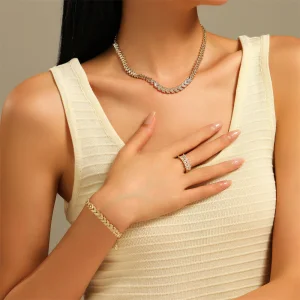
Premium Wholesale Collection (High-Demand Factory Lineup)
Explore additional hot-selling statement necklaces, charm sets, and designer jewelry lines engineered for international delivery.