 \n
Featured Enterprise Collection — Batch 01
Verified Export Standards (ISO 13485 / REACH)


Executive Summary & Global Body Piercing Dynamics
Analyzing the shift from fast fashion accessories to high-precision, medical-grade body jewelry manufacturing.
Global Market Expansion
The global piercing jewelry market is projected to reach $4.1 Billion by 2032, driven by an accelerating consumer preference for hypoallergenic materials, curated ear styling, and professional body modification studios.
Biocompatibility Paradigm Shift
Procurement criteria have permanently shifted from low-cost electroplated brass to ASTM F136 Titanium and 316LVM Surgical Steel. International buyers demand documented non-cytotoxicity and zero nickel release.
Supply Chain Integration
As a premier China Piercing Jewelry Manufacturer & Supplier, our industrial infrastructure combines raw material forging, precision CNC micro-lathes, PVD coating, and ISO Class 7 cleanroom packing in a single unified workflow.
The global landscape for piercing jewelry manufacturing has evolved into an engineering-intensive industry where metallurgical purity, mechanical precision, and regulatory transparency dictate commercial success. Professional piercing studios, medical modification clinics, and high-end retail chains across North America, Europe, and Asia-Pacific no longer treat body jewelry as standard fashion accessories. Because piercing jewelry comes into direct, prolonged contact with human sub-dermal tissues and vascular channels, products must comply with strict international biological safety frameworks.
As an established China Piercing Jewelry Manufacturer & Supplier, we bridges the historical gap between mass-market production and medical-grade manufacturing. By adopting advanced computerized numerical control (CNC) micro-machining, automated surface passivation, physical vapor deposition (PVD) ion vacuum plating, and systematic metallurgical testing, our manufacturing ecosystem delivers turn-key solutions tailored for brands operating in highly regulated international markets.
Material Science & Bio-Metallurgical Engineering
Comparing technical specifications of implant-grade metals for initial and healed body piercings.
| Material Designation | Standard Certification | Nickel Content / Release | Tensile Strength (MPa) | Primary Application Phase | Sterilization Compatibility |
|---|---|---|---|---|---|
| Ti-6Al-4V ELI Titanium | ASTM F136 / ISO 5832-3 | 0.00% (100% Nickel-Free) | ≥ 860 MPa | Fresh / Initial Piercings | Autoclave / EO / Gamma |
| 316LVM Surgical Steel | ASTM F138 / ISO 5832-1 | < 0.05 µg/cm²/week (REACH Compliant) | ≥ 620 MPa | Healed & Secondary Piercings | Autoclave / Dry Heat |
| Solid 14K / 18K Gold | Nickel-Free Bio-Alloy | 0.00% (Custom Melt) | ≥ 340 MPa | Luxury Healed & Initial | Steam Autoclave |
| Niobium (Nb) | Pure Element (99.9%) | 0.00% (Hypoallergenic) | ≥ 275 MPa | Hyper-Sensitive Tissues | Autoclave / Chemical |
| PTFE / Bioplast | USP Class VI Medical Grade | 0.00% (Polymer) | Flexible Base | Medical Scans / Pregnancy | Ethylene Oxide (EO) |
ASTM F136 Titanium Metallurgy
ASTM F136 extra-low interstitial (ELI) titanium is the gold standard for body piercing. Containing 6% Aluminum and 4% Vanadium with strictly controlled interstitial elements (oxygen, nitrogen, iron, carbon), it offers superior corrosion resistance, extreme lightness (4.43 g/cm³), and total tissue integration without adverse immunological reactions.
Electropolishing & Surface Roughness (Ra)
Microscopic surface imperfections trap bacteria and delay tissue healing. Our advanced automated electropolishing lines remove surface micro-burrs, reducing surface roughness to Ra < 0.02 micrometers. This optical-mirror finish minimizes friction against raw fistulas and dramatically accelerates healing timelines.
PVD Vacuum Ion Deposition Tech
Traditional liquid electroplating poses serious flaking and cytotoxicity risks. We utilize high-vacuum Physical Vapor Deposition (PVD). Titanium Nitride (TiN), Zirconium Nitride (ZrN), and 18K Real Gold ion coatings are atom-bonded to the base substrate inside vacuum chambers, delivering vibrant, non-toxic colors (Rose Gold, Yellow Gold, Black, Anodized Colors) that withstand autoclave heat and bodily fluids.
China Industry 4.0: Smart Manufacturing & Efficiency
How precision CNC micro-machining and automated quality control drive supply chain reliability.
Sub-millimeter thread turning for internal threading and threadless push-fit pins with tolerances within ±0.005mm.
Citric and nitric acid passivation tanks build an instantaneous, impervious titanium dioxide (TiO2) passive protective layer.
High-speed vision cameras measure 100% of thread pitch, ball diameter, and gem setting integrity to eliminate human error.
Cleanroom assembly, medical pouch sealing, and sterilization-indicator barcoding for studio-ready deployment.
Mechanical Precision Comparison: Threading Standards
The mechanical interface of labrets, barbells, and dermal anchors dictates both piercer convenience and wearer safety. Our industrial plant manufactures three distinct threading mechanisms depending on buyer specifications:
- Threadless (Push-Fit) System: Engineered with a custom-bent pin on the decorative end that locks securely into a hollow shaft through controlled spring tension. Eliminates internal threads that can harbour debris.
- Internally Threaded System: The decorative top features a solid threaded post that screws into the hollow shaft, ensuring smooth insertion without raw metal threads scraping sensitive internal tissue.
- Micro-Precision Gem Setting: Cubic Zirconia, Synthetic Opal, and Genuine Gemstones are hand-set or bezel-cast using 4-claw CNC precision settings without toxic adhesives or epoxies.
Enterprise B2B Procurement & Compliance Engineering
Meeting regulatory frameworks for customs clearance, retail distribution, and brand protection.
EU REACH Annex XVII
Full compliance with European Regulation (EC) No 1907/2006 regarding Nickel Release standards (EN 1811:2011+A1:2015) and Lead/Cadmium restrictions for skin-contact items.
US CA Prop 65 & ASTM F2923
Rigorous XRF chemical testing ensuring total heavy metal compliance below 90 ppm for lead and total cadmium content required by North American consumer protection acts.
Mill Test Certificates (MTC)
Every raw metal batch is accompanied by traceable Chemical Composition & Tensile Strength Mill Certificates from certified metallurgical laboratories (ISO/IEC 17025 accredited).
Private Label & Custom OEM/ODM Capabilities
We empower international brands, studio chains, and wholesalers with end-to-end custom production workflows:
1. Laser Marking & Branding
High-resolution fiber laser engraving for micro logos, gauge sizes (e.g., 16G, 14G), and titanium grade indicators on 1.5mm shafts.
2. Custom Tooling & CAD
Turnaround 3D CAD modeling within 24 hours; custom master mold cutting and resin prototyping within 7 business days.
3. Retail-Ready Packaging
Blister packaging, tamper-evident sterile EO pouches, custom color-coded gauge boxes, and barcode integration for FBA logistics.
Global Commercial Applications & B2B Use Cases
Tailored engineering specifications designed for distinct distribution channels.
Professional Piercing Studios
Requirement: Sterile, mirror-polished ASTM F136 titanium labret studs, threadless tops, and circular barbells ready for initial piercing installations.
Solution: EO gas sterilized individual pouches with lot numbers and micro-surface roughness under Ra 0.02μm for rapid wound recovery.
Luxury Retail Chains & Boutiques
Requirement: Curated ear stacks, 14K gold-plated clicker rings, CZ-encrusted septum rings, and delicate nose hoops for high-street shoppers.
Solution: Heavy PVD real gold vacuum ion plating over titanium or 316L steel, delivering tarnish-free, hypoallergenic fashion wear.
Direct-To-Consumer (DTC) E-Commerce
Requirement: High-margin starter kits, mixed gauge assortments, compact private label packaging, and fast supply chain replenishment.
Solution: Low MOQ manufacturing per size/color, pre-packaged barcoded sets, and rapid air freight shipping fulfillment.
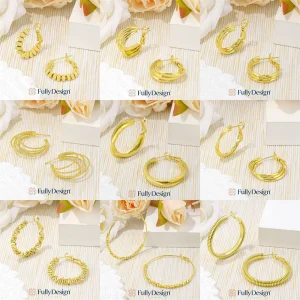
Featured Enterprise Collection — Batch 02
OEM / ODM Production Ready


Frequently Asked Procurement Questions (FAQ)
Technical, logistical, and compliance inquiries answered for B2B buyers and brand managers.
How do you verify that titanium piercing jewelry meets ASTM F136 standards?
Every single batch of titanium wire and rod stock undergoes Spectro-chemical composition analysis and mechanical tensile testing before entering our CNC production lines. We provide comprehensive Mill Test Certificates (MTC) matching the specific lot numbers of your order. Furthermore, we routinely submit samples to third-party accredited laboratories (such as SGS or TÜV Rheinland) for independent chemical verification under ISO 5832-3 and ASTM F136 ELI testing protocols.
What is the difference between G23 and ASTM F136 titanium for body piercing?
While Grade 23 (Ti-6Al-4V ELI) is a broad commercial classification, ASTM F136 is a specific, rigorous standard explicitly developed for surgical implants. ASTM F136 mandates tighter controls on interstitial elements (specifically lower maximum limits for oxygen, carbon, and iron). For initial body piercings, ASTM F136 is mandatory according to Association of Professional Piercers (APP) guidelines, as lower interstitial purity reduces long-term tissue rejection risks.
What are your Minimum Order Quantities (MOQ) for custom OEM/ODM designs?
For standard catalog items in titanium or 316L surgical steel, our minimum order quantity starts as low as 50 to 100 pieces per gauge, length, and color specification. For custom 3D-designed OEM items requiring new CNC tooling and custom master molds, MOQ is typically 200–300 pieces per design. Mixed color assortments (e.g., anodized gold, black PVD, raw titanium) can share a unified base tooling volume.
How does PVD Vacuum Plating perform against standard electroplating?
Physical Vapor Deposition (PVD) takes place inside a high-vacuum plasma environment. Vaporized titanium or real gold molecules penetrate and bond directly into the surface matrix of the base metal. Unlike standard chemical electroplating—which leaves a delicate surface layer prone to chipping, tarnishing, and leaching underlying nickel—PVD coatings are non-cytotoxic, biocompatible, hyper-durable, and fully resistant to autoclave steam sterilization up to 134°C (273°F).
What internal thread standards and pin tension specs do you produce?
We manufacture unified standard threading metrics across 18G (1.0mm), 16G (1.2mm), and 14G (1.6mm) products. Our internal thread pitches adhere strictly to ISO metric thread profiles (0.8mm internal thread post for 16G labrets). For threadless (push-fit) end attachments, our pins are pre-calibrated with a 25-degree pre-bend angle to achieve a uniform pull-out tension of 4.5N to 6.0N, preventing accidental disassembly during wear.
What export documentation is included with international wholesale shipments?
Every commercial export package includes: Commercial Invoice with precise HS Code classification (7117.19 / 8108.90), Packing List, Certificate of Origin (Form E or CO), Chemical Mill Test Reports (MTC), REACH Annex XVII / EN 1811 Nickel Release compliance certificates, and Ethylene Oxide (EO) Sterilization Validation Certificates where pre-sterilized packaging is requested.
Accelerate Your Piercing Jewelry Supply Chain Today
Request a line-by-line OEM/ODM quotation, mill test reports, or a physical sample kit engineered to your target market's regulatory standards within 24 hours.