 \n
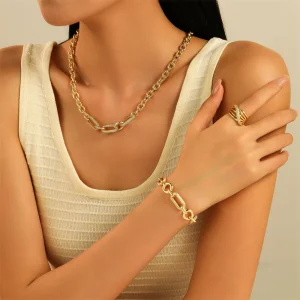
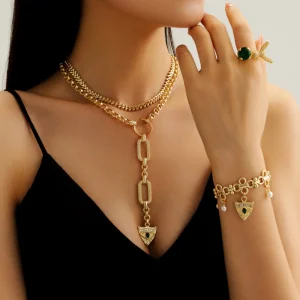
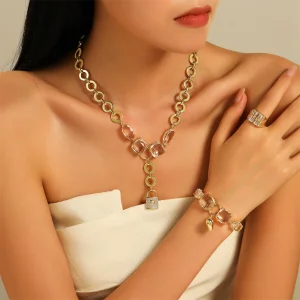
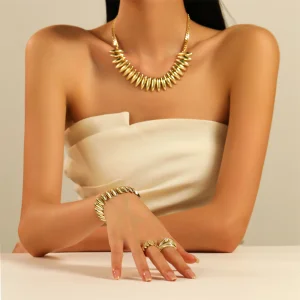
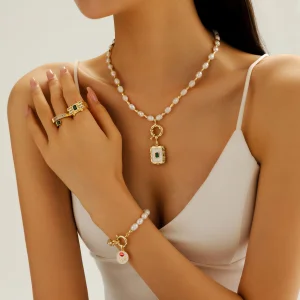
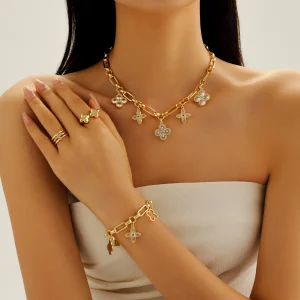
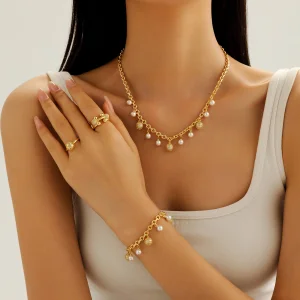
Special Occasion Jewelry Showcase — Batch I
Curated high-demand statement jewelry engineered for weddings, galas, red-carpet events, and private-label retail collections.
1. Macro-Industry Blueprint: China's Special Occasion Jewelry Manufacturing Paradigm
Special occasion jewelry represents a sophisticated, high-margin vertical within the broader fashion and demi-fine jewelry ecosystem. Unlike daily-wear minimalist accessories that prioritize rapid turnaround and ultra-low bill-of-materials (BOM) costs, special occasion jewelry—designed for weddings, galas, red-carpet events, anniversaries, and formal celebrations—demands rigorous structural integrity, complex stone setting, intricate layer geometry, and heavy vacuum plating standards. Global jewelry importers, boutique chains, and direct-to-consumer (DTC) private label brands increasingly look to specialized China special occasion jewelry factories to bridge the gap between high-end fine jewelry aesthetics and commercial wholesale feasibility.
China’s manufacturing landscape for special occasion jewelry is anchored across four primary industrial clusters, each specializing in unique metallurgical processes and artisanal crafts:
Yiwu Hub (Zhejiang)
Dominates fast-to-market design iterations, rapid prototyping, and cost-effective fashion jewelry sets. Known for high supply chain agility, rapid component sourcing, and integrated packaging logistics.
Panyu Hub (Guangzhou)
Specializes in lost-wax micro-casting, high-grade 5A cubic zirconia micro-pave setting, and demi-fine brass/silver jewelry. Houses master gem setters trained in fine jewelry standards.
Qingdao Hub (Shandong)
Focuses heavily on heavy-gauge stainless steel (316L), PVD ion plating, and North American big-box store compliance (Target, Walmart, Kohl's tier-1 audits).
The modernization of these industrial hubs has transformed the OEM/ODM relationship. Where buyers once chose between cheap mass production or expensive European artisan craft, modern Chinese factories now integrate 5-axis CNC mold engraving, 3D wax printing, zero-discharge electroplating technology, and XRF material analysis to supply global markets with jewelry that meets rigorous international compliance standards while preserving competitive enterprise margins.
2. Material Science & Plating Specifications for High-Wear Jewelry
Special occasion jewelry pieces—such as heavy statement Y-drop necklaces, multi-layer charm bracelets, and crystal-laden bridal tiaras—are subject to friction, skin perspiration, and cosmetic chemicals (perfumes, hairsprays). Ensuring long-term luster and preventing premature tarnish or skin discoloration requires precise metallurgical specifications.
Information Gain Insight: PVD Physical Vapor Deposition vs. Traditional Electroplating
Modern China special occasion jewelry factories have transitioned high-tier stainless steel and brass lines from conventional wet electroplating to Vacuum PVD (Physical Vapor Deposition) Ion Plating. PVD applies a titanium nitride (TiN) hard coating base followed by real 18K gold vapor, yielding a surface hardness up to 10 times higher than electroplating (HV 1500–2000), rendering pieces highly tarnish-resistant and water-impermeable.
Material Specification & Testing Benchmark
| Substrate Base | Plating Process | Layer Thickness Range | Salt Spray Resistance (ASTM B117) | Target Retail Category |
|---|---|---|---|---|
| 316L Surgical Stainless Steel | Vacuum PVD Real 18K/14K Gold | 0.03 μm – 0.10 μm | 72–96 Hours | Waterproof Demi-Fine, Bridal Stacks |
| H65 Eco-Friendly Brass | Rack Electroplating + E-Coating | 0.10 μm – 2.50 μm (Micron Gold) | 48–72 Hours | Red-Carpet Statement & High-Fashion |
| Lead-Free Zinc Alloy | Barrel / Hanging Plating | Flash Gold (0.01 – 0.03 μm) | 24–48 Hours | Prom & Seasonal Party Accessories |
| 925 Sterling Silver | Rhodium / Real Gold Plating | 0.25 μm – 1.00 μm (Vermeil) | 96+ Hours | Luxury Fine Jewelry Collections |
To guarantee strict compliance with EU REACH Annex XVII (Nickel Release EN 1811) and California Proposition 65 (Lead & Cadmium Limits), leading export-oriented factories implement XRF (X-ray Fluorescence) Spectroscopy testing on every raw metal batch before casting. This eliminates trace contamination at the source, ensuring seamless custom clearance into North American and European ports.
3. Supply Chain Resilience & Seasonal Capacity Optimization
Procuring special occasion jewelry presents unique supply chain dynamics driven by seasonal consumer peaks. Demand spikes heavily during two primary retail windows: Q2 Spring/Summer Wedding & Graduation Season (April–July) and Q4 Holiday/New Year Gala Season (October–December). Enterprise sourcing directors must structure factory SLA agreements to handle these demand fluctuations without compromising on quality or shipping timelines.
Q2 Wedding Season Timeline
Design Finalization: November 15 – December 15
Sampling & Tooling: January 5 – January 25
Bulk Production: February 15 – March 20 (Post-CNY)
Retail Delivery: April 1 – April 15
Q4 Holiday Gala Timeline
Design Finalization: May 1 – June 15
Sampling & Tooling: June 15 – July 10
Bulk Production: July 15 – August 30
Retail Delivery: September 15 – October 15
Leading factories in China mitigate seasonal bottlenecks through Modular Component Inventories. By keeping high-volume standard components—such as heavy OT clasps, 316L extender chains, 5A CZ solitaire drops, and AAA baroque freshwater pearls—pre-assembled in raw form, factory assembly lines can compress standard 30-day lead times down to 12–15 days for rush replenishment orders.
4. Regional Aesthetic Trends & Application Scenarios
Special occasion jewelry is deeply tied to cultural customs, evening dress codes, and regional retail expectations. Successful procurement depends on matching factory design profiles with specific regional consumer intent:
North America
Focus: Bold Statement & Vintage Charm.
High demand for vintage shield pendants, layered Y-drop emerald drop necklaces, and chunky stackable gold chains with heavy luster finishes.
Western Europe
Focus: Demi-Fine & Natural Pearls.
Preference for irregular baroque freshwater pearls, subtle crystal clover charms, 14K warm gold tones, and lightweight ergonomic stackable rings.
Middle East (GCC)
Focus: High-Carat Luster & Heavy Sets.
Intricate multi-piece matching sets (necklace, bracelet, ring, dangle earrings) featuring intense 18K/24K yellow gold plating and high-density CZ micro-pave.
Latin America
Focus: Colorful Gemstones & Wings.
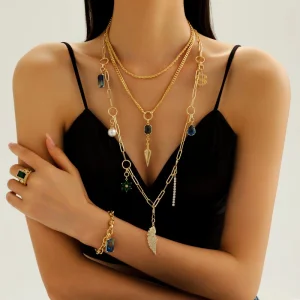
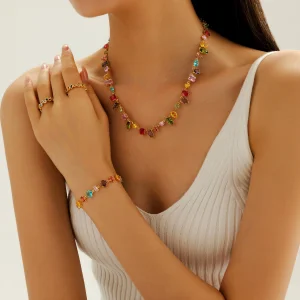
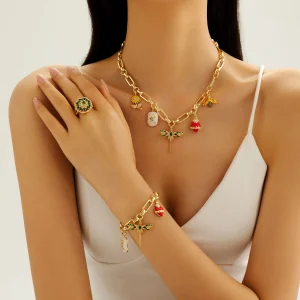
Expressive designs incorporating vibrant irregular rainbow stones, multi-layer gemstone wing pendants, and sturdy lobster clasp hardware.
5. The 4-Stage Zero-Defect Factory Inspection Protocol
To eliminate high return rates on intricate special occasion jewelry, top-tier Chinese manufacturers operate strict quality control gates across the entire manufacturing cycle. Below is the standard operating procedure (SOP) used by leading factory audit inspectors:
Gate 1: Raw Material Spectroscopy & Casting Integrity
Every batch of raw brass or 316L steel ingots undergoes XRF spectroscopy to confirm zero trace lead/cadmium contamination. Casted components are tested under optical microscopes to detect microporosity or air bubble voids that compromise plating adhesion.
Gate 2: Pre-Plating Polish & Stone Setting Pull Test
Before electroplating, raw metal pieces undergo hand and automated vibratory polishing. Prong-set cubic zirconia and crystal stones are subjected to a 5-Newton mechanical pull test to ensure stones will not detach during transit or wear.
Gate 3: Plating Thickness & Adhesion Testing
Plated batches undergo X-ray thickness measurement to confirm exact gold micron depth. Adhesion is verified using ASTM D3359 Cross-Hatch Tape Testing and thermal shock testing to ensure the plating layer never peels under humidity changes.
Gate 4: Clasp Tension & Final AQL 1.0/2.5 Inspection
Lobster clasps, OT toggles, and earring posts undergo 500-cycle open/close durability testing. Final carton packing follows strict ISO 2859-1 (AQL 1.0 critical / 2.5 major) statistical sampling protocols before export sealing.
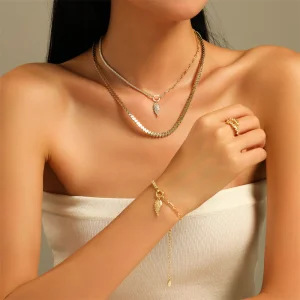
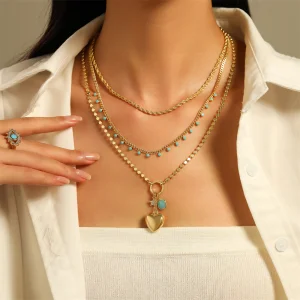
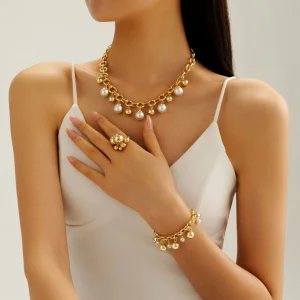
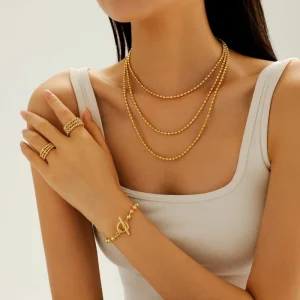
Special Occasion Jewelry Showcase — Batch II
Advanced layered chains, multi-charm sets, 14K gold leaf motifs, and statement stackable chokers ready for private label OEM/ODM customization.
6. End-to-End OEM/ODM Customization Workflow
For international buyers looking to create custom proprietary designs for special occasion lines, Chinese factories offer an integrated 4-step engineering protocol that accelerates concept-to-market speed while protecting intellectual property:
CAD & 3D Prototyping
Submitting a sketch, 2D vector file, or reference photo triggers 3D Jewelry CAD rendering within 24–48 hours. Rapid high-resolution resin 3D printing creates a tangible physical sample in 3 to 5 days.
Master Mold & Tooling
Once CAD dimensions are approved, high-precision steel silicone molds are cut via 5-axis CNC. Mold geometry guarantees uniform wall thickness and weight distribution across heavy statement pieces.
Custom Finishing & Plating
Buyers select precise metal colors (14K champagne gold, 18K yellow gold, rose gold, gunmetal, anti-tarnish rhodium) and stone grades (5A cubic zirconia, natural shell, synthetic emerald, baroque pearl).
Private Label Packaging
Factory lines assemble retail-ready packaging including custom magnetic rigid gift boxes, anti-tarnish velvet pouches, custom barcode stickers, FBA polybags, and branded care cards.
Frequently Asked Questions: China Special Occasion Jewelry Procurement
Direct technical answers addressing minimum order quantities, compliance certifications, plating guarantees, and factory audit standards.