 \n
OEM/ODM Wrist Jewelry & Matching Collections
Precision-engineered bracelets, bangles, and integrated sets manufactured to strict international compliance standards.
China's Strategic Dominance in Global Wrist Jewelry Manufacturing
An analytical overview of industrial agglomeration, raw material sourcing infrastructure, and technological economies of scale powering global fashion jewelry brands.
Industrial Cluster Dynamics
China's wrist jewelry manufacturing dominance is rooted in hyper-specialized industrial clusters across Zhejiang (Yiwu) and Guangdong (Guangzhou, Dongguan, Shanwei). Yiwu Muxi Jewelry Co., Ltd. (operating as Fully Design) leverages Yiwu’s unrivaled component ecosystem, integrating rapid alloy formulation, lost-wax precision casting, computer-controlled automatic chain weaving, electroplating eco-industrial parks, and centralized international logistics within a 30-kilometer radius.
Material Integration Infrastructure
From surgical-grade 316L stainless steel and hypoallergenic brass to eco-friendly zinc alloys, Chinese wrist jewelry suppliers maintain direct integration with metal refineries. Advanced surface enhancement facilities utilize Physical Vapor Deposition (PVD) vacuum ion plating and real-time X-ray Fluorescence (XRF) spectrometry, guaranteeing uniform coating thickness and chemical purity across mass production batches exceeding 100,000 units per calendar month.
Agile Lead Times & Prototyping
Modern B2B purchasing demands swift adaptation to micro-trends. Chinese OEM/ODM facilities utilize 3D high-resolution resin printing, parametric CAD modeling, and modular tooling systems. This enables 48-hour design concept turnaround, 7-to-10-day physical sampling, and full-scale factory order delivery within 15 to 25 days—drastically reducing time-to-market for international importers, Amazon FBA brand owners, and boutique chains.
Material Science & Advanced Surface Engineering
Understanding substrate mechanics, physical vapor deposition (PVD), electroplating thickness metrics, and anti-tarnish protective coatings.
Expert OEM Procurement Insight: The longevity of gold-plated wrist jewelry depends not merely on gold karat purity, but on the barrier layer thickness (e.g., Nickel-free Acid Copper/Palladium undercoating) and plating deposition method. Vacuum PVD Ion Plating on 316L Stainless Steel yields up to 10x greater wear resistance than traditional rack electroplating on brass.
| Base Material | Tensile Strength / Hardness | Plating Compatibility | Target Retail Bracket | Key Regulatory Features |
|---|---|---|---|---|
| 316L Surgical Stainless Steel | HV 200–240 (High Corrosion Resistance) | PVD Vacuum Ion Plating (0.03 – 0.5 µm Real Gold) | Mid-to-High Retail ($35 – $120+) | Inherently Nickel-safe, REACH Annex XVII & California Prop 65 Compliant |
| H65 Environmental Brass | HV 100–150 (Excellent Machinability) | Rack Electroplating (14K/18K/24K Gold, Rhodium, Pd Barrier) | Boutique & Designer Fashion ($25 – $85) | Requires strict Lead (<90 ppm) & Cadmium control in alloy smelting |
| Zamak 3 Zinc Alloy | HV 80–100 (Fluid Die-Casting Complexity) | Barrel / Rack Plating + Electrophoretic Lacquer | Fast Fashion & Volume Wholesale ($10 – $30) | Low melting point allows complex 3D filigree; strictly tested for Pb/Cd content |
PVD Ion Plating vs. Traditional Electroplating
Physical Vapor Deposition (PVD) utilizes high-power titanium or zirconium target sputtering under high-vacuum plasma environments. When depositing 14K/18K gold onto 316L stainless steel wrist items (cuffs, bangles, paperclip link bracelets), standard ion plating specs range from 0.03 µm to 0.05 µm for standard fashion wear, up to 0.1 µm to 0.5 µm (Heavy Gold PVD) for waterproof, tarnish-proof lifetime wear collections. X-Ray Fluorescence (XRF) non-destructive thickness readers verify every production batch.
Anti-Tarnish Nano-Coatings & E-Coating
To eliminate oxidation caused by sweat, perfume, and environmental humidity, advanced factories apply an organic Electrophoretic Coating (E-Coating) or inorganic ceramic nano-sealant over gold and silver plated surfaces. Subjected to 24-to-48-hour ASTM B117 salt spray chamber evaluations and synthetic sweat immersion testing, these nano-barrier coatings ensure zero discoloration for 24+ months under normal retail storage and consumer wear conditions.
Global Enterprise B2B Procurement & OEM/ODM Workflow
From initial reference image analysis to AQL 2.5 quality control, private label packaging, and international shipping fulfillment.
Tech-Pack & Cost Engineering
Buyers submit concept sketches, CAD drawings, or physical samples. Our engineering team conducts DFM (Design for Manufacturability) analysis, recommending substrate selection, clasp mechanics (lobster, toggle, box clasp), stone setting methods (bezel, prong, pavé CZ), and target cost structuring within 24 hours.
Rapid 3D Prototyping
Utilizing high-precision stereolithography (SLA) 3D wax printers, physical models are produced within 7–10 days. Pre-production counter-samples are plated to match specific brand color pantones (e.g., 14K Light Champagne Gold, 18K Yellow Gold, Rose Gold, Antiques Silver) and dispatched via express courier for physical review.
Batch Smelting & Casting
Upon tooling sign-off, raw metal ingots undergo vacuum induction melting and centrifugal investment casting (for intricate brass/zinc shapes) or multi-axis CNC machining and high-speed automatic chain making (for stainless steel link bracelets).
Surface Polishing & Plating
Castings enter multi-stage ultrasonic de-burring, mirror hand polishing, and chemical washing. Substrates undergo PVD or rack plating, followed by non-destructive XRF micron measurement and color consistency batch verification under standard D65 illuminants.
Stone Setting & Assembly
Grade 5A Cubic Zirconia, natural pearls, or enamel inserts are hand-set by master artisans. Chain assembly, jump-ring laser welding, and tension-testing of clasps (minimum pull force requirement: 15–25 N) are strictly performed per individual unit.
AQL 2.5 Quality Assurance & Packaging
Final pre-shipment inspections execute under ISO 2859-1 (AQL 2.5/4.0 criteria). Products are packaged in branded rigid gift boxes, velvet pouches, or FBA barcode polybags with anti-tarnish strips, ready for EXW, FOB, CIF, or DDP direct distribution.
Global Regulatory Compliance & Localized Support Blueprint
Navigating international chemical standards, consumer product safety mandates, and cross-border trade documentation with total peace of mind.
European Union Compliance (REACH & EN 1811)
Importing wrist jewelry into the European single market requires strict adherence to EU REACH Regulation (EC) No 1907/2006 Annex XVII. Key chemical thresholds enforced include:
- Nickel Release (EN 1811:2011+A1:2015): Less than 0.5 µg/cm²/week for articles in direct and prolonged contact with skin; less than 0.2 µg/cm²/week for post assemblies.
- Lead Content (REACH Entry 63): Total lead concentration ≤ 0.05% (500 mg/kg / 500 ppm).
- Cadmium Content (REACH Entry 23): Concentration ≤ 0.01% (100 mg/kg / 100 ppm) in metal alloys and plastic components.
North American Standards (Prop 65 & CPSC/ASTM)
Sourcing for North American retail demands compliance with mandatory federal and state legislation:
- California Proposition 65: Requires certification that jewelry does not contain Lead (typically <90 ppm total content) or Cadmium (<300 ppm) capable of triggering mandatory warning labels.
- US CPSIA & ASTM F2923-20: Standard Specification for Consumer Product Safety for Children’s Jewelry, mandating mechanical safety checks for small parts, sharp points, and heavy metal extraction limits.
- Canada Consumer Product Safety Act (CCPSA): Children's Jewelry Regulations (SOR/2018-82) enforcing strict lead limits of 90 mg/kg.
Third-Party Laboratory Verification: Fully Design works directly with international accredited testing bodies, including SGS, Bureau Veritas (BV), Intertek, and TÜV Rheinland. Batch-specific test certificates (CoC) and XRF chemical analysis reports are provided prior to shipment, guaranteeing flawless customs clearance at destination ports in North America, Europe, the UK, Australia, and the Middle East.
Strategic Application Scenarios Across Global Commercial Channels
Tailored wristwear product engineering adapted for diverse retail ecosystems, customer touchpoints, and price positioning.
DTC E-Commerce & Amazon FBA Brands
Key Demand: Lightweight items with high perceived value, zero tarnish rate (waterproof PVD 316L stainless steel), low return rates, and FBA-ready individually barcoded packaging.
Popular Items: Paperclip chain stackable bracelets, waterproof coin charm bangles, personalized initial slider wristbands.
High-End Boutique Chains & Brands
Key Demand: Exceptional plating consistency, heavy gold feel, handset 5A cubic zirconia or genuine freshwater pearls, custom logo engraving on clasps, luxury rigid gift boxes.
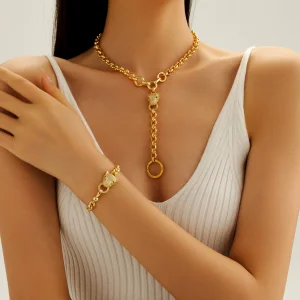
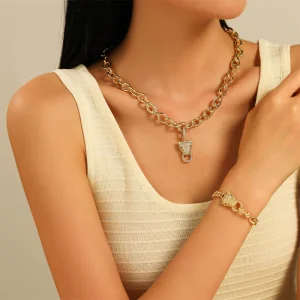
Popular Items: Heavy curb chain leopard head Y-drop bracelets, cubic zirconia bezel-set tennis bracelets, vintage coin open bangles.
Fast-Fashion Seasonal Drops
Key Demand: Ultra-fast 15-day mass production turnaround, competitive bulk FOB price per unit, compliance with rapid trend updates.
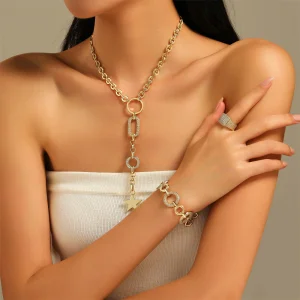
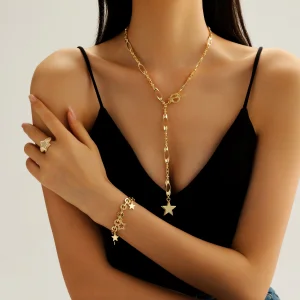
Popular Items: Multi-layer charm wrist jewelry, acrylic & enamel beaded stretch bracelets, star & moon accent multi-piece sets.
Macro Wrist Jewelry Trends & Innovations (2025–2030)
Forward-looking analysis of shifting consumer tastes, green metallurgical processes, smart hybrid jewelry, and modular manufacturing technologies.
1. Eco-Friendly PVD & Recycled Alloy Smelting
Global ESG mandates are reshaping fashion jewelry manufacturing. Traditional wet electroplating—which generates hazardous chemical waste—is rapidly being replaced by closed-loop Green PVD Vacuum Sputtering. Furthermore, progressive manufacturers are transitioning to 100% recycled 316L stainless steel and zero-lead brass ingots. Sourcing partners certified under ISO 14001 environmental standards gain a significant market edge in Western retail markets.
2. Gender-Neutral & Heavyweight Geometric Chains
Consumer demographics show a surging demand for unisex wristwear. Chunky paperclip chains, heavy Cuban curbs, bold geometric cuffs, and industrial bullet-shaped magnetic clasps are replacing ultra-dainty designs. Stainless steel's natural weight and structural rigidity make it the preferred material choice for these durable, everyday gender-fluid styles.
3. Smart & Hybrid Functional Wrist Accessories
The intersection of technology and fashion jewelry is creating a new category: micro-NFC integrated bangles and biometric health-tracking hybrid cuffs. OEM factories are developing recessed inner-band cavities to seamlessly house waterproof NFC microchips for digital business card sharing, contactless entry, or luxury authentication verification.
4. Modular & Interlocking Charm Ecosystems
Consumers increasingly seek personalized, adaptable jewelry experiences. Modern wristwear designs prioritize modularity—interchangeable charms, click-lock carabiners, convertible bracelet-to-necklace extenders, and customizable locket mechanisms. This modular approach allows brands to maintain low SKU inventories while offering end-users infinite custom styling options.
Frequently Asked Questions by Enterprise Importers
Detailed technical, operational, and financial answers to common B2B wrist jewelry procurement inquiries.
What are the minimum order quantities (MOQ) for custom OEM wrist jewelry orders?
For existing catalog models or ready-to-brand styles, our standard minimum order quantity starts at 50 to 100 pieces per design. For fully custom OEM designs requiring brand-new master steel molds or specialized die-casting tooling, the standard initial MOQ is 200 to 300 pieces per style. We also offer mixed color assortments (e.g., splitting a 200-piece order into 100 18K Gold PVD + 100 Silver/Rhodium) to lower testing barriers for new market launches.
What exact chemical and plating thickness certifications do you provide?
We provide full laboratory test documentation including EN 1811:2011+A1:2015 (Nickel Release Pass Certificate), EU REACH Annex XVII (Lead, Cadmium, Phthalates compliance), California Proposition 65 total heavy metal analysis, and X-Ray Fluorescence (XRF) Spectrometry gold plating thickness reports. Third-party testing with SGS, Bureau Veritas, or Intertek can be coordinated upon request prior to final order dispatch.
How do you guarantee color matching consistency between repeat bulk production runs?
Every approved pre-production sample is measured using a spectrophotometer to archive its exact CIE L*a*b* color space values. Master physical reference samples are preserved in vacuum-sealed retain containers at our Yiwu laboratory. During repeat bulk manufacturing, electroplating bath voltage, chemical concentration, and PVD target sputtering durations are electronically locked, ensuring zero color variation across production batches separated by months or years.
What is the standard turnaround lead time for sampling and mass production?
3D CAD renderings are delivered within 24 to 48 hours. Physical sample creation takes 7 to 10 working days for 3D-printed resin or modified stock components, and 12 to 15 working days for new custom molds. Mass production standard lead times range from 15 to 25 calendar days depending on total piece count and surface plating complexity.
Can you support Amazon FBA and private-label custom packaging requirements?
Yes. We offer complete turn-key private label packaging services, including custom foil-stamped rigid gift boxes, microfiber jewelry pouches, branded header cards, care instruction leaflets, anti-tarnish micro-strips, master outer cartoning, and direct Amazon FBA barcode labeling (FNSKU). Cartons are packed to meet strict FBA weight and dimension limits for seamless warehouse acceptance.
What are your quality control procedures for clasp durability and stone setting security?
Quality control executes across three distinct stages: IQC (Incoming Raw Material Quality Control), IPQC (In-Process Quality Control during casting and polishing), and OQC (Outgoing Quality Control). Clasps undergo 1,000-cycle mechanical fatigue testing and 20N tensile pull tests. Cubic zirconia and crystal stones undergo automated ultrasonic bath vibration testing to ensure zero stone fall-out prior to final boxing.
Additional High-Demand Wrist & Jewelry Collections
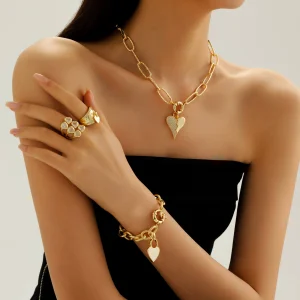
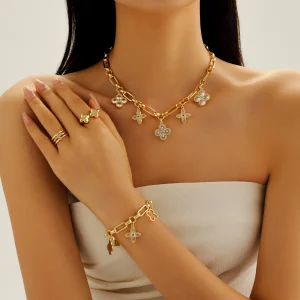
Explore top-selling paperclip chains, envelope locket charms, leopard head luxury statement pieces, and vintage coin open bangles.