 \n
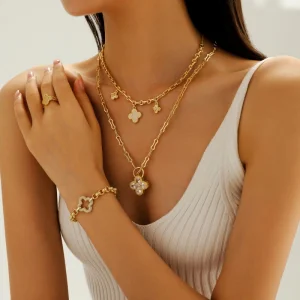
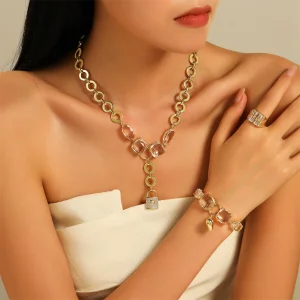
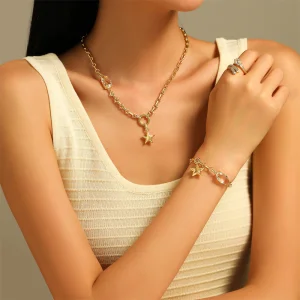
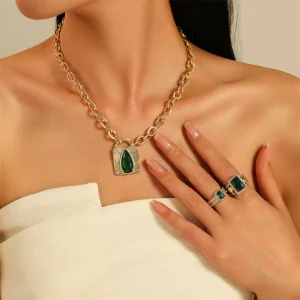
Featured Wholesale 18k Gold Plated Jewelry Products
Direct Factory Samples & OEM Solutions (Group 1 of 2)
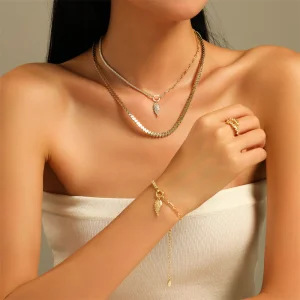
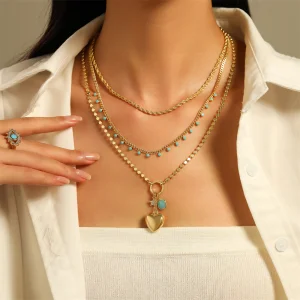
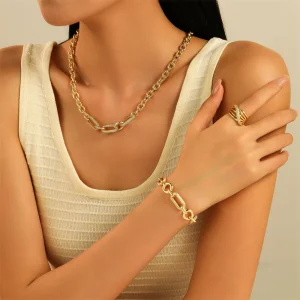
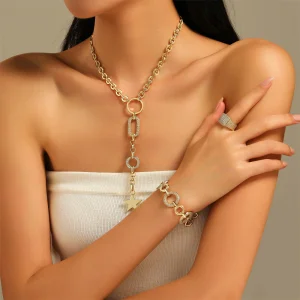
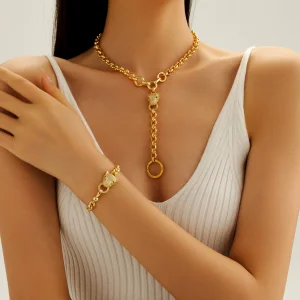


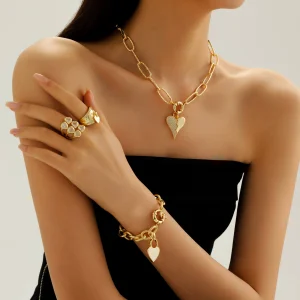
Global Landscape of 18k Gold Plated Jewelry Manufacturing
Analyzing shifting consumer demands, high-grade base metal transitions, and supply chain scaling for modern brand portfolios.
Shift Toward Demio-Fine Luxury
The global retail landscape has witnessed an aggressive pivot toward demi-fine 18k gold plated jewelry. Driven by skyrocketing spot prices of solid 18k gold bullion, consumers and luxury fashion houses alike seek long-lasting aesthetic alternatives that preserve the rich, warm color profile of authentic gold without imposing prohibitive retail price points.
Physical Vapor Deposition (PVD) Dominance
Modern wholesale factories have evolved beyond conventional wet chemical electroplating. The deployment of advanced Titanium Gold PVD vacuum chamber technology enables micron-level gold film bonding over medical-grade 316L stainless steel, drastically elevating tarnish resistance and product lifespans.
E-Commerce & Digital Supply Agility
D2C jewelry conglomerates require agile OEM/ODM manufacturing partners capable of rapid prototyping (under 7 days), flexible MOQs (50–100 pieces per SKU), and seamless integration with global fulfillment networks (FBA, direct dropshipping, and automated API reordering).
Material Science & Technical Deposition Roadmap
Understanding substrate selection, plating thickness metrics, and environmental resistance protocols.
Substrate Selection Principles
Factories leverage 316L Surgical Stainless Steel for tarnish-free, waterproof daily wear collections, alongside Lead-Free CZ121 Brass for complex, intricately set gemstone designs. Substrate purity prevents micro-pitting and guarantees uniform adhesion during plating.
XRF Thickness Verification
Every commercial batch is inspected via non-destructive X-ray Fluorescence (XRF) spectrometry. This verifies real-gold coating thickness across critical wear zones (clasps, chain links, pendant faces) to ensure compliance with strict brand specifications.
Accelerated Wear Testing
To qualify as waterproof jewelry, finished pieces undergo rigorous 72-hour Salt Spray (ASTM B117) and artificial sweat immersion tests (ISO 12870). These metrics simulate years of daily human wear without flaking, discoloration, or oxidation.
| Plating Category | Typical Thickness (μm) | Base Metal Compatibility | Water Resistance Rating | Target Retail Market Segment |
|---|---|---|---|---|
| Flash Gold Plating | 0.03 - 0.05 μm | Brass / Zinc Alloy | Low (Avoid Contact) | Fast Fashion & Budget Promotional |
| Heavy Gold Electroplating | 0.50 - 1.00 μm | Brass / 925 Sterling Silver | Moderate (Splash Proof) | Boutique Chains & Mid-Tier Fashion |
| PVD Vacuum Ion Plating | 0.10 - 0.30 μm (TiN + 18K) | 316L Stainless Steel | Maximum (100% Waterproof) | D2C Premium Wear & Activewear Jewelry |
| Gold Vermeil (Standard) | 2.50 μm (Real 18k Gold) | 925 Sterling Silver | High (Care Recommended) | Luxury Demi-Fine & Heritage Brands |
Local Support, Regulatory Safeguards & Global Distribution
Navigating chemical safety compliance, regional market standards, and end-to-end supply chain transparency.
EU REACH & Nickel Release Compliance
Shipments bound for Europe strictly adhere to REACH Annex XVII and EN 1811 testing protocols. Nickel release rates remain well below 0.5 µg/cm²/week, ensuring complete hypoallergenic safety for sensitive skin consumer demographics.
North American Prop 65 Standards
For US importers, raw metals undergo strict spectrometer screening to confirm total Lead content (< 0.009% / 90 ppm) and Cadmium thresholds compliant with California Proposition 65 and ASTM F2923 specifications for adult and children's jewelry.
Door-to-Door (DDP) Freight & FBA Prep
Leading Yiwu and Guangdong factory hubs provide comprehensive custom packaging, automated SKU barcoding, unit polybagging, and DDP air/sea freight routing to regional distribution hubs across North America, Europe, Australia, and the Middle East.
Commercial Application Scenarios for Wholesale Importers
Tailored manufacturing strategies for distinct retail models, market tiers, and brand positioning.
Waterproof Activewear Collections
Targeted at fitness enthusiasts and beachwear brands, 316L PVD 18k gold plated jewelry allows users to swim, sweat, and shower without removing their accessories, driving zero-return satisfaction rates for online D2C stores.
Bridal & Formal Statement Jewelry
High-end boutique chains utilize heavy gold electroplated brass substrate base metal paired with 5A cubic zirconia or synthetic gemstones, replicating solid gold luxury aesthetic for weddings, formal galas, and seasonal retail drops.
Private Label Subscription Boxes
Monthly jewelry subscription curators leverage rapid OEM catalog expansion—releasing 100+ trending new styles monthly—allowing brands to maintaining dynamic inventory cycles with low holding liability.
Next-Generation Technologies Shaping Jewelry Manufacturing
Pioneering advancements in green metallurgy, AI-assisted CAD rendering, and atomic layer deposition.
Recycled Metals & Sustainable Plating
Factory operations are integrating 100% recycled 316L steel and closed-loop gold recovery electroplating tanks. Sustainable manufacturing practices reduce environmental footprint while catering to ESG-conscious retail consumers.
AI-Driven Generative CAD Design
Artificial intelligence algorithms analyze global search trends and social media sentiment to automatically generate optimized 3D jewelry models, cutting product development timelines from weeks down to hours.
Atomic Layer Deposition (ALD) Protective Films
Emerging nanotech clear coats applied over gold plating provide molecular-level physical barriers, boosting scratch protection by up to 300% and setting new benchmarks for fashion jewelry durability.
Frequently Asked Questions by Wholesale Buyers
Expert engineering and commercial insights to guide your factory selection and purchasing decisions.
What is the primary technical difference between 18k PVD vacuum plating and standard gold electroplating?
Standard electroplating relies on aqueous chemical baths to deposit a micro-thin layer of gold onto base metal. PVD (Physical Vapor Deposition) takes place inside a high-vacuum chamber where titanium nitride and real 18k gold are plasma-vaporized and bomb-bonded to the substrate (typically 316L steel). PVD results in significantly higher atomic density, making it sweat-proof, waterproof, and far more resistant to friction than traditional electroplating.
How do wholesale gold plated jewelry factories guarantee compliance with international chemical standards?
Reputable OEM/ODM factories enforce strict supply chain protocols. Raw metals are screened via X-ray fluorescence (XRF) prior to casting. Electroplating and PVD solutions are kept free of lead, cadmium, and nickel. Batch testing certificates from accredited third-party laboratories (such as SGS, Bureau Veritas, or TÜV Rheinland) are issued for REACH Annex XVII (EU) and California Prop 65 (USA) compliance before customs dispatch.
What Minimum Order Quantities (MOQs) and lead times can buyers expect for custom private-label orders?
Standard factory MOQs for existing catalog items range from 50 to 100 pieces per SKU. For fully custom designs requiring new mold creation, MOQs typically start at 200 pieces. CAD sampling requires 5 to 7 working days, physical counter-samples take 10 to 12 days, and bulk mass production typically completes within 15 to 25 calendar days depending on design complexity.
How can buyers ensure color consistency across different production batches?
Factories utilize digital spectrophotometers and master color chips (e.g., standard 18k yellow gold, 14k light gold, rose gold) to calibrate PVD vapor chambers and plating tanks. By recording exact voltage, time, and gas mixture parameters, repeat orders placed months apart achieve consistent color matching across all product lines.
More Wholesale 18k Gold Plated Jewelry Collections
Explore Direct Factory Products & Custom Designs (Group 2 of 2)