 \n
Precision-Engineered Pendant Necklaces & Jewelry Sets
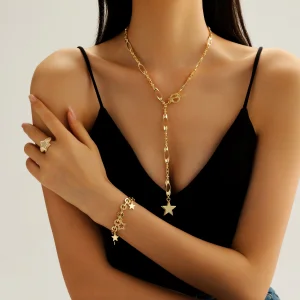
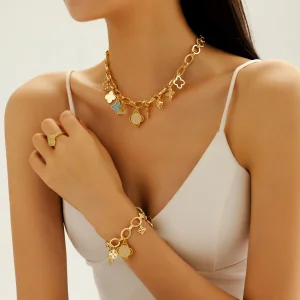
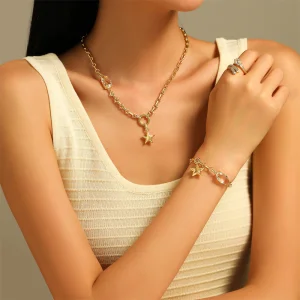
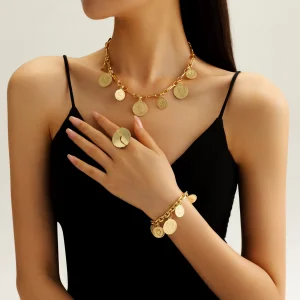
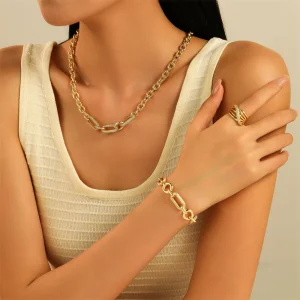
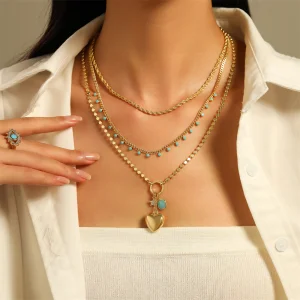
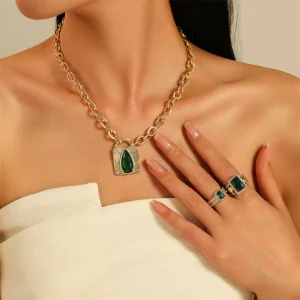
The Global Industrial Landscape of Wholesale Pendant Necklace & Costume Jewelry
The global market for pendant necklaces and costume jewelry is undergoing a structural paradigm shift. Traditionally driven by fast-fashion retail cycles with low-cost zinc alloy materials, international procurement strategies have shifted toward longevity, skin safety, and advanced surface engineering. Enterprise B2B buyers—ranging from high-volume Amazon FBA aggregators and regional boutique retail chains to global brand importers—now require suppliers to blend fast-turnaround OEM manufacturing with strict metallurgical control.
As the epicenter of global fashion jewelry manufacturing, China's industrial clusters in Zhejiang (Yiwu) and Guangdong (Guangzhou/Dongguan) account for over 70% of global output. However, modern procurement mandates extend far beyond low unit prices. Procurement managers must navigate complex regulatory landscapes including the European Union's REACH Annex XVII (Entry 27, 28, and 63) for nickel release, lead, and cadmium contents, alongside the United States' California Proposition 65 and ASTM F2923-14 children's jewelry safety standards.
Costume pendant necklaces, in particular, represent the highest-velocity sub-category within fashion accessories. Their position as a focal accent piece makes them uniquely sensitive to surface oxidation, chain tensile failure, and stone setting integrity. Consequently, top-tier manufacturing facilities have abandoned legacy wet-electroplating in favor of vacuum Physical Vapor Deposition (PVD), real-time X-ray fluorescence (XRF) coating validation, and automated CNC wax modeling.
Transition from porous zinc alloys to medical-grade 316L Stainless Steel and Eco-Brass, eliminating structural micro-fissures and preventing deep-layer metal corrosion.
Comprehensive documentation control for EN 1811 (nickel release), EN 12472 (corrosion simulation), and XRF spectroscopy certification for frictionless global customs clearance.
Integration of 5A Synthetic Cubic Zirconia, natural agate, turquoise, and mother-of-pearl cabochons set via hand-prong or micro-pave methods rather than volatile chemical glues.
Key Industry Trends Transforming Costume Jewelry Manufacturing
The manufacturing of wholesale pendant necklaces has entered an era of digital precision. The legacy reliance on hand-carved wax masters led to significant dimension tolerances (+/- 0.5mm), weight variations, and inconsistent stone setting sockets. Contemporary B2B production utilizes high-resolution 3D SLA wax printers coupled with matrix-based casting trees, ensuring that every pendant charm within a 10,000-piece batch maintains exact geometric symmetry.
| Manufacturing Parameter | Legacy Fast-Fashion Jewelry | Modern B2B Semi-Fine Standard | Advanced OEM/ODM Factory Standard |
|---|---|---|---|
| Base Substrate | Recycled Lead-Zinc Alloy / Scrap Brass | Eco-Brass (H65/H68) / 304 Steel | Medical Grade 316L Stainless Steel / Deoxidized Brass |
| Plating Methodology | Flash Water Electroplating (0.01-0.02 µm) | Rack Electroplating + E-Coating (0.03-0.05 µm) | Vacuum PVD Ion Plating / Real 14K-18K Gold (0.1-3.0 µm) |
| Color Longevity | 1 - 3 Months (Prone to tarnish) | 6 - 12 Months Normal Wear | 24 - 36 Months Sweat & Water Resistant |
| Stone Fixing Tech | Liquid Epoxy Resin Glue | Manual Bezel & Prong Setting | Micro-Pave CNC Prong Setting & In-Mold Casting |
| Quality Control Standard | Visual Spot Check (AQL 4.0) | AQL 2.5 Standard Inspection | AQL 1.5 + XRF Plating Test + 48h Salt Spray Test |
Unlike traditional dip-plating, PVD takes place inside a high-vacuum chamber where titanium nitride and real 18K gold atoms are bombarded onto the metal surface. This creates a molecular bond that stands up to seawater, perfume, and daily abrasion without flaking or green discoloration.
For brass and alloy base metals, applying a nano-scale organic protective coat via electrophoresis yields an invisible shield. This non-yellowing layer seals the underlying metal from oxygen and humidity, extending shelf-life during transoceanic shipping and warehouse storage.
Localized Application Scenarios & Regional Regulatory Architectures
Consumer Trend: High demand for layered Y-shaped pendant chains, vintage coin lockets, chunky statement collars, and personalized celestial/zodiac charms in warm 14K gold tones.
Regulatory Compliance: Strict enforcement of California Proposition 65 (Lead < 90 ppm, Cadmium < 300 ppm). Compliance with CPSC and ASTM F2923-14 for adult and children's jewelry. E-commerce platforms like Amazon mandate GCC (General Certificate of Conformity) for all pendant listings.
Packaging & Logistics: FBA-ready polybagging with barcode labeling, anti-tarnish strips inside custom rigid presentation boxes.
Consumer Trend: Preference for minimalist geometric pendants, organic gemstone drops, clover emblems, and cool 18K champagne gold or silver finishes.
Regulatory Compliance: Mandates strict REACH Annex XVII regulation. Nickel release rates must fall below 0.5 µg/cm²/week for items intended for direct prolonged skin contact. Lead must be below 0.05% by weight. UKCA/CE markings required where integrated electronic/light components are involved.
Sustainability Focus: Rising mandate for GRS-certified recycled stainless steel and eco-friendly FSC cardboard packaging.
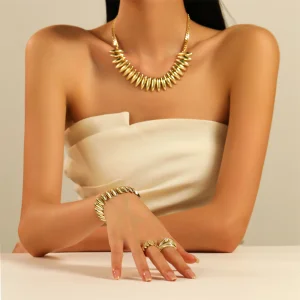
Consumer Trend: Preference for rich, high-carat 21K/24K deep gold color matching, intricate filigree pendants, oversized statement sets with matching bracelets and rings.
Technical Challenge: High humidity and elevated ambient temperatures accelerate sweat-induced oxidation. Products require heavy PVD gold plating (> 0.1 µm) combined with specialized anti-corrosion sealing coats.
Consumer Trend: High volume demand for affordable multi-charm sets, vibrant enamel inlay pendants, heart motifs, and durable stainless steel base jewelry suitable for daily tropical wear.
B2B Logistics: Import tariff optimization via bulk non-assembled supply, custom private label carding, and localized retail barcode printing.
Technology Roadmap & Future Outlook for Costume Jewelry Factories
Development of nickel-free titanium-infused steel matrix alloys that reduce overall weight by 25% while offering 300% higher tensile strength for delicate pendant links and fine chains.
Full transition to eco-friendly, zero-wastewater plasma PVD coating technology. Eliminates chemical baths and guarantees complete compliance with global ESG mandates.
Machine learning algorithms analyze global social retail trends to output production-ready 3D CAD models within 24 hours, cutting product sample lead times from 14 days down to 48 hours.
End-to-End Enterprise Manufacturing & Quality Management
Managing large-scale fashion jewelry orders requires seamless synchronization between artistic design and industrial engineering. A single defect in clasp tension, pendant bail thickness, or electroplating batch chemistry can lead to high return rates and brand reputation damage. To protect commercial buyers, top-tier China jewelry factories implement a structured 4-step manufacturing quality protocol.
Transforming reference sketches into 3D CAD files. Silicone or steel molds are precision-cut using CNC engravers. physical counter-samples are delivered with full XRF plating reports for client sign-off prior to bulk casting.
Three distinct inspection gates: raw casting deburring audit, post-polishing smoothness check, and post-plating color matching under standardized D65 light sources. Tensile testing is performed on all pendant chains to ensure a minimum pull strength of 15-20 N.
Laser-engraving custom brand logos onto pendant tags, fold-over clasps, or coin charms. Full assembly services include backing card mounting, anti-tarnish polybagging, and custom barcode/UPC sticker application.
FOB, CIF, or DDP fulfillment directly to client warehouses or Amazon fulfillment centers worldwide. Customs clearance documentation, REACH safety datasheets, and Certificate of Origin (CO) are provided for every shipment.
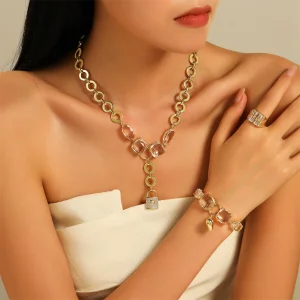
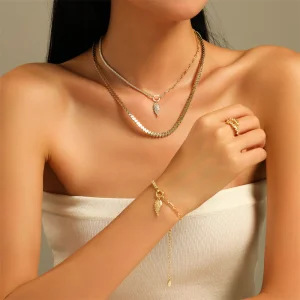
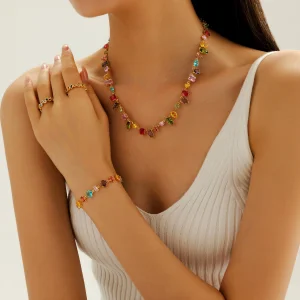
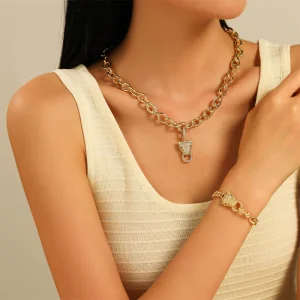
Custom Pendant Necklaces, Multi-Charm Sets & Fashion Accessories
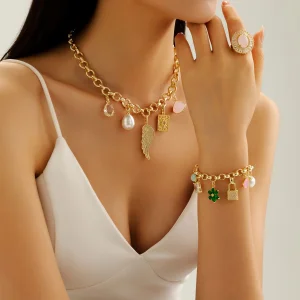
Frequently Asked Questions for Wholesale Jewelry Buyers
- EU REACH Annex XVII: Entry 27 (Nickel Release < 0.5 µg/cm²/week), Entry 63 (Lead < 500 ppm), Entry 23 (Cadmium < 100 ppm).
- US California Proposition 65: Total Lead Content < 90 ppm.
- ASTM F2923-14: Standard Specification for Consumer Product Safety for Children's Jewelry.