 \n
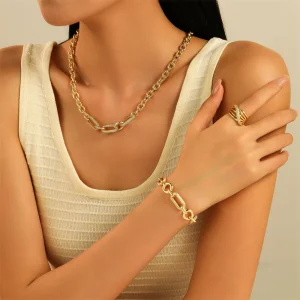
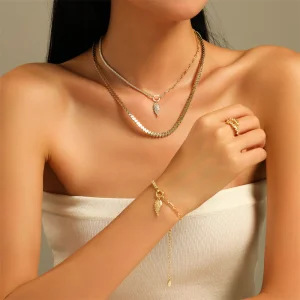
Featured Western & Fashion Jewelry Catalog (Batch 01)
Explore high-volume OEM/ODM Western fashion jewelry collections engineered with advanced PVD plating and precision stone settings.
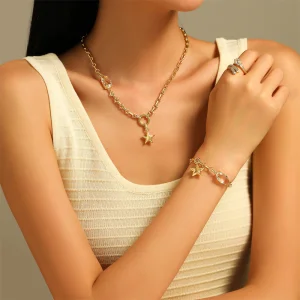
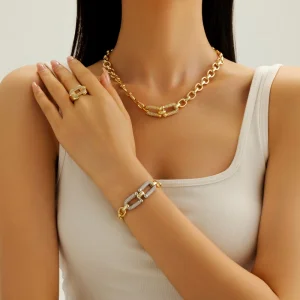
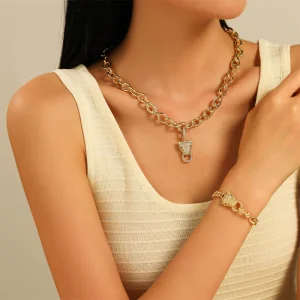
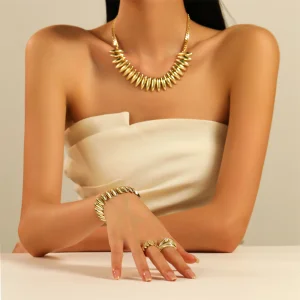
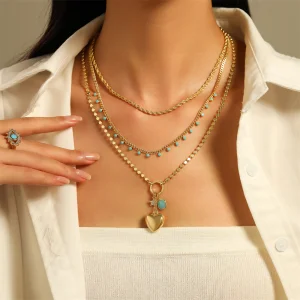
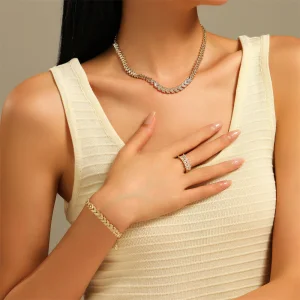
1. Global Commercial Landscape & Evolution of Western Jewelry
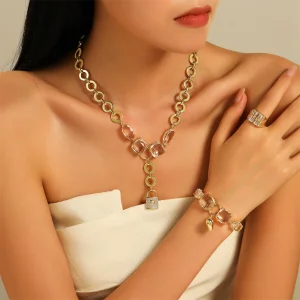
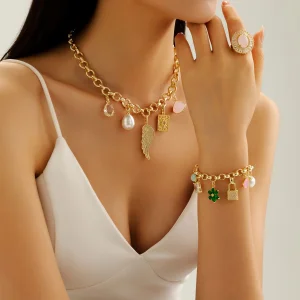
The global market for Western jewelry—traditionally anchored in Southwestern American heritage, equestrian motifs, Native American tribal influences, and ranch/country aesthetics—has transformed from a niche regional craft into a lucrative multi-billion-dollar global commodity. Modern Western jewelry fuses classic elements like turquoise matrices, hand-tooled leather textures, filigree engraving, and silver patinas with modern fashion-forward silhouettes, such as paperclip link chains, micro-pave cubic zirconia, and hypoallergenic PVD gold plating.
Driven by the worldwide surge in country music culture, rodeo fashion events, festival-wear trends (e.g., Coachella, Stagecoach), and the rise of crossover "Boho-Western" apparel, demand for high-quality Western jewelry has expanded well beyond the American Sun Belt into Western Europe, Latin America, Australia, and East Asia. Commercial buyers—ranging from high-street boutique chains to global e-commerce powerhouses—require scalable manufacturing partners capable of delivering authentic aesthetic details combined with industrial consistency, rigorous metal compliance, and high margins.
Information Gain Insight: The shift from handcrafted sterling silver (artisanal scale) to mass-precision manufacturing (316L stainless steel & brass substrates with vacuum PVD plating) has reduced B2B unit costs by up to 65% while increasing wear durability by 400% against tarnishing and corrosion.
Market Growth Dynamics
The global Western fashion accessories sector is expanding at a CAGR of 7.8% (2024–2030), with non-precious metal Western jewelry taking over 58% of total volume due to consumer preference for accessible, waterproof daily-wear accessories.
Material Innovation
Depletion of high-grade natural turquoise mines has forced a shift toward engineered reconstituted stone cabochons, color-matched natural green agate, and high-density epoxy resins that mimic matrix lines without structural fracturing.
Regulatory Strictness
North American (California Prop 65, ASTM F2923) and EU (REACH Annex XVII) regulations mandate strict zero-lead, zero-cadmium, and nickel-release compliance (<0.5 µg/cm²/week), forcing brand buyers toward certified factory partners.
2. China's Manufacturing Ecosystem & Factory Efficiency Advantages
Sourcing wholesale Western jewelry from China factories—specifically within the concentrated industrial clusters of Yiwu (Zhejiang) and Guangdong (Panyu, Dongguan, Qingyuan)—offers global procurement teams unprecedented structural advantages. Unlike isolated regional suppliers, China’s jewelry manufacturing network operates as a fully integrated, hyper-efficient ecosystem.
The Supply Chain Density Advantage
Within a 30-kilometer radius in Zhejiang or Guangdong, a primary jewelry manufacturer has direct access to raw metal refining facilities, precision mold makers, custom gemstone lapidaries, automated electroplating lines, packaging printers, and international logistics hubs. This geographical concentration reduces internal lead times for raw materials to under 24 hours.
- Tooling Acceleration: 3D CAD modeling and resin printing prototypes delivered in 48 to 72 hours.
- Casting Throughput: High-vacuum lost-wax casting machines capable of yielding 100,000+ units weekly per line.
- Surface Polishing: Hybrid centrifugal barrel polishing paired with manual master-finishing for crisp detail retention.
Cost Efficiency & Yield Optimization
By leveraging semi-automated CNC engraving machines for Western filigree detailing and automated multi-axis robot stone setting, Chinese factories eliminate human margin of error while optimizing material consumption. Scrap metal recovery systems allow precious metal plating (14K/18K gold, 925 silver) to be applied with micro-inch accuracy.
- Material Waste Minimization: Scrap rates kept under 1.2% through closed-loop recycling.
- Competitive Tooling Fees: Custom master mold creation costs 70% less than North American or European equivalents.
- Scalable MOQs: Low starting MOQs (50–100 pcs/style for catalog items; 200–500 pcs for full custom OEM).
| Production Metrics & Operational Benchmarks | China Tier-1 Integrated Factory | Traditional Regional Supplier | B2B Buyer Advantage |
|---|---|---|---|
| Rapid Prototyping (CAD to Sample) | 3 – 7 Working Days | 15 – 25 Working Days | 70% Faster Time-to-Market for Trend Waves |
| Mass Production Lead Time (10,000 pcs) | 15 – 20 Days | 45 – 60 Days | Prevents Stock-outs During Peak Seasons |
| PVD Vacuum Gold Coating Tolerance | ±0.005 Micron (XRF Verified) | Manual / Variable | Consistent Wear Life & Zero Color Drift |
| Defect Rate (AQL 2.5 Standard) | < 0.5% (Automated Optical QC) | 2.0% – 4.0% | Lower Customer Returns & Replacement Costs |
3. Material Engineering & Plating Science in Western Jewelry Production
High-end Western jewelry relies heavily on structural integrity, distinct weight feel, and deep antiqued contrast. A professional wholesale manufacturer must offer precise metallurgical options suited for different retail price tiers and performance expectations.
Substrate Engineering
316L Surgical Stainless Steel: Preferred for waterproof, non-tarnish Western chains, heavy buckle pendants, and signet rings. High tensile strength prevents warping.
Environmentally Friendly Brass (H65 Grade): Excellent for intricate 3D die-struck components, filigree lockets, and detailed Western relief work requiring crisp hand-chasing.
Zinc Alloy (ZAMAK 3): Cost-effective solution for large statement pieces, belt sliders, and decorative conchos while maintaining strict lead/cadmium limits.
Advanced Plating Technologies
PVD Vacuum Ion Plating: Deposits titanium nitride (TiN) mixed with 18K/14K real gold in a vacuum chamber. Yields a layer thickness of 0.03µm to 0.1µm with 10x higher wear resistance than liquid plating.
Antiqued Oxidized Silver (Western Patina): Multi-stage process using ammonium sulfide dipping followed by selective mechanical buffing to create deep contrast in recessed filigree details.
E-Coating (Electrophoretic Lacquer): Transparent acrylic nano-layer baked at 120°C to seal silver and gold plating against oxidation, sweating, and friction wear.
Stone Inlay & Embellishments
Reconstituted & Synthetic Turquoise: Formulated using crushed stone dust bonded with color-stabilized resin to withstand impact and moisture without color fading.
Natural Agate & Gemstone Slabs: Precision lapidary cutting for bezel-set rings, bolo ties, and vintage green agate pendant sets.
5A Grade Cubic Zirconia: Micro-pave prong-set crystals used to introduce modern "glam-cowgirl" aesthetics to classic Western motifs (horseshoes, stars, skulls).
4. Regional Application Scenarios & Market Sourcing Trends
Different international target markets exhibit distinct stylistic preferences and functional requirements for Western jewelry. Factory production lines must adapt to localized consumer expectations across global sales channels.
1. North American Southwestern & Rodeo Heritage
Key Geographies: USA (Texas, Arizona, Tennessee, Oklahoma, Wyoming), Western Canada.
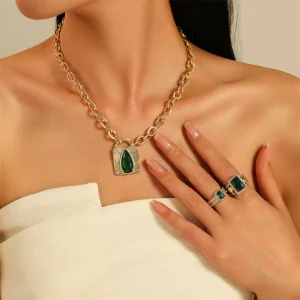
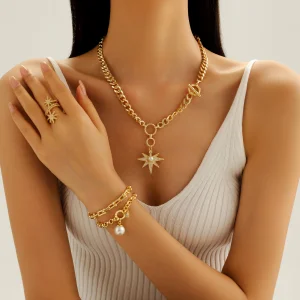
Design Profile: Heavy-gauge turquoise bezel lockets, chunky paperclip charm necklaces with cattle skulls, north star pendants, bullet-shaped charms, and wheat-pattern ring-and-bracelet sets. Preferred finishes include burnished 14K yellow gold and heavily oxidized vintage silver.
Buying Requirement: Durable daily-wear durability, hypoallergenic certifications for sensitive skin, and premium gift-box presentation for Western boot boutiques and equestrian retailers.
2. European Festival & Modern "Boho-Chic" Trend
Key Geographies: United Kingdom, France, Germany, Spain, Ibiza retail markets.
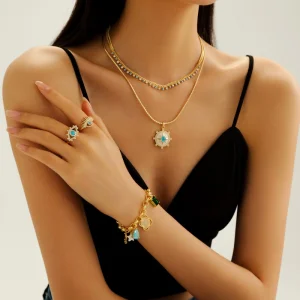
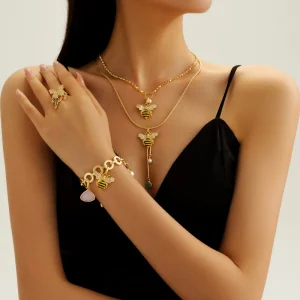
Design Profile: Layered delicate chokers, honeybee pearl accents, evil eye blue bead accents combined with dainty gold chains, starburst drop earrings, and stackable band rings.
Buying Requirement: Ultra-strict REACH compliance (zero nickel release), lightweight packaging to minimize airfreight costs, and rapid stock rotation capability for e-commerce fast-fashion brands.
3. Latin American Vaquero & Ranchero Aesthetics
Key Geographies: Mexico, Colombia, Northern Argentina, Brazil.
Design Profile: Bold gold-plated religious and equestrian iconography, heavy curb chain necklaces with coin pendants, green agate inlay signet rings, and multi-charm bracelet sets.
Buying Requirement: High-shine 18K gold color consistency, high resistance to high-humidity climates (anti-tarnish lacquering), and competitive volumetric volume packaging for sea freight.
4. Global E-Commerce & Direct-to-Consumer (D2C) Brands
Key Channels: Amazon FBA, Shopify storefronts, TikTok Shop sellers, Boutique Subscription Boxes.
Design Profile: Modular customizable initial lockets, star/sunflower sets, charm-expandable bracelets, and waterproof stainless steel chains suitable for active lifestyles.
Buying Requirement: Barcoded polybags, polybagged units ready for FBA scanners, low defect ratios, 7-day reorder replenishment cycles, and custom white-label packaging solutions.
Factory Engineering & Operational Capability Metrics
Quantifiable performance metrics verified through ISO 9001 quality system audits and automated optical inspection systems.
5. The End-to-End OEM/ODM Procurement Workflow for B2B Buyers
Working directly with a China wholesale Western jewelry factory streamlines product development from conceptual sketch to customs-cleared container delivery. Below is the standardized step-by-step engineering roadmap.
Phase 1: Concept & CAD Rendering
Buyer submits reference photos, vector sketches, or tech packs. Factory engineering team creates high-precision 3D CAD models within 48 hours, detailing stone dimensions, clasp mechanisms, and weight estimations.
Phase 2: 3D Resin Printing & Master Mold
A physical wax/resin prototype is 3D printed to verify scale, hand-feel, and ergonomics. Upon buyer approval, a rubber master mold or steel CNC die is cut for volume production.
Phase 3: Casting, Assembly & Plating
Vacuum lost-wax casting or automatic stamping produces raw metal blanks. Components undergo multi-stage centrifugal deburring, hand polishing, stone setting, and electroplating (PVD or liquid electro-gold/silver patina).
Phase 4: Inspection & Packaging
100% visual inspection paired with AQL 2.5 final sampling for plating thickness (XRF gauge) and pull-test clasp strength. Custom branded backing cards, gift boxes, and barcoded cartons are packed for export.
6. Quality Engineering & International Compliance Verification
Customs impoundment or marketplace product takedowns due to chemical non-compliance present massive risks for jewelry brands. Premium Western jewelry factories operate strict internal laboratory testing protocols to guarantee smooth global distribution.
Chemical Compliance Standards
REACH Regulation (EC) No 1907/2006: Enforces Nickel Release limits under Annex XVII (<0.5 µg/cm²/week for wearable components, <0.2 µg/cm²/week for piercers).
California Proposition 65: Restricts total Lead content to <90 ppm and Cadmium content to <100 ppm across all metal substrates and surface coatings.
Mechanical & Physical Durability
Tension & Pull Testing: Jump rings, solder joints, and lobster clasps undergo motorized tensile testing up to 15 kg of force to eliminate chain snapping.
Abrasion Resistance: Plated surfaces are subjected to eraser friction tests (1,000 cycles) to simulate daily wear against denim and leather clothing.
Corrosion & Tarnish Acceleration
Neutral Salt Spray (NSS) Testing: Plated samples are exposed to a 5% sodium chloride fog at 35°C for 24 to 96 hours to simulate months of human sweat exposure without discoloration.
XRF Spectrometry: X-ray fluorescence analysis is conducted on every batch to measure exact gold and silver micron thickness.
7. Future Trends Driving the Western Jewelry Industry (2025–2030)
Understanding emerging shifts in Western jewelry aesthetics and manufacturing technology enables brand owners to order inventory that aligns with future consumer desires rather than fading trends.
1. Sustainable & Recycled Base Metals
Consumer demand for eco-conscious fashion has driven top-tier China manufacturers to adopt 100% recycled 316L stainless steel and post-consumer brass. Partnering with GRS-certified (Global Recycled Standard) factories provides brand story leverage for DTC marketing campaigns.
2. Modular & Interchangeable Western Charms
Modern consumers seek versatility. Emerging lines feature quick-release spring clasps, charm-convertible bolo ties, and snap-on conchos that allow wearers to transition a necklace from a minimalist chain to a dramatic Western focal piece.
3. Hyper-Realistic Synthetic Gemstone Matrixing
Through advanced thermal pressing and natural vein injection technology, modern lab-created turquoise and green agate stones achieve 99% aesthetic fidelity to natural Kingman or Sleeping Beauty turquoise without matrix fracturing vulnerabilities.
4. Fusion of High-Glam CZ with Rustic Patina
The boundary between traditional rustic rodeo gear and luxury fashion continues to blur. Expect heavier integration of micro-pave 5A cubic zirconia set inside heavily oxidized vintage silver rope frames and horse-bit link structures.
8. Frequently Asked Questions (FAQ) for B2B Procurement
Direct answers to critical operational, technical, and financial questions asked by global jewelry buyers prior to placing wholesale orders.
What is the typical Minimum Order Quantity (MOQ) for custom Western jewelry orders?
For existing factory catalog styles, MOQs generally start at 50 to 100 pieces per design. For completely custom OEM designs requiring unique 3D mold fabrication, standard MOQs are 200 to 300 pieces per style. Mixed color plating assortments (e.g., 100 pcs 14K Gold + 100 pcs Antiqued Silver) can frequently share a single mold batch.
How long does PVD gold plating last on stainless steel vs. brass Western jewelry?
When applied over 316L stainless steel using PVD vacuum ion deposition (0.05µm–0.1µm), gold plating typically maintains its color without fading or peeling for 1 to 3 years of continuous daily wear, even with exposure to water. On brass substrates with standard electroplating and protective e-coating, wear life averages 6 to 12 months depending on wear conditions.
Can the factory match exact color swatches or vintage silver patina finishes?
Yes. By utilizing spectrophotometers and XRF plating analysis, factories can precisely match physical counter-samples provided by buyers. Approved physical color standards are maintained in factory sealed vaults to guarantee zero batch-to-batch color drift across repeat orders.
How are intellectual property (IP) and custom OEM designs protected in China?
Reputable tier-1 manufacturers sign legally binding Non-Disclosure Agreements (NDAs) prior to receiving design files. Custom tooling molds remain the exclusive property of the client and are stored securely with unique mold serial numbers, preventing unauthorized duplication or listing in public catalogs.
What third-party testing documentation is provided with wholesale shipments?
Factories provide in-house XRF material analysis reports with every batch. Additionally, buyers can request third-party compliance certificates from internationally accredited laboratories such as SGS, Bureau Veritas (BV), or TÜV Rheinland for REACH Annex XVII nickel release, California Prop 65 lead/cadmium levels, and ASTM F2923 safety testing.
What are the lead times for sample production and bulk order delivery?
Rapid 3D CAD modeling takes 48 to 72 hours. Physical sample creation (including mold cutting and plating) takes 7 to 12 days. Bulk production for 1,000 to 10,000 pieces typically completes in 15 to 22 working days, followed by express air shipping (3–5 days) or sea freight (20–35 days).
Related Western & Custom Jewelry Collections (Batch 02)
Discover additional high-demand Western-styled pendants, layered bead necklaces, and custom locket jewelry manufactured to international market standards.